
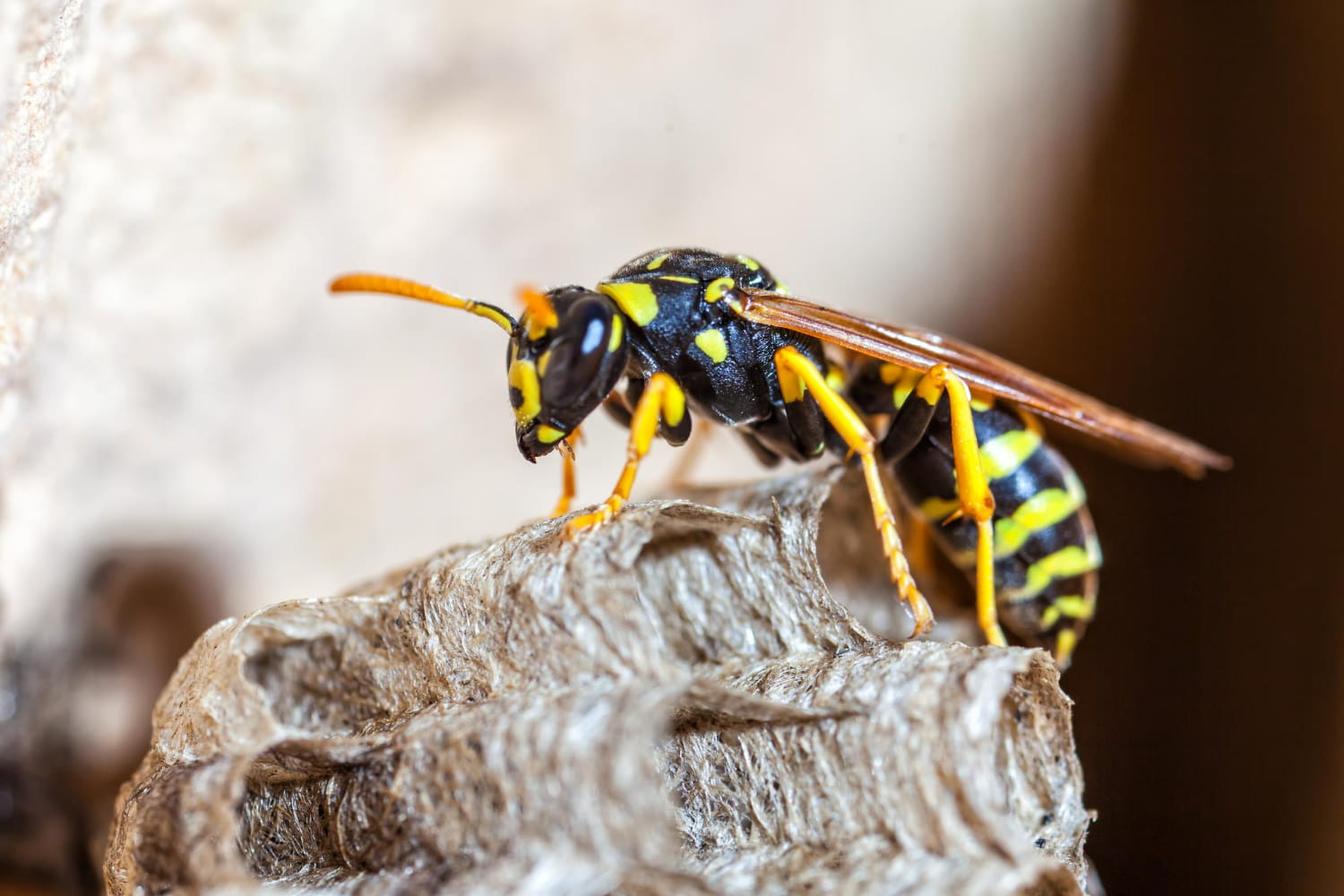
Many people view wasps solely as aggressive and dangerous insects to avoid during summer months. However, these creatures are remarkably complex organisms with unique abilities and an important ecological role. Fascinating facts about wasps can completely transform our perception of these insects, revealing their intellectual sophistication and environmental significance. You might not know that wasps demonstrate cognitive abilities rivaling some mammals and construct intricate social structures. Amazing facts about these insects unveil a world where each wasp plays a distinct part in maintaining nature’s delicate balance.
- Wasps possess a remarkable ability to recognize human faces thanks to specialized neurons in their brains. They can memorize and distinguish individual facial features for several days after initial exposure. This capability helps social wasp species identify nestmates and recognize potential threats from outsiders. Such cognitive complexity is rare among insects and indicates a surprisingly high level of intelligence.
- Social wasps construct elaborate paper nests by transforming wood fibers into a soft papery pulp using their mandibles and saliva. They scrape wood from tree bark or weathered wooden structures to gather the raw material needed for construction. Each nest consists of numerous hexagonal cells arranged in horizontal tiers stacked upon one another. Some species even incorporate special antimicrobial compounds into their paper to protect against fungal and bacterial growth.
- Unlike honeybees, wasps have smooth stingers without barbs, allowing them to sting repeatedly without dying. After delivering a sting, a wasp can easily withdraw its stinger and continue attacking perceived threats. Wasp venom contains a complex mixture of proteins and peptides that trigger pain and inflammation in mammals. This characteristic makes wasps considerably more dangerous when defending their nests compared to single-sting insects.
- Wasp larvae are carnivorous predators that feed primarily on other insects brought to them by adult workers. Adult wasps themselves consume mostly carbohydrate-rich foods like nectar, fruit juices, and other sweet liquids. This nutritional division within the colony ensures optimal larval development while providing energy for adult activities. Such specialization makes wasps valuable natural regulators of pest insect populations in ecosystems.
- Certain solitary wasp species exhibit extraordinarily sophisticated hunting behavior by paralyzing prey with a precise sting. They inject venom directly into the nervous system of insects or spiders, leaving them alive but completely immobilized. The paralyzed victim serves as fresh living food for the larva that hatches from an egg laid nearby. This strategy guarantees the developing larva has access to nutritious unspoiled food throughout its growth period.
- Wasps can learn and remember the locations of food sources by using visual landmarks in their environment. They utilize the Sun as a compass for navigation during flights covering considerable distances from their nest. Research has demonstrated that wasps can retain memory of routes to feeding stations for several weeks. This spatial memory is crucial for efficiently gathering resources to sustain the entire colony.
- Social wasp colonies maintain a clear caste system where the queen handles egg-laying duties while worker wasps manage nest operations. A queen can lay hundreds of eggs daily during peak reproductive periods in warm weather. Worker wasps perform diverse tasks ranging from nest construction and larval care to colony defense and foraging. This division of labor enables the colony to function as a highly efficient superorganism.
- Wasps contribute significantly to plant pollination, though less effectively than honeybees. They transfer pollen between flowers while collecting nectar for their own nourishment. Certain plant species have even evolved to specialize in wasp pollination, developing appropriate colors and scents to attract these insects. Without wasps, some plant varieties would face substantial challenges reproducing in natural environments.
- Temperature inside social wasp nests remains remarkably stable through the collective efforts of worker wasps. During hot weather, wasps bring water droplets into the nest and fan their wings to evaporate the moisture, cooling the interior space. When temperatures drop, they cluster together and vibrate their flight muscles to generate warmth for developing larvae. This thermoregulation proves essential for larval survival since they require consistent thermal conditions.
- Many wasp species employ pheromones for sophisticated chemical communication within their colonies. Each individual wasp carries a unique chemical signature allowing nestmates to distinguish between colony members and intruders. Alarm pheromones instantly alert the entire colony to danger, triggering coordinated defensive responses. This communication system operates more rapidly than visual or auditory signals in the complex environment of a nest.
- One of the largest wasp species on Earth is the Asian giant hornet with a wingspan reaching up to seven centimeters. These formidable insects can decimate entire honeybee colonies within hours using their powerful stingers and strong mandibles. They feed their larvae with the flesh of destroyed honeybees, making them serious threats to beekeepers. Despite their danger, they play important roles controlling other insect populations in their native ecosystems.
- The life cycle of a social wasp begins each spring when a fertilized queen emerges from winter hibernation. She single-handedly constructs the first cells of a new nest and lays the initial eggs that develop into worker wasps. By midsummer the colony reaches its population peak, sometimes containing thousands of individuals. Autumn brings the emergence of new queens and males that mate before winter arrives.
- Wasps possess compound eyes composed of thousands of individual lenses enabling them to see ultraviolet light. This visual capability helps them locate flowers with ultraviolet nectar guides invisible to the human eye. They also excel at detecting movement, making them efficient aerial hunters of other insects. Such visual acuity represents a critical survival adaptation in their natural habitats.
- Some wasp species demonstrate problem-solving abilities by successfully completing simple logical tasks in laboratory settings. They can learn to manipulate mechanisms and open containers to access food rewards after limited trial-and-error attempts. This cognitive flexibility indicates an intelligence level uncommon among most insects. Such research continues reshaping our understanding of invertebrate mental capabilities.
- Wasps serve as prey for numerous animals including birds, bats, and certain mammals that have learned to consume them safely. Some bird species have developed techniques like rubbing wasps against tree bark to remove stingers before eating. Specialized parasitic wasps also exist that lay eggs inside the larvae of other wasp species. These predator-prey relationships form essential components of ecological balance in natural systems.
- During winter dormancy, mated queen wasps seek protected shelters beneath tree bark or within building crevices. They enter a state of diapause where their metabolism slows dramatically to conserve energy reserves. Only a small percentage of queens survive winter due to cold temperatures, moisture exposure, or predation. Those that endure become the founders of entirely new colonies the following spring.
- Wasps can achieve flight speeds up to thirty kilometers per hour when pursuing prey or escaping threats. Their wings operate independently of each other, providing exceptional aerial maneuverability and agility. This capability enables them to execute complex flight patterns while hunting other flying insects. Speed and precision make them formidable predators in three-dimensional airspace.
- Certain wasp species maintain symbiotic relationships with bacteria that assist in digesting specific food types. These microorganisms reside in specialized sections of the wasp’s digestive system and produce enzymes for breaking down complex compounds. Such symbiosis allows wasps to survive in environments with limited nutritional resources. This represents another example of their biological complexity at the microbial level.
- Autumn becomes a critical period for social wasp colonies as food sources diminish and the colony begins declining. Worker wasps grow increasingly persistent in approaching human food and beverages seeking carbohydrate energy. This behavior explains the rise in human-wasp conflicts during August and September months. Actually wasps aren’t more aggressive during this time but rather desperately searching for energy sources as natural supplies dwindle.
- In some cultures wasps are considered delicacies and are deliberately cultivated for human consumption. Wasp larvae contain high protein levels and are regarded as tasty after frying or boiling. In Japan for instance specialty dishes featuring giant hornet larvae appear on menus at upscale restaurants. This practice demonstrates how cultural attitudes toward wasps vary dramatically across different regions of the world.
- Wasps can distinguish colors and form lasting associations between specific hues and food sources. They quickly learn that particular flower colors or container shades correlate with nectar or juice availability. This color-learning ability enhances their efficiency in locating nourishment within complex environments. Such cognitive function provides additional evidence of their relatively advanced neural processing capabilities.
- Parthenogenesis occurs commonly in certain wasp species where unfertilized eggs develop into males. This reproductive strategy allows colonies to rapidly increase male numbers for mating purposes near season’s end. Queens can control offspring gender by deciding whether to fertilize each egg during laying. This mechanism provides reproductive flexibility adapting to the colony’s changing needs throughout the season.
- Autumn queens store sperm from mating encounters in a specialized organ called the spermatheca throughout winter dormancy. The following spring she uses this preserved sperm to fertilize eggs that develop into female workers and future queens. This long-term sperm storage capability proves essential for species survival in temperate climates with seasonal constraints. Without this biological adaptation new colonies could not establish annually.
These extraordinary facts about wasps reveal a world of remarkably sophisticated creatures far more complex than they appear at first glance. Compelling insights into their behavior, intelligence, and ecological contributions encourage us to regard these insects with greater respect for their place in nature. You might not have realized how multifaceted the world of wasps truly is, but now understand they form indispensable components of healthy ecosystems worldwide. The next time you encounter a wasp, consider its remarkable capabilities rather than immediately seeking ways to eliminate it.


