
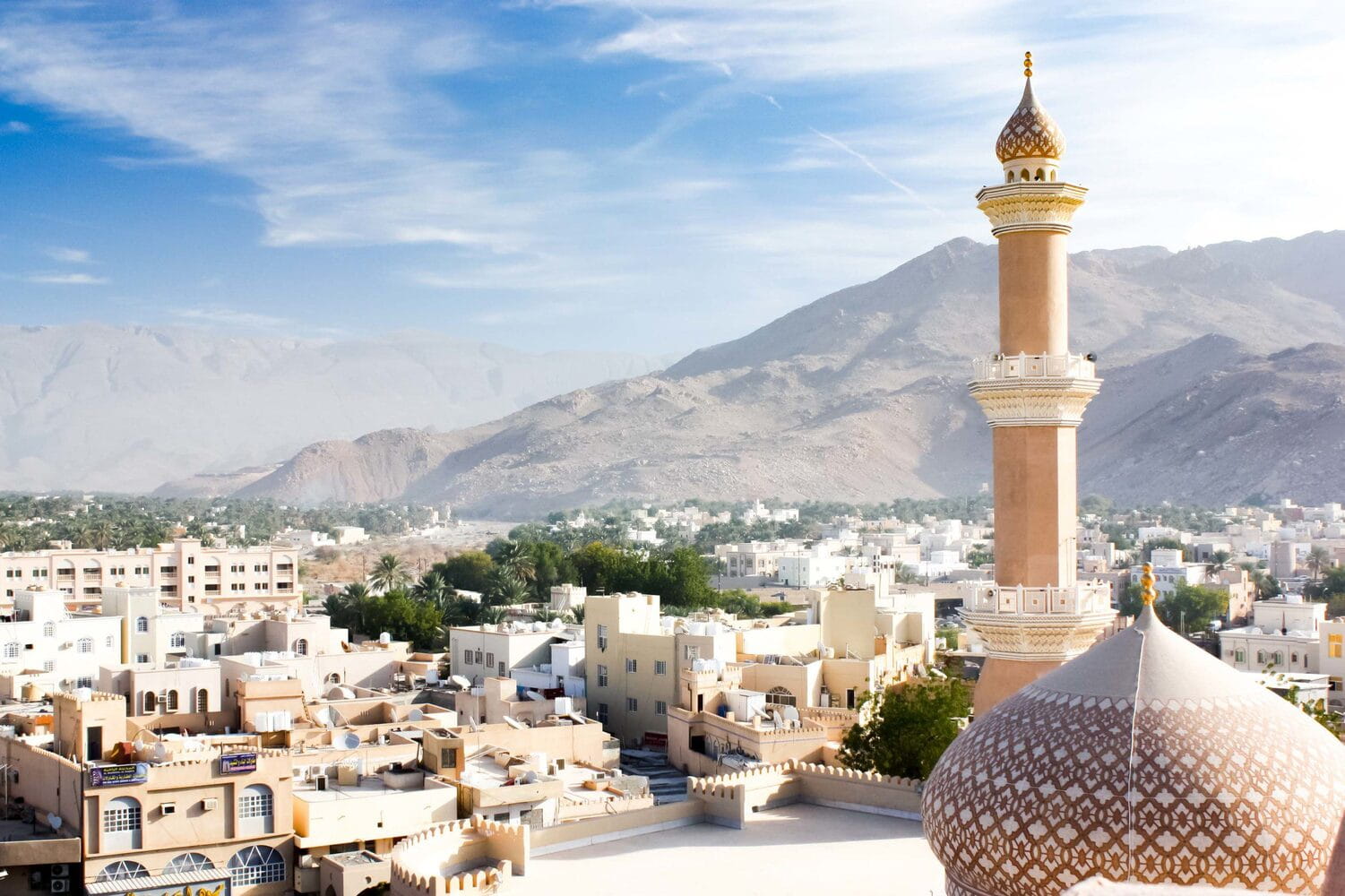
Oman is a true jewel of the Arabian Peninsula, a country where endless desert sands meet green mountain peaks, picturesque canyons, and the crystal-clear waters of the Indian Ocean. Beyond its borders, this state preserves a unique cultural heritage, skillfully combining ancient traditions with modern development without losing its national identity. Every corner of the country tells a story of millennia-old maritime trade, a powerful empire, and wise diplomacy. We invite you to discover remarkable facts about this fascinating country, many of which you may not have known before. Prepare for a journey into a world of captivating discoveries about a state that has managed to preserve its authenticity in the modern era.
- Oman is the only country in the world where Ibadi Islam is the official state religion. This branch of Islam differs from Sunni and Shia traditions through its emphasis on moderation and tolerance. Ibadi Islam emerged as early as the seventh century and became the foundation for the peaceful coexistence of different religious communities within the country. Thanks to Ibadism, Oman has long stood apart from other Arab states due to its openness to dialogue with other cultures. This religious characteristic has contributed to the formation of a stable society in which followers of different faiths are free to practice their beliefs.
- The capital of Oman, Muscat, is located on the coast of the Gulf of Oman and impresses visitors with its blend of modern architecture and ancient fortresses. The city stretches for more than sixty kilometers along the coastline between mountain ranges, creating a distinctive and dramatic landscape. Among its most notable landmarks are the imposing Al Mirani and Al Jalali forts, built by the Portuguese in the sixteenth century. The Sultan Qaboos Grand Mosque, with its enormous handwoven carpet and some of the largest Swarovski crystal chandeliers in the world, is a true masterpiece of contemporary Islamic architecture.
- The Musandam Peninsula in northern Oman is often referred to as the Norway of Arabia due to its fjord-like inlets formed by the flooding of mountain valleys. This region is completely separated from the rest of the country by the territory of the United Arab Emirates and has a unique geographical status. Local residents continue to follow a traditional way of life, relying on fishing and cultivating date palms on terraces carved into rocky gorges. Sailing on traditional wooden dhow boats through these fjords offers the chance to see dolphins and admire sheer cliffs rising directly from the sea.
- In the southern part of Oman, in the Dhofar region, there is a unique local climatic phenomenon known as the Khareef monsoon season, which lasts from June to September. Unlike the rest of the Arabian Peninsula, where summer heat is intense, temperatures during Khareef drop noticeably, and the mountains become covered in dense mist and lush greenery. This season transforms the desert into a flourishing landscape filled with the scent of frankincense and other spices cultivated here since ancient times. Owing to this phenomenon, Dhofar became a center of the ancient frankincense trade, supplying markets in Ancient Rome and India.
- Oman ruled the island of Zanzibar for more than two centuries, until the mid-nineteenth century, when it became an independent sultanate. This fact explains the deep cultural connections between Oman and East Africa, which are reflected in the language, architecture, and cuisine of both regions. Many wealthy Zanzibaris still have Omani ancestry, and communities of African origin live within Oman itself. These historical ties made Oman a major hub of maritime trade in the Indian Ocean for many centuries.
- In the Al Hajar Mountains in the north of the country lies the remarkable Jebel Akhdar massif, whose name means Green Mountain. The name comes from its fertile terraces, where local inhabitants grow roses, pomegranates, and other crops thanks to an intricate irrigation system. The region is striking for its contrast between arid rocky slopes and green oases shaped by human labor over centuries. At elevations exceeding two thousand meters, snow can occasionally be seen in winter, an extremely rare phenomenon on the Arabian Peninsula.
- Oman is home to one of the oldest continuously functioning irrigation systems in the world, known as aflaj, which has been in operation for more than three thousand years. This engineering system consists of a network of underground and open channels that transport water from mountain springs to agricultural lands in the desert. The aflaj system has been recognized by UNESCO as a World Heritage site, illustrating humanity’s ingenious adaptation to harsh natural conditions. Each community follows its own water distribution rules, passed down through generations and strictly observed to this day.
- On the eastern coast of Oman, in Ras Al Hadd National Park, lies one of the largest nesting sites in the world for green sea turtles. Every year, thousands of females return to the beach where they were born to lay a new generation of eggs. The breeding season lasts from April to October, during which visitors can observe this impressive natural event while adhering to strict regulations. Local communities actively participate in turtle conservation, creating a unique model of cooperation between traditional culture and modern environmental protection.
- Oman is the only country on the Arabian Peninsula that does not share a border with Saudi Arabia, giving it a distinctive geopolitical position. This geographical feature has allowed Oman to pursue an independent foreign policy throughout its history and to act as a mediator in regional conflicts. The country has maintained diplomatic relations with such diverse states as Iran, Israel, and Western nations, making it a unique bridge between different worlds. Thanks to this approach, Oman preserved stability during the Arab Spring, when many other countries in the region experienced political upheaval.
- Traditional Omani dhow boats, with their characteristic slanted sails, are symbols of the country’s maritime heritage and are still used for fishing and trade. These vessels are built entirely by hand without a single nail, using only wood and coconut fibers to bind the elements together. The design of the dhow allows it to harness monsoon winds efficiently for long-distance travel across the Indian Ocean. Today, these boats form part of the cultural heritage and are often seen during traditional maritime festivals and regattas.
- In the southern part of Oman lies the Rub al Khali Desert, the largest sand desert on Earth, spanning the territory of several countries. The Omani section of this desert is notable for its towering sand dunes, some of which rise to heights of more than two hundred meters. Unlike other areas of the desert, rare oases can sometimes be found here, supporting unique species of plants and animals. Local Bedouins continue to maintain a traditional nomadic lifestyle, using camels to travel between water sources.
- Oman is a leader among the countries of the Persian Gulf in biodiversity conservation, having established a network of more than twenty-five protected areas. These include national parks, marine reserves, and sanctuaries designed to protect rare species such as the Arabian lion and the Arabian oryx. In the Dimaniyat marine reserve, some of the healthiest coral reefs in the region can be found, attracting divers from around the world. The government actively invests in ecotourism, combining nature conservation with the creation of new employment opportunities for local communities.
- Sultan Qaboos bin Said, who ruled Oman from 1970 to 2020, transformed the country from an isolated medieval sultanate into a modern state with developed infrastructure. Under his leadership, roads, schools, hospitals, and universities were built, raising standards of education and healthcare to international levels. He also implemented a series of economic reforms aimed at diversifying an economy heavily dependent on oil. Sultan Qaboos remains a deeply revered figure in Oman, and his legacy is honored throughout the country.
- Oman operates a unique system of governance that combines modern state institutions with traditional methods of dispute resolution through councils of elders. Each region has its own council composed of respected elders who assist the government in addressing local issues. This system helps maintain a connection with tradition while the country continues to develop according to contemporary standards. Such an approach has contributed to stability and social harmony even during periods of global economic crisis.
- Omani cuisine is notable for its diversity, blending Arab, Indian, African, and Persian culinary traditions. Among the national dishes are shuwa, lamb slow-cooked with spices in a special underground oven, and makbous, rice prepared with meat and dried fruits. Aromatic spices, particularly frankincense and saffron, play a key role in shaping the distinctive flavors of Omani food. The traditional drink kahwa is served with cardamom and accompanied by dates as a symbol of hospitality.
- Along the coast of Oman, numerous fortresses and towers were built over the centuries to protect the country from pirates and foreign invaders. One of the most famous is the Bahla Fort, considered the largest mud-brick structure on the Arabian Peninsula. Many of these fortifications were constructed before the arrival of Islam and later rebuilt under the influence of various cultures, including the Portuguese. Today, most of the forts have been restored and are open to visitors as important historical landmarks.
- Oman is regarded as one of the safest countries in the world, where travelers can explore even remote regions without concern. The local population is known for its hospitality and willingness to help visitors, even when there is no shared language. This sense of security, combined with a high level of infrastructure, makes the country especially attractive to those seeking authentic travel experiences. Many travelers note that the warmth and kindness of the Omani people remain their most vivid memory of the journey.
These fascinating facts reveal only part of the richness and uniqueness of Oman, a country that has succeeded in preserving its cultural identity in a globalized world. They serve as a reminder of the importance of respecting tradition while striving for progress. We hope this collection has not only expanded your knowledge but also inspired a desire to discover this remarkable country in person. Oman continues to stand as an example of how ancient heritage and modern development can coexist in harmony, maintaining internal balance and stability.


