
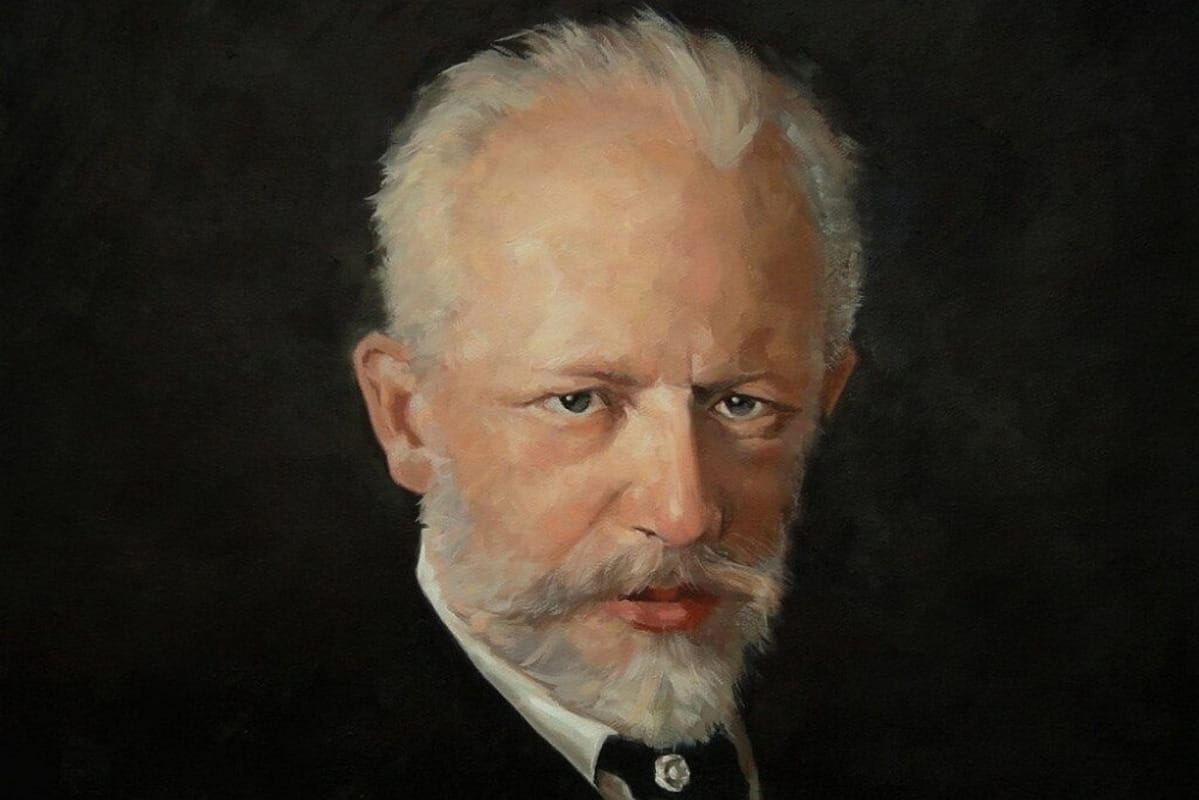
The great Russian composer Pyotr Ilyich Tchaikovsky remains one of the most significant figures in world music, whose works continue to stir the hearts of millions more than a century after his death. His melodic genius blends seamlessly with profound emotional depth, creating a unique musical universe where joy and sorrow coexist in perfect harmony. Behind the golden radiance of this master’s fame lies a complex, often tragic personal drama that he transformed into timeless music. We invite you to discover incredible facts about the life and creativity of this genius, many of which you might not have known before. Prepare for a journey into the fascinating world of details about the man who gifted the world unforgettable melodies.
- Pyotr Ilyich Tchaikovsky was born on May seventh, 1840, in the town of Votkinsk in Vyatka Governorate, where his father worked as director of a metallurgical plant. His musical abilities manifested remarkably early, as the boy attempted to reproduce melodies on the piano by age four. However, his family did not view this as a serious vocation and initially prepared him for a career as a civil servant. Only after working at the Ministry of Justice did he decide at age twenty-three to devote himself entirely to music.
- Before becoming a composer, Tchaikovsky graduated from Saint Petersburg University with a law degree and worked as a collegiate secretary in the Ministry of Justice. This position proved extremely tedious for him, and he spent considerable time translating opera librettos rather than fulfilling official duties. After meeting Anton Rubinstein, he made the bold decision to abandon civil service and enroll in the newly founded Saint Petersburg Conservatory. This step became a turning point in his life, though it initially caused concern within his family.
- Tchaikovsky became the first Russian composer to receive professional musical education at a conservatory, distinguishing him from most of his contemporaries. He studied composition under Anton Rubinstein and music theory with Karl Zaremba. This academic training enabled him to master Western European compositional forms and techniques with exceptional skill. However, this very approach sometimes drew criticism from the nationally oriented composers of the Mighty Handful group.
- For six years, Tchaikovsky worked as a professor of harmony at the Moscow Conservatory, where he taught music theory and composition. During this pedagogical period, he authored his famous textbook “A Practical Course in Harmony,” which remained in use at conservatories for many decades. Teaching provided him with a stable income but consumed time he wished to dedicate to composition, often causing inner conflict. Only through the financial support of Nadezhda von Meck was he able to leave teaching and devote himself fully to composing.
- The ballet “Swan Lake,” composed by Tchaikovsky in 1876, initially suffered complete failure at its premiere at the Bolshoi Theatre. Critics condemned the music as overly complex while the choreography was deemed weak, resulting in a cold reception from audiences. Only nineteen years after the composer’s death, when Marius Petipa and Lev Ivanov created a new choreographic version, did the ballet become a global sensation. Today it ranks among the most popular ballets of all time, though during the composer’s lifetime it received little recognition.
- Tchaikovsky composed only three ballets throughout his entire creative career, yet these works became genre classics and defined the future development of ballet music. Alongside “Swan Lake,” this trilogy includes “The Sleeping Beauty,” created in 1889, and “The Nutcracker,” written in 1892. These compositions revolutionized ballet, transforming it from background music for dance into a fully developed dramatic form with sophisticated narrative structure. “The Sleeping Beauty” particularly pleased Tsar Alexander III, who called it a masterpiece, contributing significantly to the composer’s official recognition.
- In 1877, Tchaikovsky married his student Antonina Miliukova, a decision that became one of the greatest mistakes of his life. The marriage was planned under pressure to conceal his homosexuality from society but proved disastrous for both parties. Just nine weeks after the wedding, the composer suffered a severe nervous breakdown and even attempted to drown himself in the Moscow River. This event triggered a prolonged psychological crisis, and only a journey abroad gradually helped him recover.
- Nadezhda von Meck was a wealthy widow who provided Tchaikovsky with an annual pension for fourteen years, enabling him to abandon teaching. They maintained an extensive correspondence in which they discussed music, philosophy, and personal reflections. Von Meck stipulated they must never meet in person to preserve an idealized image of each other. Their relationship unexpectedly ended in 1890 when von Meck discontinued financial support due to personal financial difficulties and illness.
- Tchaikovsky was openly homosexual, which in the context of the nineteenth-century Russian Empire created constant threat of criminal prosecution. He attempted to conceal his sexual orientation due to fear of social condemnation and possible imprisonment. This internal struggle between personal life and societal norms became a source of profound emotional suffering reflected in his creative output. Modern scholars believe this hidden drama lends his music its distinctive emotional depth and tragic quality.
- Tchaikovsky’s Sixth Symphony received the title “Pathétique” and was first performed just nine days before the composer’s death. He personally conducted the premiere in Saint Petersburg, though audiences received the work coolly, failing to grasp its innovative structure. Particularly shocking was the symphony’s unexpected finale, which concludes not triumphantly but with quiet, tragic dissolution. Today this composition is regarded as one of the greatest achievements in symphonic music, with many perceiving in it a premonition of the composer’s impending death.
- Tchaikovsky harbored an unusual fascination with the number nine, which he considered fateful and associated with death. This fixation intensified after learning that Ludwig van Beethoven had died following completion of his Ninth Symphony. The composer even feared writing a ninth symphony himself, considering it an ill omen, though ultimately he created only six symphonies. This numerical obsession reflected his general inclination toward mystical beliefs and premonitions that frequently influenced his behavior.
- In 1891, Tchaikovsky became the first prominent European composer to visit the United States of America. He conducted at the grand opening of the famous Carnegie Hall in New York City, performing his orchestral suite “Souvenir de Florence.” His American tour made a strong impression on him, though he criticized certain aspects of American culture he considered superficial. During this journey he also visited Philadelphia, Baltimore, and Niagara Falls, where he was captivated by the natural grandeur.
- The opera “Eugene Onegin,” based on Alexander Pushkin’s eponymous poem, became one of Tchaikovsky’s most cherished compositions. He termed it “lyrical scenes” rather than a full-scale opera to emphasize its intimate, chamber-like character. The premiere took place in 1879 at the student theater of the Moscow Conservatory since major theaters initially refused to stage the work. Only after its success in Saint Petersburg under conductor Eduard Nápravník did the opera gain widespread recognition and become a cornerstone of the Russian operatic repertoire.
- Tchaikovsky composed the “1812 Overture” by commission for organizers of an exhibition in Moscow dedicated to the consecration of the Cathedral of Christ the Saviour. The piece was conceived as a festive composition commemorating Russia’s victory in the Patriotic War of 1812 against Napoleon. The finale incorporates actual cannon fire and carillon bells, creating a spectacular sonic effect. The composer himself regarded this work rather critically, considering it overly showy, yet today it stands among his most popular compositions.
- The symphonic fantasy “Romeo and Juliet,” based on Shakespeare’s tragedy, became one of Tchaikovsky’s most significant works even before he achieved widespread fame. Musicologist Mily Balakirev provided detailed guidance on the work’s structure and even suggested the primary theme for the love episode. Following its premiere the composition faced criticism, but after a second revision created with Balakirev’s advice it gained universal acclaim. This work became Tchaikovsky’s first major success and opened the path to international recognition.
- Tchaikovsky died on November sixth, 1893, in Saint Petersburg nine days after the premiere of the “Pathétique” Symphony. The official cause of death was recorded as cholera, allegedly contracted after drinking unboiled water at a restaurant during an epidemic. However, many researchers doubt this version since cholera spreads through contaminated water and the composer came from an affluent family making it unlikely he would consume dangerous water. A theory exists that his death was a disguised suicide or even a “court-mandated killing” connected to his homosexuality.
- Tchaikovsky’s brother Modest Ilyich was not only a close friend but also the author of the composer’s first comprehensive biography. Modest worked as a playwright and translator and also wrote the libretto for Tchaikovsky’s opera “The Enchantress.” After Pyotr’s death, he devoted many years to collecting and publishing his letters and documents, forming the foundation for understanding the composer’s inner world. Thanks to Modest, we today have access to thousands of Tchaikovsky’s letters revealing his thoughts, feelings, and creative intentions.
- Tchaikovsky was a devoted admirer of Wolfgang Amadeus Mozart’s work and even named his favorite nephew Vladimir in honor of the Austrian composer. He created the orchestral suite “Mozartiana” as a tribute to Mozart’s memory, arranging several lesser-known works by his idol. Tchaikovsky frequently quoted Mozart in his letters, calling him the greatest musician of all time. This love for Mozart’s music influenced the transparency and melodic quality of Tchaikovsky’s own compositions.
- Despite worldwide fame, Tchaikovsky frequently suffered from self-criticism and doubts about his abilities. In his letters he often described his works as awkward or excessively emotional and feared criticism from musical experts. After the premiere of the first version of his Piano Concerto No. 1, Anton Rubinstein criticized it so harshly that the composer was deeply distressed, though he later refused to make significant revisions. This inner vulnerability coexisted with extraordinary productivity, as he created more than one hundred significant works during his lifetime.
- Tchaikovsky left behind an enormous legacy of letters that serve as a valuable source for understanding not only his creativity but also his personal life. He wrote letters daily, sometimes several per day, particularly to his sister Alexandra and brother Modest. These letters contain detailed descriptions of his emotional states, creative plans, and thoughts about contemporaries. Through this correspondence historians possess a unique opportunity to glimpse into the composer’s soul and comprehend the mechanisms of his creative process.
These fascinating facts help us better understand the complex and multifaceted personality of a great composer whose music became a bridge between eras and cultures. Incredible facts about Tchaikovsky’s life remind us that behind every masterpiece stands a human drama with its joys, sufferings, and search for harmony. We hope this collection of interesting facts has not only expanded your knowledge but also inspired you to revisit the works of this brilliant master whose music remains eternal.


