
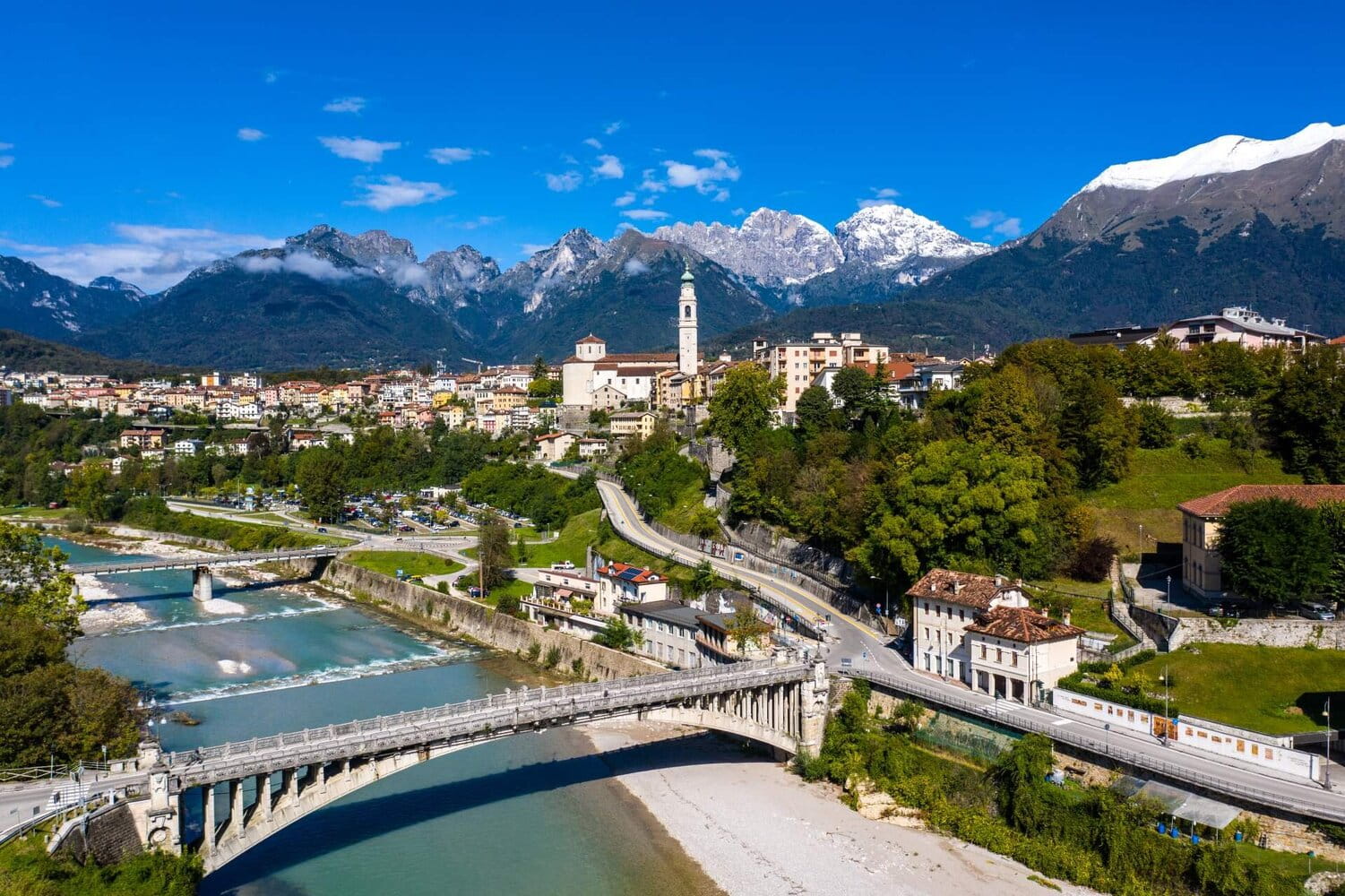
Belluno is a true gem of the Italian Alps that hides many fascinating stories and unique features. This city in the Veneto region amazes with its location among majestic mountain peaks and rich cultural heritage. Here, Alpine traditions combine with Venetian charm, creating an incomparable atmosphere. Prepare to discover incredible facts about a city that became the birthplace of outstanding personalities and preserves ancient secrets. These interesting facts will reveal Belluno to you from an unexpected perspective.
- Belluno is located at an altitude of 389 meters above sea level in a valley surrounded by the Dolomite Alps, which are inscribed on the UNESCO World Heritage List. The city is situated at the confluence of two mountain rivers, Piave and Ardo, which creates a picturesque landscape. The geographical location of Belluno makes it an ideal starting point for exploring the most beautiful mountain routes of the Dolomites. From the city center, impressive panoramic views of mountain peaks open up, including the famous Monte Serva mountain.
- The name of the city Belluno comes from the Celtic word “belo-dunum”, which means “bright city” or “strong fortress”. This testifies to the ancient history of the settlement, which existed even during the times of Celtic tribes. The first written mentions of Belluno date back to the Roman period, when the city was called Bellunum. Over the centuries, the name underwent minor changes but retained its original Celtic roots.
- Belluno is the birthplace of Pope John Paul I, who was born here in 1912 under the name Albino Luciani. His pontificate lasted only 33 days in 1978, which makes it one of the shortest in the history of the Catholic Church. The paternal home of the future pope has been preserved in the city and has become a pilgrimage site for believers. The memory of John Paul I is honored in Belluno with numerous memorials and museum exhibitions.
- The ancient city of Belluno was an important Venetian outpost from 1404, when it became part of the Venetian Republic. Venetian rule lasted almost four centuries and left a deep mark on the architecture and culture of the city. Numerous buildings in the center of Belluno are decorated with the symbol of Venice, the winged lion of Saint Mark. This period of prosperity transformed Belluno into an important commercial and cultural center of the region.
- Belluno is the capital of the province of the same name, which occupies the largest area among all provinces of the Veneto region. The province of Belluno covers a large part of the Dolomite Alps and includes famous ski resorts such as Cortina d’Ampezzo. The population of the province is about 200 thousand people, while the city of Belluno itself has approximately 36 thousand residents. The province is known for its eyewear manufacturers who supply their products to all corners of the world.
- The outstanding Renaissance artist Sebastiano Ricci, who lived from 1659 to 1734, was born in Belluno. His works adorn numerous churches and palaces not only in Italy, but also in France, England and Austria. Ricci is considered one of the predecessors of Venetian rococo and had a significant influence on the development of European painting. His most famous frescoes can be seen in the Royal Palace in London and the Louvre in Paris.
- The Palazzo dei Rettori, built in the 15th century, is one of the most important architectural monuments of Belluno. This palace served as the residence of Venetian governors and a place for making important decisions. The facade of the building is decorated with Gothic windows and Renaissance elements, which reflects a transitional period in architecture. Today, the prefecture is located in the palace and important official events are held there.
- Belluno is known for its dialect, which differs significantly from standard Italian and has much in common with the Ladin language. The Belluno dialect belongs to the Venetian language group and preserves archaic forms that have disappeared from other Italian dialects. Local residents proudly use their dialect in everyday communication, passing it down from generation to generation. There are even poetic works and theatrical productions written in the Belluno dialect.
- The city cathedral of Belluno, dedicated to Saints Martin and Mauro, impresses with its baroque and renaissance architecture. Construction of the cathedral began in the 16th century according to the design of architect Tullio Lombardo. The cathedral bell tower, designed by Filippo Juvarra, reaches a height of 67 meters and is the tallest building in the city. Inside the cathedral, valuable works of art are preserved, including paintings by Sebastiano Ricci and Andrea Schiavone.
- Belluno is an important center for eyewear production, and it is here that the headquarters of the world-famous companies Luxottica and Safilo are located. Approximately 80% of world eyewear production is concentrated in the province of Belluno and adjacent areas. This industry provides employment for thousands of local residents and brings billions in profits to the region. The traditions of eyewear production in Belluno date back more than a century and are passed down from master to master.
- Piazza dei Martiri is the main square of Belluno and the heart of city life since the Middle Ages. The square received its name in honor of the partisans executed here during World War II. Around the square are located the most important historical buildings, including the town hall and numerous cafes with arcades. Every week, a traditional market is organized on the square, where you can purchase local products and handicrafts.
- The Civico Museum in Belluno preserves a unique collection of works by Venetian artists from the 15th to 18th centuries. A special pride of the museum is the archaeological section with artifacts from the Roman and pre-Christian periods found in the vicinity of the city. The museum also has a rich collection of folk art and traditional costumes of Alpine regions. Temporary exhibitions of contemporary and classical art are regularly held here.
- Belluno is traditionally famous for the production of high-quality cheese, especially the variety called “Piave”, named after the local river. This hard cheese has a rich flavor and is produced according to ancient recipes from the milk of cows that graze on Alpine meadows. Piave cheese has received numerous international awards and is protected by a special quality mark. Cheese production remains an important part of the local economy and culinary tradition.
- The historic center of Belluno is surrounded by the remains of medieval city walls built by the Venetians to protect against enemies. Although most of the fortifications were destroyed in the 19th century, some sections of walls and gates have survived to this day. The most famous are Porta Rugo and Porta Dojona, which still serve as entrances to the old city. A walk along the remains of the walls allows you to appreciate the fortification mastery of Venetian builders.
- Belluno became the venue for the World Alpine Skiing Championships in 2021 in neighboring Cortina d’Ampezzo. The province of Belluno regularly hosts international sporting competitions thanks to its first-class ski slopes. Local ski centers offer slopes of varying difficulty levels for professionals and amateurs. Winter sports are an integral part of the culture and economy of the region.
- Traditional Belluno cuisine combines Venetian and Austrian culinary influences due to its historical geographical location. The most famous dish is “casnec”, mountain cheese that is melted with polenta and bacon. Also popular are “casonsei”, a variety of ravioli with beets and poppy seeds. Local cuisine widely uses game, mushrooms and berries collected in the surrounding forests.
- Belluno has a long tradition of blacksmithing, especially the manufacture of forged products and bells. Local craftsmen created bells for churches throughout Venice and even exported them abroad. The metal processing techniques developed in Belluno were passed down from generation to generation and are considered unique. Today, several workshops continue to preserve these ancient craft traditions.
- The Piave River flowing through Belluno played a key role during World War I as a natural defensive line. On its banks, the famous Battle of the Piave took place in 1918, which became a turning point in the Italian campaign. Today, along the river are located numerous memorials and museums dedicated to the events of the Great War. The river remains an important part of the identity and history of Belluno.
- Around Belluno there are more than 30 small historical villages and towns, each of which has its own unique architecture and traditions. These settlements have preserved an authentic Alpine character with wooden houses and narrow stone streets. Many of these villages have remained virtually unchanged over the past centuries and offer a unique look at traditional life in the Alps. Tourist routes connect these villages, allowing visitors to discover the true face of the region.
- Belluno is an important educational center with several higher education institutions, including a branch of the University of Padua. University faculties specialize in the study of mountain environments, forestry and tourism. Every year, students come here from all over Italy and other countries to receive education in a unique Alpine environment. Scientific research conducted here focuses on the preservation of mountain ecosystems and sustainable development.
- The Crewdo-Lollis Palace is an excellent example of 16th-century Venetian palace architecture in Belluno. The building is decorated with elegant frescoes and stucco work by famous Venetian masters. The interior of the palace has preserved original furniture and decorative elements from that period. Today, the palace is partially open for public visits and is used for cultural events.
Belluno continues to enchant with its unique atmosphere, where mountain nature harmoniously combines with rich cultural heritage. Every street of this city tells its own story, and residents proudly preserve the ancient traditions of their ancestors. Now you know fascinating facts about a city that deserves to be discovered by travelers from around the world. Belluno truly is a hidden gem of the Italian Alps that awaits its visitors.


