
Imagine a country where snow-capped peaks of the Andes pierce the sky, endless Amazon rainforests stretch toward the horizon, and mysterious giant drawings lie etched across desert sands. Peru stands as a true treasure trove for those seeking to discover something extraordinary and captivating. Every corner of this South American nation preserves traces of ancient civilizations while modern life harmoniously blends with ancestral traditions. Prepare to immerse yourself in a world of fascinating facts about this remarkable land. You might not have known just how many wonders this diverse country holds within its borders.
- Peru ranks among the most biodiverse countries on Earth and holds fourth place globally for the number of bird species. More than eighteen hundred bird species inhabit its territories including the rare Andean condor with a wingspan reaching up to three meters. The Manu National Park alone hosts more bird species than the entire continent of North America combined. This extraordinary biodiversity stems from the unique convergence of three distinct natural regions within a single nation.
- Lake Titicaca situated at thirty eight hundred twelve meters above sea level claims the title of the world’s highest navigable lake. It spans the border between Peru and Bolivia covering an area of approximately eight thousand three hundred square kilometers. Local communities have constructed floating islands from totora reeds for centuries creating entire settlements complete with homes schools and livestock areas. These islands require constant maintenance as the lower reed layers gradually decompose in the water.
- The Nazca Lines carved into the desert floor more than two thousand years ago remain one of archaeology’s greatest enigmas. These massive geoglyphs depict animals plants and geometric shapes visible only from aerial perspectives. The largest figure representing a snake extends three hundred meters while the combined length of all lines exceeds thirteen hundred kilometers. Scholars continue debating their origin and purpose with theories ranging from astronomical calendars to sacred religious pathways.
- Peru is universally recognized as the birthplace of the potato where this vital crop was first domesticated nearly eight thousand years ago. Today Peruvian farmers cultivate over four thousand distinct potato varieties displaying an astonishing array of colors shapes and flavors. Andean agriculturalists maintain ancient cultivation techniques using terraced fields originally engineered by the Inca civilization. This humble tuber became Peru’s gift to global cuisine fundamentally transforming human nutrition worldwide.
- Machu Picchu the legendary Inca citadel remained hidden from the Western world until American historian Hiram Bingham rediscovered it in nineteen eleven. Perched dramatically at twenty four hundred thirty meters among rugged Andean peaks its remote location shielded it from Spanish conquistadors during colonial times. The precision stonework featuring perfectly interlocking blocks without mortar continues to astonish modern engineers and architects. This archaeological marvel now stands among the New Seven Wonders of the World attracting visitors from every continent.
- Peru features three dramatically distinct geographic regions each with unique climates and landscapes. The western coastal strip presents a narrow desert corridor along the Pacific Ocean where some areas have received virtually no rainfall for centuries. The central highlands rise into the majestic Andes mountain range with numerous peaks soaring above six thousand meters. The eastern lowlands encompass the vast Amazon Basin containing the planet’s largest tropical rainforest system and the headwaters of the mighty Amazon River.
- Peruvian cuisine has earned international acclaim as one of the world’s finest culinary traditions blending influences from indigenous cultures Spanish colonizers African slaves and Asian immigrants. Ceviche prepared with fresh raw fish cured in lime juice represents the nation’s signature dish and source of culinary pride. Lima hosts multiple restaurants consistently ranked among the world’s top fifty dining establishments. This gastronomic richness reflects Peru’s complex history of cultural exchange and migration.
- Alpacas and llamas iconic symbols of Peru were domesticated by ancient Andean civilizations over six thousand years ago. Alpaca fiber ranks among the world’s most luxurious textiles prized for its exceptional softness warmth and durability often called the fiber of the gods. These camelids served as indispensable pack animals transporting goods across the challenging mountain terrain of the Andes. They remain economically and culturally vital to highland communities maintaining their traditional roles in modern Peruvian society.
- Peru nurtured the longest continuous civilization in the Americas flourishing for more than five thousand years before Spanish arrival. Before the Inca Empire rose to prominence numerous sophisticated cultures thrived here including Chavín Moche Nazca Wari and Chimú. Each civilization contributed unique architectural achievements artistic expressions and technological innovations that shaped Andean development. The Inca Empire itself represented the final great pre-Columbian civilization lasting merely a century before European conquest.
- The Amazon River originates in Peru where its headwaters begin high in the Andes under the name Apurímac. When measured from its most distant source the Peruvian stretch constitutes the river’s longest segment on Earth. Peruvian Amazonia shelters the planet’s greatest diversity of freshwater fish species including the massive arapaima and electric eel. This region also provides home to numerous indigenous groups who maintain traditional lifestyles deeply connected to the rainforest ecosystem.
- Peru officially recognizes more indigenous languages at the national level than any other Latin American country. Beyond Spanish both Quechua and Aymara hold official status while several Amazonian native languages receive regional recognition. Quechua the lingua franca of the Inca Empire remains the first language for more than four million Peruvians today. This linguistic diversity embodies the nation’s rich cultural heritage and complex historical tapestry.
- Peru contains the world’s most extensive system of agricultural terraces built by the Inca civilization for mountain farming. Known as andenes these stepped platforms enabled cultivation on steep slopes while minimizing soil erosion and optimizing water distribution. The most famous examples grace the landscapes of Machu Picchu and the Sacred Valley near Cusco. Many terraces continue functioning today as local farmers grow traditional crops like potatoes and maize using ancestral methods.
- The Sechura Desert in northern Peru ranks among Earth’s hottest and driest locations with remarkably stable conditions. Average temperatures hover around twenty five degrees Celsius year round while certain areas have recorded no significant rainfall for over four hundred years. This arid environment preserved the remarkable Paracas mummies discovered with intricate tattoos and elaborate burial textiles. These remains belong to a pre Inca culture that developed sophisticated practices long before the Inca Empire emerged.
- Peru leads global production of silver and ranks among the top copper producers while also featuring in the world’s top ten gold producing nations. Mining forms the backbone of the national economy generating substantial export revenue and government income. The Cerro Verde mine operates as one of the planet’s largest open pit copper extraction sites. This vital industry frequently sparks debates regarding environmental protection and indigenous community rights.
- Andean communities maintain a living tradition of weaving suspension bridges from grass fibers a practice passed through generations since Inca times. The Q’eswachaka Bridge spans forty five meters across the Apurímac River rebuilt entirely by hand every June using ancestral techniques. Local villages collaborate in this communal effort employing methods unchanged for over five centuries. UNESCO recognized this cultural practice as an Intangible Cultural Heritage of Humanity celebrating its continuity and social significance.
- Peru boasts the greatest orchid diversity on Earth with more than three thousand documented species thriving across its varied ecosystems. Many varieties grow in remote inaccessible areas of the Andes and Amazon awaiting full scientific documentation. The Waqanki orchid serves as Peru’s national floral emblem flourishing exclusively above three thousand meters elevation. This delicate flower symbolizes the resilience and beauty inherent in Peru’s natural landscapes.
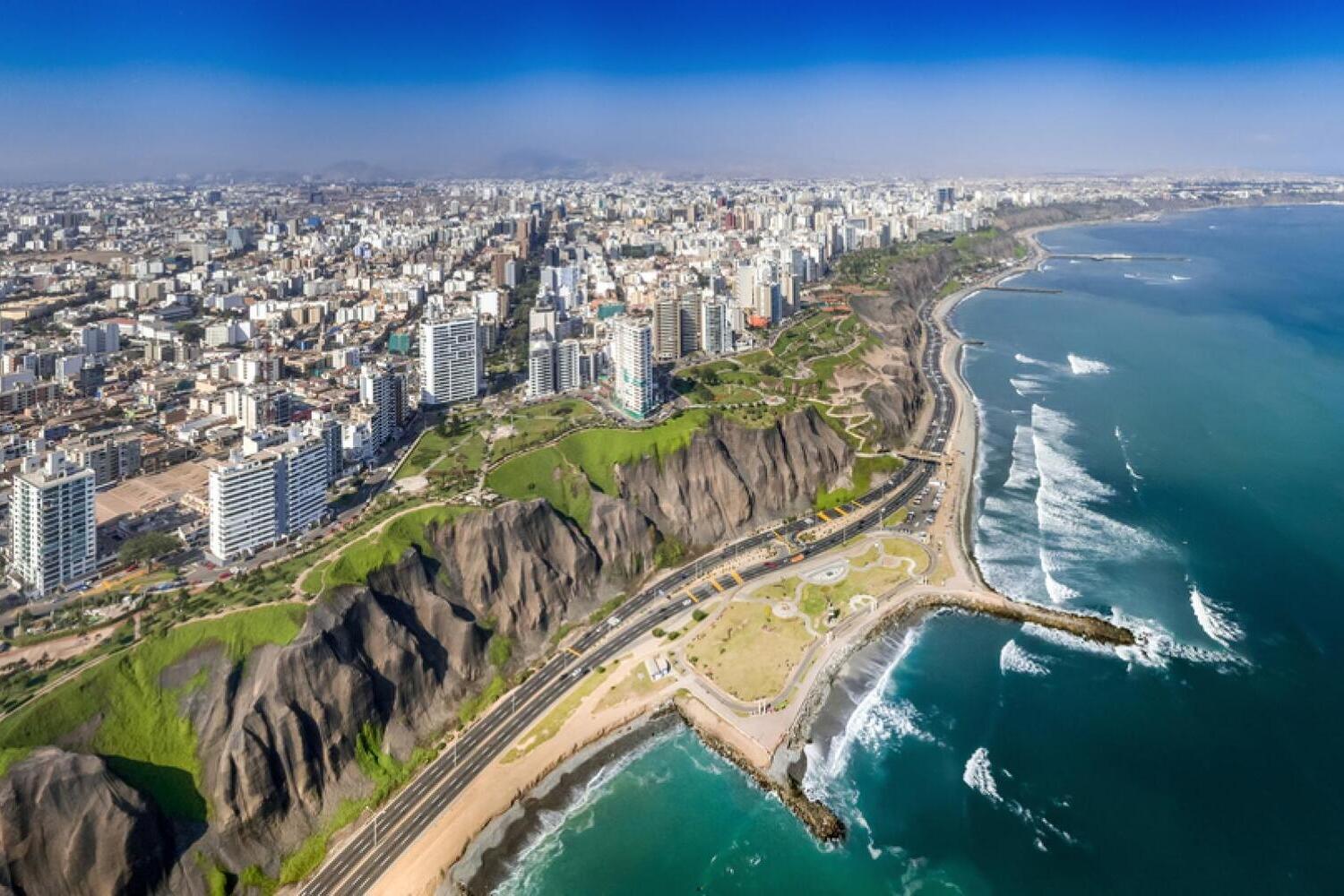
- Lima Peru’s capital city was founded by Spanish conquistador Francisco Pizarro in fifteen thirty five and originally named the City of Kings. Its historic center showcases magnificent colonial architecture earning designation as a UNESCO World Heritage Site. The city features remarkable monasteries with hidden underground passages and ornate fountains operating through hydraulic engineering without electricity since colonial times. Lima has also emerged as South America’s culinary capital hosting the continent’s most prestigious restaurants and innovative chefs.
- Peru hosts the planet’s only nature reserve created specifically to protect a rare desert flowering plant the Añañuca lily. This spectacular bloom emerges solely after uncommon desert rainfall transforming barren landscapes into vibrant carpets of color. The desert flowering phenomenon occurs irregularly every few years drawing thousands of visitors hoping to witness nature’s ephemeral display. This remarkable event demonstrates life’s extraordinary capacity to flourish under Earth’s most challenging environmental conditions.
- The ancient city of Caral located in coastal Peru represents the oldest known urban center in the Americas dating back more than five thousand years. Contemporary with Egypt’s pyramids and Mesopotamia’s earliest cities this sophisticated settlement developed without defensive walls suggesting a peaceful society focused on trade and spiritual practices. Archaeological discoveries at Caral fundamentally reshaped scholarly understanding of early civilization development in the Western Hemisphere. Its monumental pyramids and circular plazas reveal unexpectedly advanced urban planning for such an ancient culture.
- Peruvians developed a distinctive coffee preparation method known as café peruano that creates a unique sensory experience. During brewing a small amount of sugar is added to the grounds producing a delicate caramel colored foam called espumilla on the beverage’s surface. This tradition originated during colonial times when sugar represented a precious commodity reserved for special occasions. The technique remains popular particularly in Andean communities where it enhances the daily coffee ritual.
- The Inti Raymi festival celebrated annually on June twenty fourth in Cusco revives the ancient Inca ceremony honoring Inti the sun god during winter solstice in the Southern Hemisphere. Thousands of participants wearing vibrant traditional costumes perform ritual dances and processions culminating at the Sacsayhuamán fortress overlooking the city. This spectacular event draws over half a million spectators making it one of South America’s most significant cultural celebrations. The festival embodies Peru’s living connection to its pre Hispanic heritage and spiritual traditions.
These captivating facts merely scratch the surface of Peru’s profound richness and diversity a nation where every valley mountain and riverbank holds potential for discovery. The incredible facts surrounding this land remind us how deeply layered and vibrant humanity’s cultural and natural heritage truly is. We hope this collection has expanded your understanding and inspired curiosity about one of our planet’s most fascinating destinations. Peru continues to reveal its secrets to those willing to explore beyond the obvious inviting deeper appreciation of its enduring wonders.


