
Arizona impresses with its contrasts and unique natural wonders that leave millions of tourists amazed every year. This state in the southwestern United States hides many fascinating facts that you may not know about. From the deepest canyon on the planet to towns where clocks are never changed, Arizona constantly surprises with its uniqueness. Here, ancient Native American traditions combine with space-age technologies of the future. Get ready to discover incredible facts about a state where the desert meets innovation.
- The Grand Canyon, located in Arizona, has a depth of over 1,800 meters and stretches 446 kilometers in length. This natural wonder has been forming for millions of years under the influence of the Colorado River, which continues to deepen the canyon to this day. The oldest rock formations at the bottom of the canyon are approximately 2 billion years old, making this place a true geological treasure. About 6 million tourists from around the world visit the Grand Canyon annually.
- Arizona is the only state in the continental United States that does not observe daylight saving time. This decision was made due to the hot climate, as an additional hour of daylight in summer would make the heat even more unbearable. The only exception is the Navajo Nation territory, which observes daylight saving time along with neighboring states. Thanks to this, Arizona’s time during the year can align sometimes with California, sometimes with New Mexico.
- The state received its name from the Spanish word “arizonac”, which comes from the O’odham Native American language and means “small spring”. Another version claims that the name comes from the Basque expression “aritz ona”, which translates as “good oak”. This name was officially approved only in 1863, when Arizona became a separate territory. Before that time, the region was part of various administrative units of Mexico and the United States.
- In the Sonoran Desert in Arizona grow giant saguaro cacti that can reach heights of 15 meters and weigh up to 10 tons. These majestic plants live for over 200 years, and grow their first “arm” only at the age of 75-100 years. The saguaro is Arizona’s symbol and is protected by state law, with serious fines for damaging them. The flowers of these cacti bloom only at night and are the official state flower.
- Arizona has the largest concentration of observatories in the world thanks to clear skies and minimal light pollution. On Mount Hopkins is located an observatory that contains one of the most powerful telescopes for astronomical research. The state’s climate with over 300 sunny days per year creates ideal conditions for stargazing. Therefore, many scientific institutions have chosen Arizona for their research centers.
- The meteor crater near the town of Winslow has a diameter of 1,200 meters and a depth of 170 meters, having formed about 50,000 years ago. This is one of the best-preserved meteor craters on Earth and is used for training NASA astronauts. The meteorite that created this crater weighed approximately 300,000 tons and was traveling at 45,000 kilometers per hour. Today, the crater is privately owned and a popular tourist attraction.
- Phoenix, the capital of Arizona, is the fifth-largest city in the United States with a population of over 1.7 million people. Summer temperatures here regularly exceed 40 degrees Celsius, making Phoenix one of the hottest large cities in the country. The city received its name in honor of the mythical phoenix bird, symbolizing rebirth on the ruins of ancient Native American settlements. The area of Phoenix exceeds the area of Los Angeles, although the population is significantly smaller.
- The Navajo Nation reservation in Arizona is the largest Native American reservation in the United States, occupying a territory larger than 10 American states. Over 300,000 representatives of the Navajo people live here, preserving their language and cultural traditions. The reservation has its own government, police, and judicial system, functioning as a sovereign nation within the United States. The Navajo language was used as a code during World War II, which the Japanese were never able to decipher.
- The London Bridge from 1831 is indeed located in Arizona after it was purchased by an American businessman in 1968. The bridge was dismantled into over 10,000 blocks, transported across the Atlantic, and reconstructed in the town of Lake Havasu City. There is a legend that the buyer thought he was buying the more famous Tower Bridge, but this is just a myth. Today, the London Bridge is the second most popular tourist attraction in Arizona after the Grand Canyon.
- The underground city of Bisbee was originally a mining town from which copper worth over 6 billion dollars was extracted. Over 2,500 kilometers of underground tunnels were laid here, turning the city’s underground into a true labyrinth. After the mines closed in 1975, Bisbee transformed into an artist’s town and tourist center. Old houses clinging to mountain slopes create a unique architectural ensemble.
- Lake Powell is one of the largest artificial reservoirs in the world with a shoreline of over 3,000 kilometers. It formed after the construction of Glen Canyon Dam on the Colorado River in 1963. It took 17 years to completely fill the lake, and it became a popular place for water sports. Under the lake’s water are submerged ancient Native American settlements and unique geological formations.
- The city of Yuma has recorded the highest number of sunny days in the world, with over 90% of days per year having clear weather. This city receives an average of only 76 millimeters of precipitation per year, making it one of the driest inhabited places on the planet. Thanks to such a climate, Yuma became an important center for growing vegetables and fruits in winter. The U.S. Army also chose this location for storing aircraft due to the low air humidity.
- Canyon de Chelly on the Navajo reservation territory is the only canyon in the National Park System that belongs to Native Americans. The canyon walls are decorated with ancient Anasazi drawings that are over 2,000 years old. Visiting the canyon is possible only accompanied by a Navajo guide, which allows preserving the sacredness of this place for Native Americans. Navajo families still live at the bottom of the canyon, engaged in traditional agriculture.
- Arizona’s Petrified Forest contains the largest concentration of petrified wood in the world, over 225 million years old. These ancient trees turned into quartz thanks to unique geological processes, preserving even the details of their structure. Petrified Forest National Park protects these unique formations and prehistoric fossils. The colors of petrified wood range from bright red to purple due to admixtures of various minerals.
- Arizona produces more than two-thirds of all copper in the United States, earning it the nickname “Copper State”. Copper mining began here in the 1850s and continues to this day in huge quarries. The Morenci mine is the largest copper mine in North America with a depth of over 300 meters. Copper from Arizona has been used in the production of electrical wiring, ammunition, and electronics around the world.
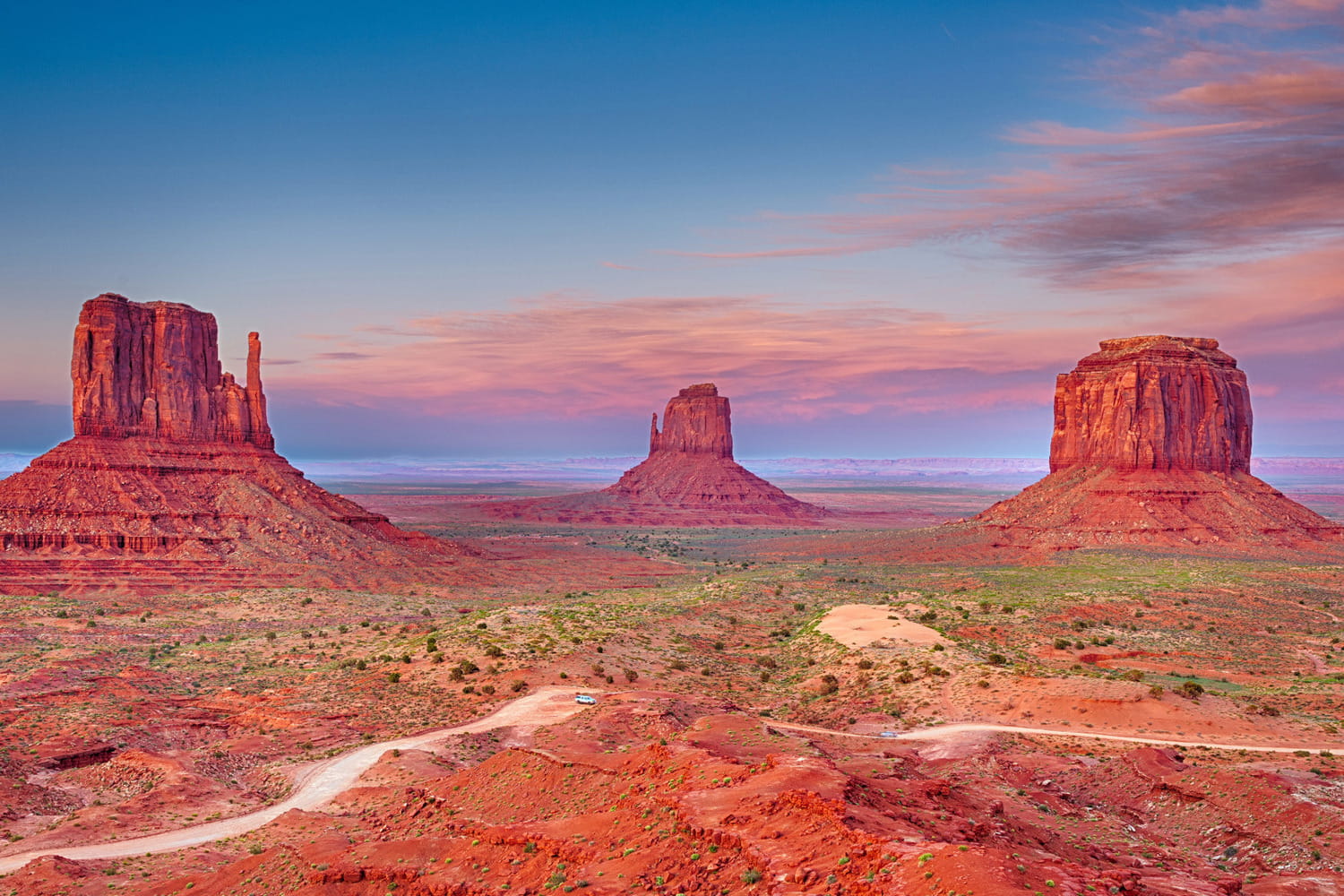
- Monument Valley with its iconic red rocks is one of the most photographed landscapes in the world. These majestic sandstone formations reach heights of 300 meters and became a symbol of the Wild West thanks to numerous westerns. Monument Valley is located on Navajo territory and is managed by representatives of this people. Geological formations here have been forming for millions of years under the influence of wind and water.
- Arizona became the 48th state of the United States only on February 14, 1912, being the last continental state admitted to the country. Before this, the territory belonged to Spain for a long time, then to Mexico, until it was annexed by the United States after the war of 1848. The day of admission to the union coincided with Valentine’s Day, so Arizona is sometimes called the “Valentine State”. The delay in admission was related to political disputes about states’ rights.
- Havasu Falls, located in the Havasupai reservation, is considered one of the most beautiful waterfalls in the world thanks to its blue-green water. The water color is created by high concentrations of calcium and magnesium carbonate in the water. The waterfall can only be reached on foot, on horseback, or by helicopter after obtaining special permission from the tribe. Every year, thousands of tourists wait for months for the opportunity to visit this paradise in the heart of the canyon.
- The Skywalk at the Grand Canyon is a horseshoe-shaped glass bridge that hangs 1,200 meters above the canyon floor. The bridge extends 21 meters from the edge of the cliff and can support a weight of over 70 tons. Visitors can walk on the transparent floor and look straight down at the dizzying depth. The construction of the bridge cost 30 million dollars and was completed in 2007.
- Antelope Canyon is the most photographed slot canyon in the world thanks to the play of light on the wavy sandstone walls. The canyon formed as a result of erosion of red sandstone during flash floods over millennia. The best lighting for photography is observed here in summer at noon, when sunlight penetrates deep inside. Visiting the canyon is only possible with a Navajo guide due to the danger of flash floods.
- The ghost town of Jerome is located at an elevation of 1,600 meters on a mountain slope and was once a thriving mining town with 15,000 residents. After the copper mines closed in the 1950s, the population decreased to 50 people. Today, Jerome has been reborn as a tourist center and artists’ town with a population of about 450 people. Many of the town’s buildings have retained their original appearance, creating a Wild West atmosphere.
Arizona continues to amaze with its diversity and unique features that make this state unrepeatable. Every corner of this land holds interesting facts and stories capable of captivating the most demanding traveler. From natural wonders to technological achievements, Arizona demonstrates a harmonious combination of past and future. Now you know incredible facts about a state that truly deserves to be called one of the most fascinating corners of America.


