
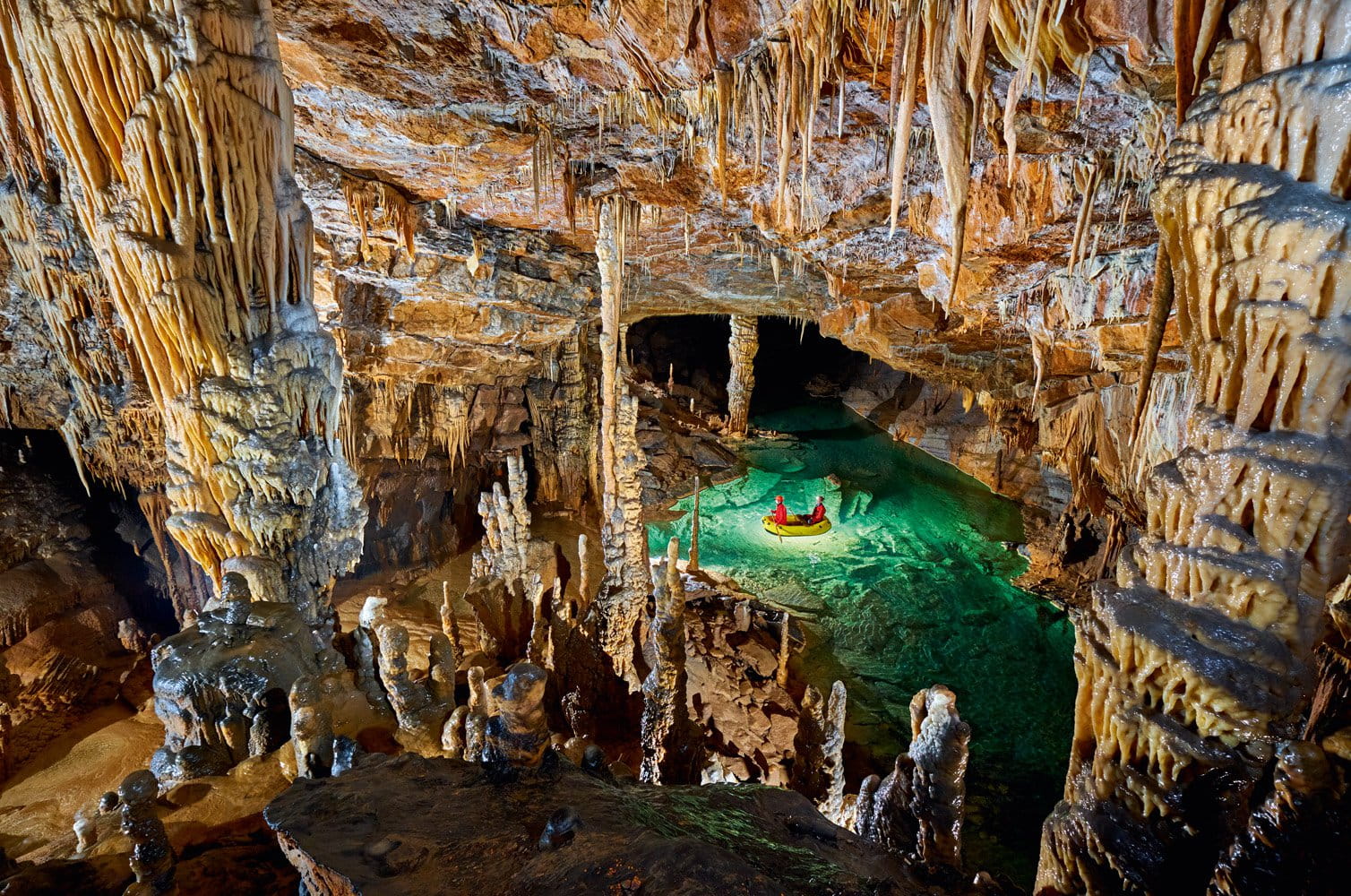
Beneath our feet, far from human eyes, nature has carved a true labyrinth—networks of caves, sinkholes, and underground rivers shaped by the quiet yet powerful process of rock dissolution. Karst is one of the most fascinating geological phenomena on Earth, influencing not only landscapes but also water resources, ecosystems, and even the mythologies of ancient peoples. Karst features occur on every continent and play a crucial role in the lives of humans, animals, and plants. If you thought you already knew everything about caves and sinkholes, prepare to discover a wealth of captivating facts you may never have heard before. Below is a collection of the most intriguing and lesser-known details about karst phenomena.
- Karst landscapes primarily form in regions rich in soluble sedimentary rocks such as limestone, dolomite, gypsum, and chalk. Rainwater, slightly acidic due to dissolved carbon dioxide, slowly dissolves these rocks over time, creating fractures that gradually widen into large underground voids. This process can take thousands or even millions of years. It is through this slow chemical weathering that caves, karrens, sinkholes, and other distinctive landforms emerge.
- The world’s longest known karst cave system is Mammoth Cave in the United States, with more than 675 kilometers of mapped passages. Exploration continues to this day, and scientists believe the full extent of the system remains undiscovered. Mammoth Cave is part of a UNESCO World Heritage Site and has yielded archaeological evidence of early human activity as well as unique species of eyeless, pigment-free cave-dwelling organisms.
- Karst springs—often called “vauclusian” or “vrulja” springs—are characterized by the sudden emergence of groundwater at the surface, sometimes with tremendous force. Some of these springs discharge thousands of liters of water per second and serve as primary sources for major rivers, especially in the Balkans and other karst-rich regions. Because the water filters naturally through layers of rock, it is typically exceptionally pure and clear.
- Sinkholes, or “dolines,” form when the roof of an underground cavity collapses under the weight of overlying rock and soil. As subterranean voids grow larger, the surface layer can no longer support itself and suddenly gives way, creating funnel-shaped depressions. These features can range from just a few meters to over a kilometer in diameter. In places like Mexico and China, massive sinkholes have become popular tourist destinations.
- China is home to the world’s largest karst sinkholes, known locally as “tiankeng” or “heavenly pits.” The most famous, Xiaozhai Tiankeng, plunges over 600 meters deep and spans nearly a kilometer across. These giant pits often harbor isolated ecosystems, cut off from the outside world for millennia. Many host endemic plant and animal species found nowhere else on Earth.
- Karst caves frequently act as natural time capsules, preserving archaeological artifacts, prehistoric cave paintings, and fossils of extinct animals. For example, Paleolithic art over 30,000 years old has been discovered in caves across France and Spain. The stable, humid conditions inside caves help preserve organic remains, including bones and tools. Some karst caves were inhabited by Neanderthals and later by early Homo sapiens.
- Karst regions are extremely vulnerable to pollution because contaminants can travel rapidly through fissures and conduits directly into groundwater supplies. Even a small chemical spill on the surface can quickly contaminate drinking water sources used by entire communities. As a result, karst areas require strict environmental protection and careful land-use planning. Many countries have established karst conservation zones to safeguard these fragile systems.
- Certain karst caves maintain unique microclimates that differ significantly from external conditions. Temperatures remain remarkably stable year-round, while humidity levels stay consistently high. These environments support highly specialized life forms, including blind insects, translucent crustaceans, and even fish adapted exclusively to darkness. Many of these species are troglobites—true cave dwellers that cannot survive outside their subterranean habitats.
- Karst aquifers store vast quantities of freshwater and serve as critical water sources for millions of people worldwide. However, because water moves quickly through karst conduits, predicting water availability and quality is challenging. In many parts of the Balkans, the Middle East, and Southeast Asia, karst systems supply the majority of drinking water. Understanding these systems is therefore essential not only for science but also for public health and sustainable development.
- The term “karst” originates from the Kras Plateau, a limestone region straddling the border between Slovenia and Italy, where these landforms were first scientifically described in the 19th century. Geologists studying the area coined the term to describe the distinctive landscape shaped by rock dissolution. Over time, “karst” became the standard scientific term for similar terrains worldwide. Today, karstology is a recognized subdiscipline of geology and hydrogeology.
- Karst landscapes often possess extraordinary scenic beauty and attract millions of visitors each year. Examples include Plitvice Lakes National Park in Croatia and the Li River valley near Guilin in China, where towering limestone peaks rise above emerald waters. These sites inspire artists, poets, and filmmakers and are frequently featured in global media. Many karst regions are protected as UNESCO World Heritage Sites due to their natural and cultural significance.
- Inside karst caves, mineral deposits create stunning formations such as stalactites, stalagmites, helictites, and cave pearls. These structures grow incredibly slowly—often less than a millimeter per century—as mineral-rich water drips and evaporates. Beyond their aesthetic value, these speleothems contain valuable climate records. By analyzing their isotopic composition, scientists can reconstruct past rainfall patterns, temperatures, and even atmospheric conditions stretching back hundreds of thousands of years.
- Karst terrain can pose serious risks to infrastructure because the ground may collapse without warning. Urban areas built over karst bedrock occasionally experience sudden sinkhole formation beneath roads, buildings, or railways. To mitigate these hazards, thorough geological surveys and subsurface mapping are essential before any major construction. Several countries maintain detailed karst hazard maps to guide urban planning and emergency response.
- Throughout history, karst caves have inspired myths and spiritual beliefs, often viewed as gateways to the underworld or realms of spirits and ancestors. In Slavic folklore, caves were considered sacred spaces inhabited by deities or supernatural beings. Many indigenous cultures performed rituals in caves to communicate with the dead or seek divine guidance. These traditions continue to shape cultural attitudes toward caves and karst landscapes today.
These interesting facts about karst phenomena only begin to reveal the complexity and wonder of this natural process. The astonishing details you may not have known illustrate how deeply karst is woven into Earth’s geology, ecology, and human heritage. The captivating insights into karst remind us that even beneath our feet lies a hidden world waiting to be explored, understood, and protected.


