
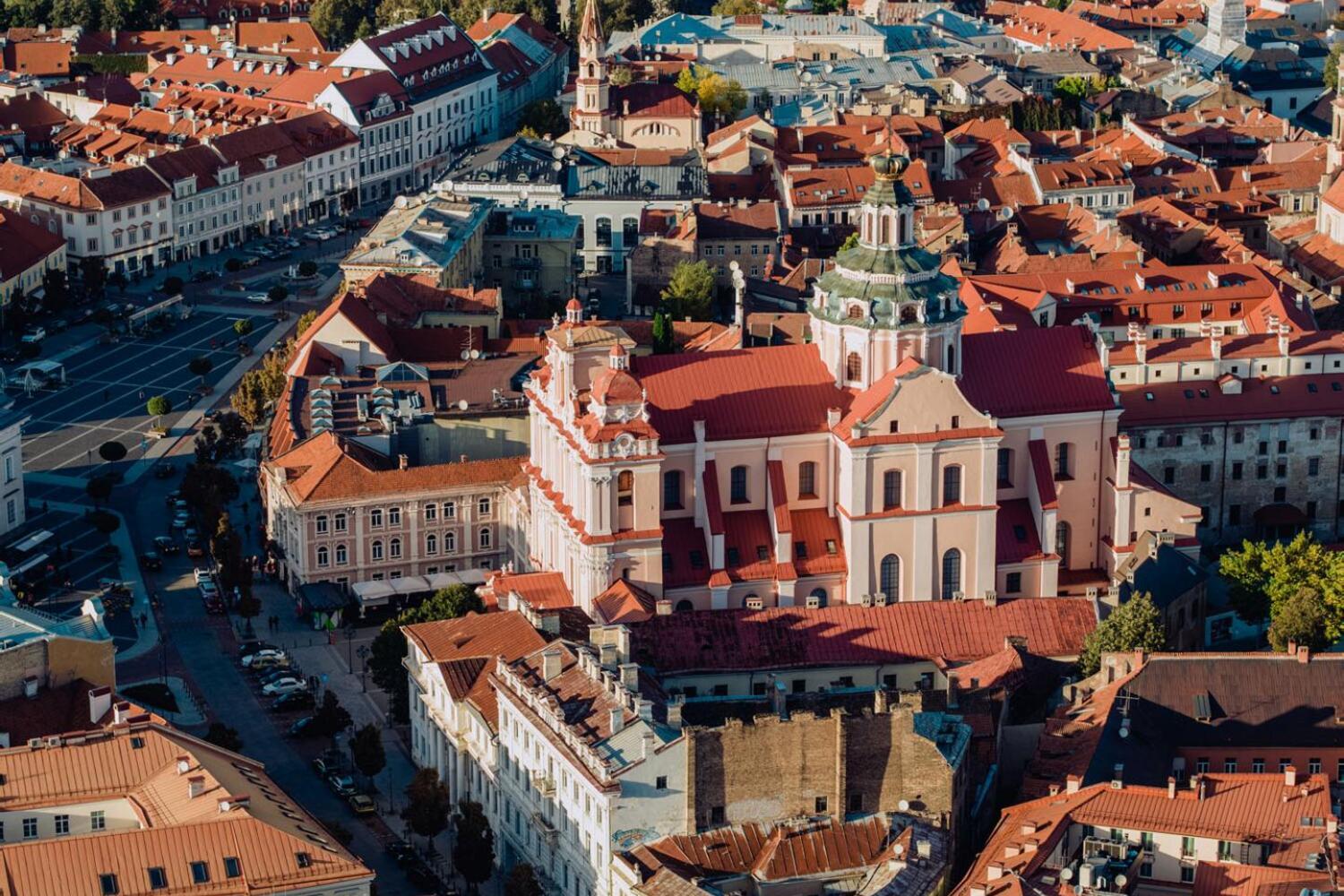
Vilnius is far more than just the capital of Lithuania—it is a true open-air museum where every street, building, and park corner preserves traces of centuries-old history. This UNESCO World Heritage city harmoniously blends Gothic spires, Baroque façades, Soviet-era architecture, and modern urban design. Many consider Vilnius one of Europe’s most underrated cities, yet it harbors remarkable historical gems, cultural treasures, and natural wonders. If you thought you knew everything about this city, you’re in for a wealth of fascinating facts you may never have heard before. Below is a collection of the most intriguing and lesser-known details about Vilnius.
- Vilnius is the easternmost capital city among all European Union member states, making it geographically unique compared to other European capitals. This location has deeply influenced the city’s cultural landscape, where Eastern and Western traditions intertwine. Throughout history, its position made Vilnius a crossroads of battles, intellectual exchange, and migration flows. Despite its eastern coordinates, the city has always aspired to a distinctly European identity.
- Vilnius is home to the oldest university in Eastern Europe—Vilnius University, founded in 1579. This institution played a pivotal role in advancing education, science, and culture not only in Lithuania but across the entire region. Its campus retains original Baroque architecture and houses one of the oldest libraries in Europe. To this day, the university remains the nation’s leading academic and intellectual hub.
- The Old Town of Vilnius is one of the largest surviving medieval old towns in Europe, covering over 360 hectares. It was inscribed on the UNESCO World Heritage List in 1994 due to its exceptional architectural integrity and preservation. More than 1,500 buildings representing various eras—from Gothic to Art Nouveau—can be found within its boundaries. Walking its narrow cobblestone streets feels like stepping back through time.
- According to legend, Vilnius was founded by Grand Duke Gediminas, who dreamt of an iron wolf howling on a hilltop. Interpreting this vision as a divine sign, he ordered a fortress built on that very spot—the seed from which the future city would grow. The golden wolf from this tale remains a central symbol in Vilnius’s coat of arms. This founding myth has become deeply embedded in the city’s cultural identity and frequently appears in art and literature.
- Vilnius contains Lithuania’s highest point—Aukštojas Hill, which rises to 293.84 meters above sea level. Though not a mountain in the traditional sense, it holds great national significance and is a popular destination for visitors. A commemorative marker stands at its summit, offering panoramic views of the surrounding forests and city outskirts. Many locals regard this hill as the spiritual heart of the country.
- In Vilnius lived and worked Chaim Zloty Zhagar, a renowned Jewish poet who wrote Lithuania’s first national anthem. His contribution to shaping national identity is immense, though his name remains relatively unknown outside Lithuania. He was also an active participant in the vibrant Jewish cultural life of a city once called the “Jerusalem of the North.” His poetry reflects the complex, multicultural history of Vilnius, where many languages and peoples converged.
- Vilnius boasts the highest concentration of Baroque churches per square kilometer in Europe. This architectural style dominated the city during the 17th and 18th centuries when Vilnius was part of the Polish–Lithuanian Commonwealth. The Baroque era gave the city a distinctive visual character that sets it apart from other European capitals. Many of these churches remain active places of worship today.
- Vilnius hosts Europe’s only Museum of Illusions, dedicated to optical illusions, anamorphoses, and interactive exhibits. Its unconventional concept has made it a favorite among tourists and locals alike. Rather than passive observation, the museum encourages hands-on participation, making visits especially engaging. It’s an ideal stop for those seeking a break from traditional museums.
- The city features Paupio Street, recognized as the longest street in Lithuania, stretching over 10 kilometers. It runs through diverse neighborhoods—from the historic center to modern suburbs. Along its length, one can find both centuries-old buildings and contemporary shopping centers. The street serves as a living timeline of Vilnius’s urban evolution.
- Vilnius ranks among Europe’s greenest capitals, with more than 46% of its area covered by parks, forests, and green spaces. Among them is the famous Vingis Park, once a key site for mass rallies during Lithuania’s independence movement. This abundance of greenery not only improves air quality but also creates a uniquely peaceful and welcoming atmosphere. The city actively supports environmental and greening initiatives.
- Vilnius is home to the country’s only planetarium, opened in 1963. It remains a popular destination for school groups and astronomy enthusiasts. Regular lectures, sky shows, and space-themed events are held year-round. The planetarium plays a vital role in sparking scientific curiosity among young people.
- Vilnius holds the distinction of being the first city in the world to be named European Capital of Culture twice—in 2009 and again in 2022. This honor underscores the city’s vibrant cultural life and its significant contribution to Europe’s shared heritage. During these years, hundreds of festivals, exhibitions, concerts, and theatrical performances took place across the city. These initiatives significantly raised Vilnius’s international profile.
- Vilnius houses Lithuania’s oldest continuously operating theater—the Vilnius City Theatre, established in 1920. It played a crucial role in developing national drama and acting traditions. Housed in a building featuring Art Nouveau elements, the theater exudes charm and historical character. It continues to stage both classical and contemporary productions.
- The Gediminas Tower, a remnant of the medieval Upper Castle built in the 14th century, stands as one of Vilnius’s most iconic landmarks. It is the only surviving structure of the original castle complex. From its summit, visitors enjoy sweeping views of the entire city. The tower is among the most visited historical sites in Vilnius.
- Vilnius is one of the few cities in the world where you can see the original “Chapel of Skulls”—St. Nicholas Chapel, adorned with thousands of human skulls. Built in the 19th century as a memorial to soldiers who died in the Napoleonic Wars, it combines macabre aesthetics with profound symbolism. Such monuments are exceptionally rare in Europe.
- Vilnius is home to the largest zoo in the Baltic states, founded in 1938. It shelters over 2,000 animals representing approximately 200 species. The zoo actively participates in international programs for the conservation of endangered species. It is a beloved destination for families and nature lovers alike.
- Vilnius is a city of striking contrasts, where Gothic cathedrals stand alongside Soviet-era apartment blocks and sleek glass skyscrapers. This architectural fusion creates a unique cityscape unlike any other European capital. The blend of historical layers turns Vilnius into a living museum of urban history. Every district tells its own story.
- The city celebrates an annual Vilnius Day in April, marked by concerts, fairs, art exhibitions, and fireworks. This festive occasion brings together residents and guests from across the country. It reflects a strong sense of local pride and deep affection for the city.
- Vilnius was among the first cities in Europe to introduce electric street lighting, as early as the late 19th century while still part of the Russian Empire. This forward-thinking move demonstrated the progressive mindset of local authorities and their commitment to modernization. Today, Vilnius continues to embrace innovation in technology and urban development.
- Vilnius hosts Lithuania’s only Energy Museum, located in a former thermal power plant. It offers a unique perspective on the nation’s energy history and technological progress. Exhibits include original machinery, tools, and archival documents. The museum appeals equally to engineers and history buffs.
These interesting facts about Vilnius only begin to reveal the depth of its historical richness, cultural diversity, and natural beauty. The astonishing details you may not have known illustrate just how layered and multifaceted this city truly is. The captivating insights into Vilnius inspire exploration, discovery, and deeper appreciation—because every corner of this city holds a story worth hearing.


