
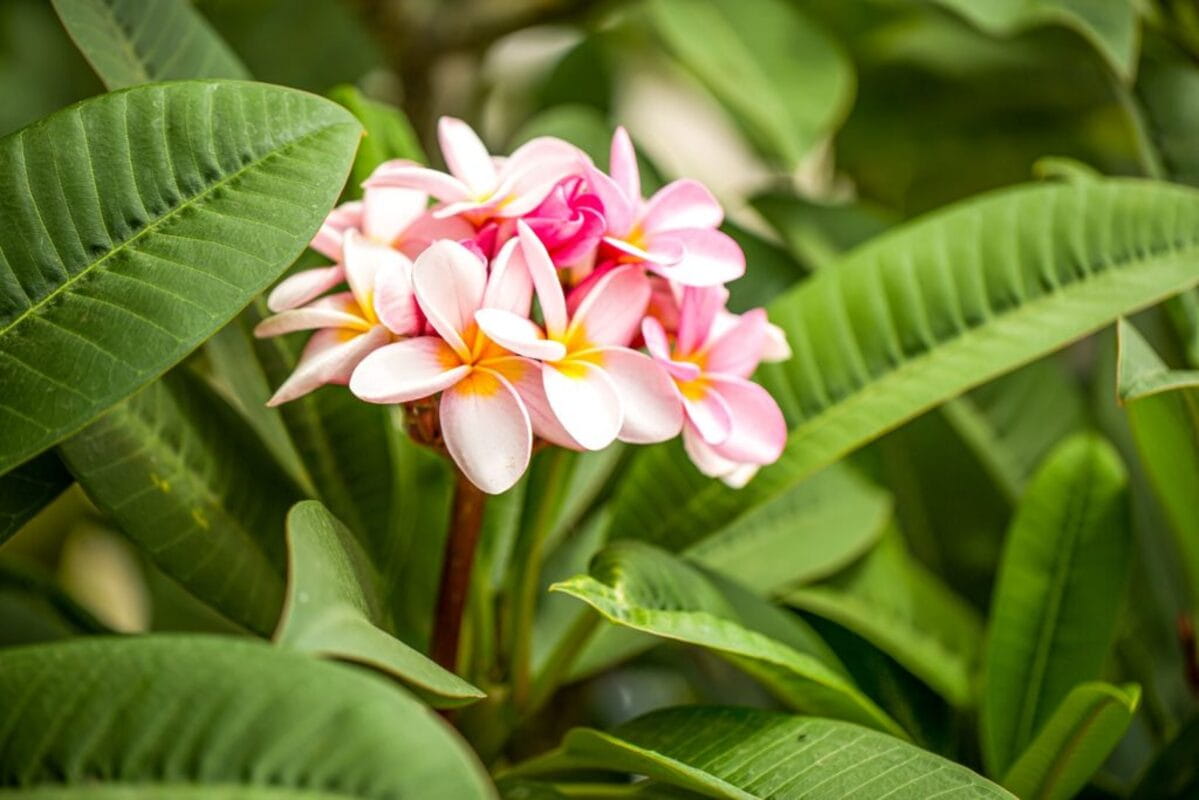
Plumeria is far more than just a tropical beauty with fragrant flowers—it is a true symbol of exoticism, spirituality, and natural elegance. Its white, pink, or yellow blossoms, scented with the delicate perfume of jasmine, are most famously associated with Hawaii, where they are woven into traditional lei garlands to welcome island visitors. Yet this plant has much deeper roots—stretching from ancient Mesoamerican civilizations to modern botanical collections around the globe. In this article, you’ll discover fascinating facts about its origin, biology, cultural significance, and even medicinal properties. You might not have known just how multifaceted and symbolically rich this seemingly ornamental flower truly is.
- Plumeria belongs to the dogbane family (Apocynaceae) and originates from tropical regions of the Americas—from Mexico through Brazil to the Caribbean islands. It was named after Charles Plumier, a 17th-century French botanist who documented the flora of the New World during his expeditions. The plant has adapted exceptionally well to warm climates and is now cultivated across tropical and subtropical zones worldwide. On Hawaii, it became so beloved that it is often mistaken for a native species.
- Plumeria is a deciduous shrub or small tree that can reach heights of 5–8 meters in its natural habitat. It features thick, succulent branches that exude a milky sap when cut or broken. This sap contains toxic compounds, making the plant poisonous to humans and pets if ingested. However, these very chemicals provide plumeria with strong resistance to pests and diseases, contributing to its hardiness.
- Plumeria flowers captivate with their simple yet graceful form—five rounded petals arranged in a star-like or pinwheel shape. Their fragrance is strongest in the evening, an adaptation tied to their primary pollinators: nocturnal moths. During the day, the flowers remain relatively closed and quiet; at night, they release their scent to attract insects. This is why plumerias are often planted near patios or windows—to enjoy their perfume during twilight hours.
- In Hawaii, plumeria flowers are essential components of lei—traditional floral garlands used to greet guests, celebrate weddings, or honor the deceased. There’s even a symbolic meaning behind how a woman wears a plumeria: behind the right ear means she is single, while behind the left indicates she is taken. This custom is common not only in Hawaii but throughout Polynesia. Over time, plumeria has become deeply woven into local identity and cultural expression.
- Among ancient Mesoamerican civilizations—particularly the Maya and Aztecs—plumeria held sacred significance. It was used in rituals dedicated to goddesses of life, death, and fertility. Because it could bloom even on rocky, nutrient-poor soils, it came to symbolize resilience and spiritual awakening. Archaeologists have found depictions of plumeria on ceremonial pottery and temple carvings, underscoring its religious importance.
- Plumeria cannot tolerate frost and is grown as a houseplant or in greenhouses in temperate climates. During summer, it can be placed outdoors, but must be brought inside before temperatures drop in autumn. It thrives in bright, indirect sunlight and well-draining soil. With proper care, it may bloom multiple times a year, producing hundreds of fragrant flowers that delight its caretaker.
- In traditional Latin American folk medicine, plumeria is used cautiously—its leaves and flowers are applied to treat inflammation, fever, and digestive ailments. Due to the toxicity of its sap, such remedies are administered only under the guidance of experienced healers. Modern scientific studies have identified antioxidant, anti-inflammatory, and even potential anticancer compounds in plumeria extracts. Researchers continue to explore its pharmaceutical promise.
- Plumeria is easily propagated from cuttings—simply take a healthy branch, let it dry for several days to form a callus, then plant it in sand or a light potting mix. Roots typically develop within 4 to 8 weeks if kept warm and watered moderately. This method preserves the exact characteristics of the parent plant. Seed propagation is rare, as it is slower and less predictable, often yielding plants that differ from the original.
- Despite their powerful scent, plumeria flowers produce no nectar—a clever example of pollinator deception. Moths are lured by the aroma, expecting a food reward, but instead inadvertently transfer pollen from flower to flower. This strategy saves the plant energy that would otherwise be spent producing nectar. It’s a remarkable illustration of evolutionary efficiency and adaptation.
- There are over 12 recognized species of plumeria, but thanks to hybridization, thousands of cultivated varieties exist—with blooms ranging from pure white and golden yellow to deep pink, magenta, violet, and even bicolored patterns. Some cultivars feature double (frilled) petals, while others boast an especially intense fragrance. Collectors around the world prize rare hybrids, with some cuttings selling for hundreds of dollars. Unique petal coloration and form are especially valued.
- Plumeria frequently appears in art, photography, and fashion as an emblem of the tropics, relaxation, and romance. Its scent is a key note in perfumes that blend jasmine, gardenia, and ylang-ylang. In literature and film, plumeria sometimes symbolizes fleeting beauty or hidden danger—due to its toxicity beneath its allure. This duality of charm and caution makes it a compelling motif for creative expression.
- In Buddhism, plumeria (often called frangipani in Asia) is considered a sacred flower representing purity, devotion, and enlightenment. Its blossoms are offered at temples as gifts to deities. In Thailand and Laos, plumeria trees are commonly planted around monasteries and shrines. Though not native to Asia, it has been fully embraced as part of the region’s spiritual landscape.
- Plumeria grows very slowly in its early years—sometimes only 15–20 cm per year. But with age, ample light, and proper care, it begins to branch vigorously and bloom profusely. A well-tended plumeria can live for decades, becoming a cherished heirloom passed down through generations. Many gardeners share cuttings with family and friends as living gifts.
- Despite its tropical origins, plumeria is highly drought-tolerant and uses water very efficiently. This makes it ideal for gardens in arid or water-restricted regions. During its dormant period in winter, it requires little to no watering—only occasional light moisture to prevent root desiccation. This resilience, paired with its breathtaking beauty, makes plumeria truly exceptional.
These interesting facts about plumeria reveal that behind its delicate appearance lies a complex, culturally rich, and biologically sophisticated plant. The astonishing details about its role in religion, healing, and horticulture show plumeria as a bridge between nature, humanity, and the sacred. Captivating insights into its evolutionary strategies and symbolic meanings highlight how it transcends the category of mere ornamental flora. You might not have known that plumeria is not just a flower—but a living artifact of tropical civilization, still inspiring the world today.


