
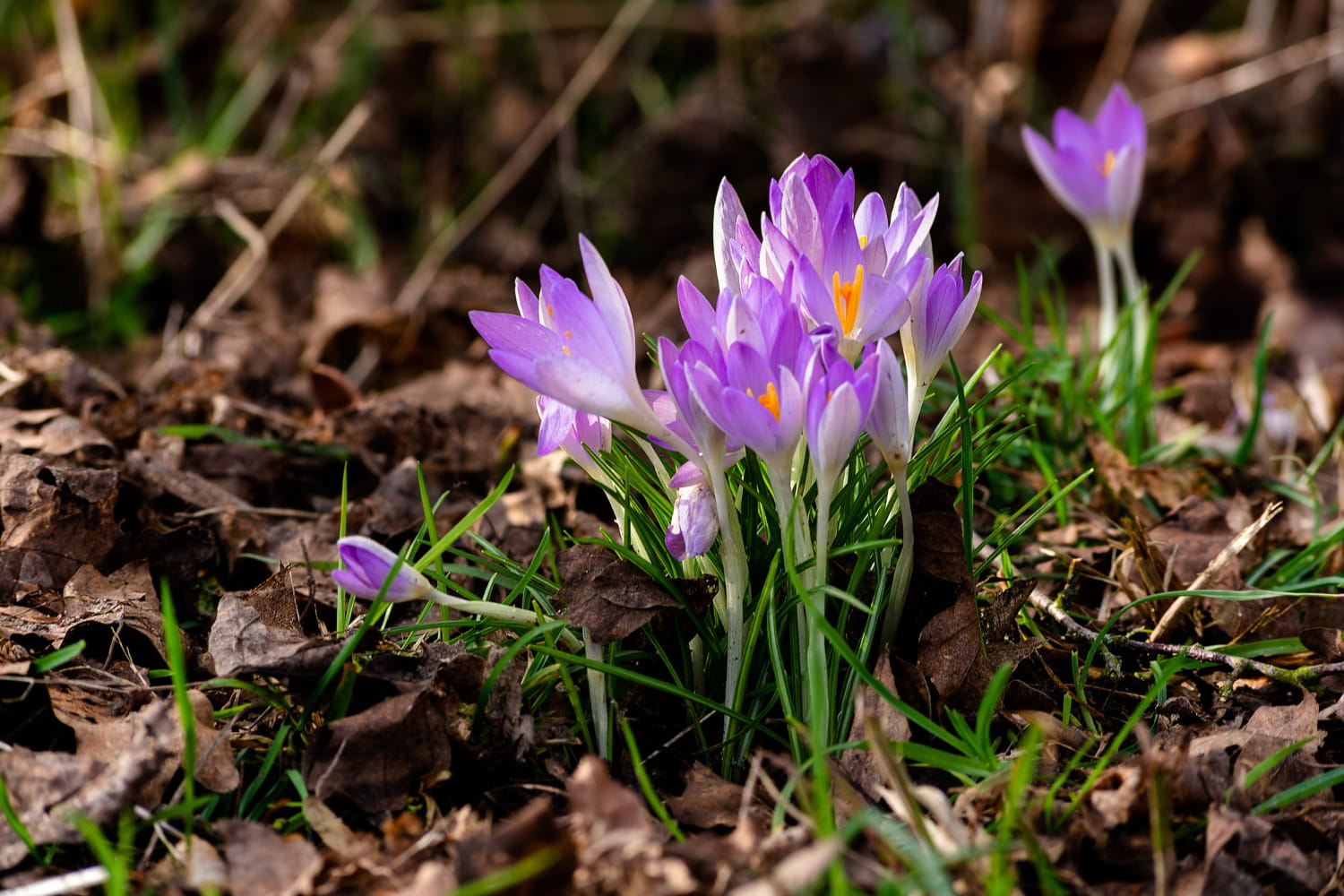
Crocuses are far more than just the first spring flowers that push through lingering snow—they are true symbols of renewal, hope, and natural resilience. These delicate yet remarkably hardy plants belong to the iris family and have deep roots in human history, culture, and even economics. The most famous among them—the saffron crocus—yields the world’s most expensive spice: saffron. In this article, you’ll discover fascinating facts about their biology, distribution, uses, and the mythology surrounding crocuses. You might not have known just how multifaceted and significant these seemingly modest flowers truly are.
- Crocuses belong to a genus of perennial bulbous plants, with over 90 species known today, ranging from Europe to Central Asia. Most bloom in spring, but some—like the autumn crocus—flower in September or October. These plants are frost-resistant and often emerge through snow to bloom as soon as the ground begins to thaw. This remarkable trait makes them one of the earliest harbingers of spring.
- Saffron, the world’s most expensive spice, is harvested from the stigmas of the saffron crocus, which blooms in autumn. Producing just one gram of saffron requires hand-picking the stigmas from approximately 150 flowers. Due to its labor-intensive harvesting and low yield, saffron is worth more than gold by weight. It is used not only in cooking but also in medicine, perfumery, and as a natural dye.
- Crocuses do not have a true stem in the conventional sense—their flowers grow directly from the corm (a bulb-like structure), while leaves appear simultaneously or shortly afterward. This adaptation allows them to make the most of the brief spring window for photosynthesis. After flowering, the leaves continue to nourish the corm, storing energy for the next growing season. This cycle ensures their survival for many years.
- Crocuses are among the first nectar sources for bees in early spring, providing vital sustenance for colonies emerging from winter dormancy. Without these early blooms, many bee populations would struggle to rebuild their numbers after the cold months. Thus, crocuses play a crucial role in supporting pollinator health and overall biodiversity. Gardeners often plant them specifically to aid local pollinator communities.
- In ancient Greece, crocuses were sacred to Aphrodite, goddess of love, and symbolized youth and beauty. According to myth, a young man named Crocus was deeply in love with the nymph Smilax, but the gods transformed him into a flower due to his unrequited passion. Since then, the crocus has represented fleeting beauty and tenderness. Similar legends exist in other cultures, where the flower is associated with sacrifice, purity, or spiritual awakening.
- Crocuses reproduce easily through corm offsets—each mother corm produces several daughter corms annually. This allows them to quickly form dense patches in lawns, woodlands, or garden beds. However, this vegetative propagation reduces genetic diversity, making seed reproduction essential for long-term species conservation. In the wild, crocuses often create spectacular “crocus fields” that become seasonal tourist attractions.
- Crocuses are toxic to many animals, especially dogs and cats, due to alkaloids present in their corms. Ingestion can cause vomiting, diarrhea, seizures, or even liver damage. Therefore, gardeners with pets should exercise caution when planting them. However, the flowers of the saffron crocus are safe for humans and even beneficial in moderate amounts.
- Crocuses are widely used in landscape design as one of the most beloved early-spring accents, thanks to their vivid colors—from pure white and sky blue to deep violet. They are often planted in clusters to create a carpet-like effect. They pair beautifully with other spring bulbs like snowdrops, daffodils, and grape hyacinths. Crocuses also thrive in containers and even on lawns, where they bloom before grass begins its vigorous growth.
- Unlike many spring plants, crocuses are unfazed by late frosts and can bloom even at sub-zero temperatures. Their flowers close at night or during rain to protect pollen and nectar. When sunlight returns, they reopen, revealing their full splendor. This adaptive behavior helps them maximize reproductive success during their short flowering period.
- In medieval Europe, saffron was used not only as a spice but also as a remedy for depression, insomnia, and digestive issues. Modern research confirms that saffron possesses antioxidant, anti-inflammatory, and even antidepressant properties. Still, it must be used cautiously, as large doses can be toxic. Interestingly, saffron was also prized for dyeing fabrics a rich golden-red hue.
- Crocuses are not merely ornamental—they are also important subjects in botanical and genetic research. Their corms contain unique biochemical compounds studied for potential pharmaceutical applications. Additionally, crocuses serve as model organisms for understanding plant adaptation to climate change, particularly regarding shifts in early-spring flowering times. Many botanical gardens maintain collections of rare crocus species to preserve genetic diversity.
- In countries like the Netherlands and Iran, crocuses hold significant economic value due to saffron cultivation. Iran produces over 90% of the world’s saffron, while the Kashmir region of India is also renowned for its high-quality harvest. Saffron farming remains largely manual, preserving traditional methods passed down through generations. This makes saffron not just a spice, but a living part of cultural heritage.
- Crocuses can remain in the same spot for 5–7 years without needing to be replanted, making them ideal for low-maintenance gardens. They thrive in sunny locations with well-drained soil and cannot tolerate waterlogged conditions. After blooming, their foliage should not be cut back—it must fully yellow and die down naturally so the corm can store enough energy. With proper care, a single corm can produce flowers year after year.
- In Christian symbolism, the crocus is sometimes associated with the Resurrection of Christ, as it “rises” from the earth in spring—a metaphor for spiritual rebirth. Medieval art often featured crocuses in icons and stained-glass windows as emblems of hope and new life. This symbolism endures in modern culture, where the crocus frequently marks the beginning of a new cycle. Even in garden design, it is used to evoke a sense of surface-level renewal after winter’s dormancy.
These interesting facts about crocuses reveal that beneath their delicate appearance lies profound ecological, cultural, and economic significance. The astonishing details about their role in supporting pollinators and producing saffron highlight crocuses as true heroes of the spring season. Captivating insights into their mythological and symbolic meanings underscore just how deeply these flowers are woven into the human story. You might not have known that the crocus is not merely a beautiful bloom, but a living bridge between nature, culture, and commerce.


