
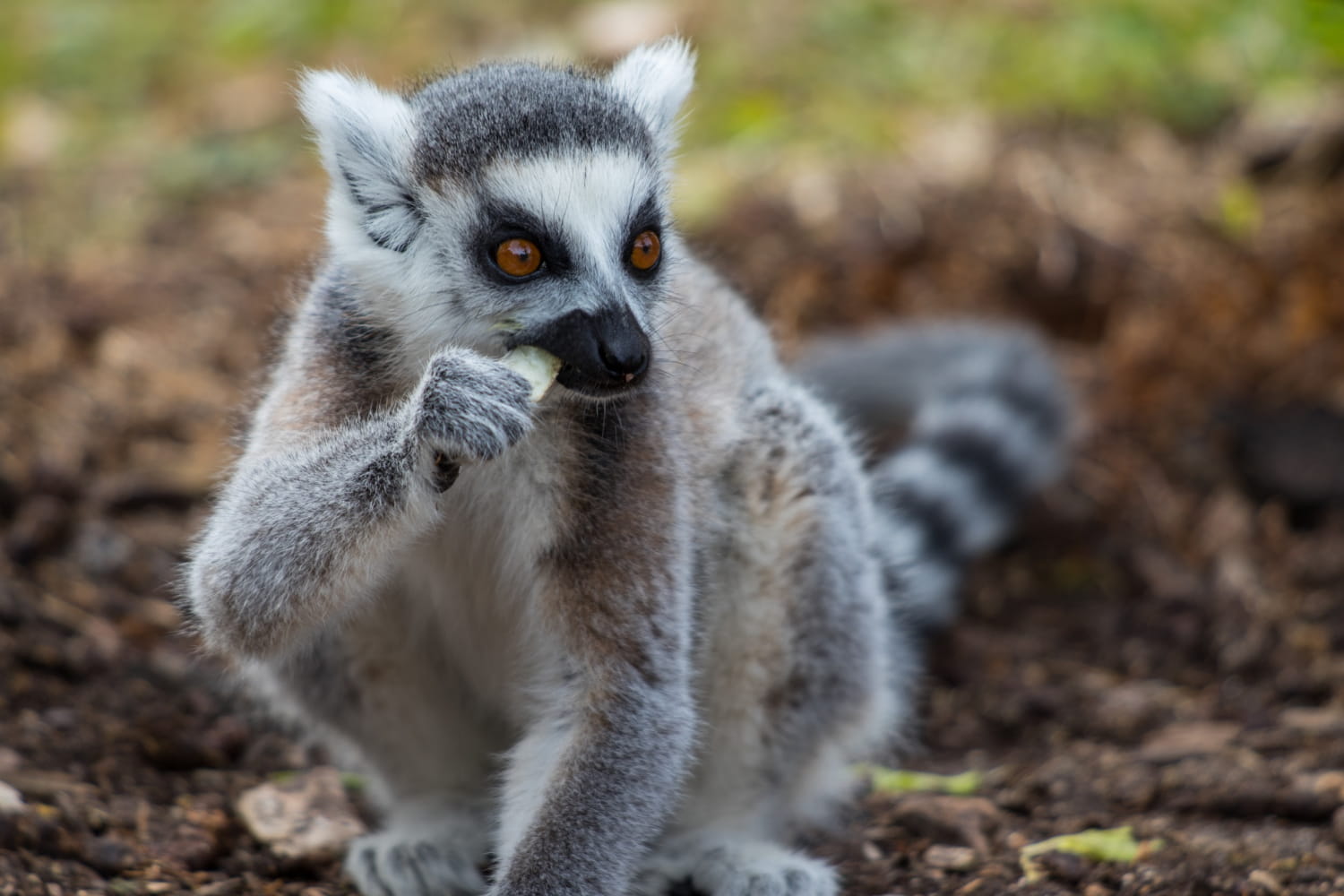
Lemurs are far more than just cute primates with big eyes—they are true evolutionary marvels found only on a single island in the entire world: Madagascar. They diverged from other primates over 60 million years ago and evolved in complete isolation, giving rise to an astonishing diversity of species—from tiny mouse lemurs to giant forms that have since gone extinct. Today, the vast majority of lemur species are endangered due to deforestation and hunting, despite their critical role in maintaining Madagascar’s unique ecosystems. In this article, you’ll discover fascinating facts about their behavior, biology, diversity, and cultural significance. You might not have known just how complex, social, and vital lemurs are to global biodiversity conservation.
- Lemurs live exclusively on the island of Madagascar and a few small neighboring islands, such as the Comoros, where they were introduced by humans. Their oceanic isolation allowed them to evolve separately from all other primates for tens of millions of years. That’s why Madagascar has no monkeys, gorillas, or chimpanzees—only lemurs. This geographic restriction makes them among the most endemic mammals on Earth.
- There are over 100 recognized lemur species, and scientists continue to discover new ones every few years. Among them are extremely small species like the pygmy mouse lemur, which weighs only about 30 grams, and large ones like the indri, which can reach one meter in length. Most species possess unique adaptations—from strictly nocturnal lifestyles to highly specialized diets. This extraordinary variety makes lemurs some of the most adaptable primates on the planet.
- The largest living lemur is the indri, famous for its loud, hauntingly melodic calls that can be heard up to 3 kilometers away. These vocalizations serve to communicate between groups, mark territory, and strengthen social bonds. Indris live in monogamous family units and spend nearly all their time in trees. Unlike most other lemurs, they lack a long tail.
- The world’s smallest lemur is the pygmy mouse lemur, which easily fits in the palm of a human hand. It is primarily active at night and sleeps during the day hidden in tree hollows or dense foliage. During the cool dry season, it enters a state of torpor to conserve energy. Its enormous eyes allow excellent night vision, while its long hind legs enable agile leaps between branches.
- Lemurs play a crucial role in seed dispersal for many Malagasy plants, especially baobabs. They eat fruit and later excrete the seeds, often far from the parent tree, aiding forest regeneration. Without lemurs, numerous plant species would struggle to reproduce, potentially triggering ecosystem collapse. For this reason, they are often called the “gardeners of the forest.”
- Many lemurs possess a specialized “toothcomb”—a row of forward-facing lower incisors used for grooming fur. Combined with an elongated second toe on their hind feet, this adaptation allows them to meticulously clean themselves and others in their group. This social grooming reinforces group cohesion and maintains hygiene. It’s a clear sign of advanced social organization among primates.
- Sifakas are renowned for their vertical, sideways leaps between trees that resemble dancing. On the ground, they cannot run, so they move by hopping bipedally with arms held high for balance. This distinctive “dance” has become iconic and frequently appears in wildlife documentaries. Sifakas also consume leaves that are toxic or indigestible to most other animals.
- In some lemur species, such as the ring-tailed lemur, females dominate males—a rare trait among mammals. Females get first access to food, choose the best resting spots, and often display aggression toward males. This matriarchal structure helps ensure offspring survival in resource-limited environments. It also reveals that primate social systems can be far more diverse than previously assumed.
- Lemurs have a highly developed sense of smell, unlike most primates who rely primarily on vision. They use scent marking to define territories, attract mates, and recognize individuals. Many species have specialized scent glands on their wrists or chests that secrete distinct odors. This reflects their retention of ancestral traits lost in higher primates.
- While most lemurs are diurnal, some—like the mouse lemur—are strictly nocturnal. Nocturnal species have large eyes to maximize light capture and highly sensitive ears. By being active at night, they avoid competition with daytime species, occupying a different temporal niche within the ecosystem. This is a classic example of evolutionary adaptation to limited island resources.
- Lemurs are capable of using tools, though such behavior is rarely observed. In captivity, some individuals have used sticks to extract food or stones to crack open nuts. In the wild, tool use remains almost undocumented, possibly due to lower necessity or alternative survival strategies. Nevertheless, this hints at underestimated cognitive abilities.
- Over 95% of lemur species are classified as threatened with extinction—the highest percentage of any mammalian group. Primary threats include slash-and-burn agriculture, logging, mining, and habitat fragmentation. Although illegal, hunting for bushmeat persists in some regions. Without urgent conservation action, several species could vanish within decades.
- In Malagasy culture, lemurs are often regarded as sacred beings or ancestral spirits. For instance, the indri is considered taboo to hunt because of its human-like posture and mournful cries, believed to echo the voices of the dead. Many local legends describe lemurs as guardians of the forest or reincarnations of ancestors. This cultural reverence sometimes aids conservation efforts.
- Lemurs employ a rich array of communication methods—including vocalizations, body postures, facial expressions, and scent signals. Some species produce more than 20 distinct calls, each with specific meanings, such as predator alerts or mating invitations. Their expressive faces and gestures further convey emotions and intentions. This sophisticated communication system points to high social intelligence.
- Extinct giant lemurs, such as Archaeoindris, were as large as gorillas and weighed up to 200 kilograms. They disappeared only a few thousand years ago, likely due to human arrival, habitat change, and hunting. Their bones, found in caves across Madagascar, reveal a lost world of megafauna. Modern lemurs represent just a fraction of the island’s former primate diversity.
These interesting facts about lemurs show they are not merely exotic animals but intelligent, socially complex creatures with a unique evolutionary legacy. The astonishing details about their ecological role and cultural symbolism highlight a profound connection between people, nature, and the island of Madagascar. Captivating insights into their behavior and cognition dismantle outdated stereotypes of “simple” primates. You might not have known that lemurs are not only the emblem of Madagascar but also irreplaceable guardians of one of Earth’s most extraordinary biodiversity hotspots.


