
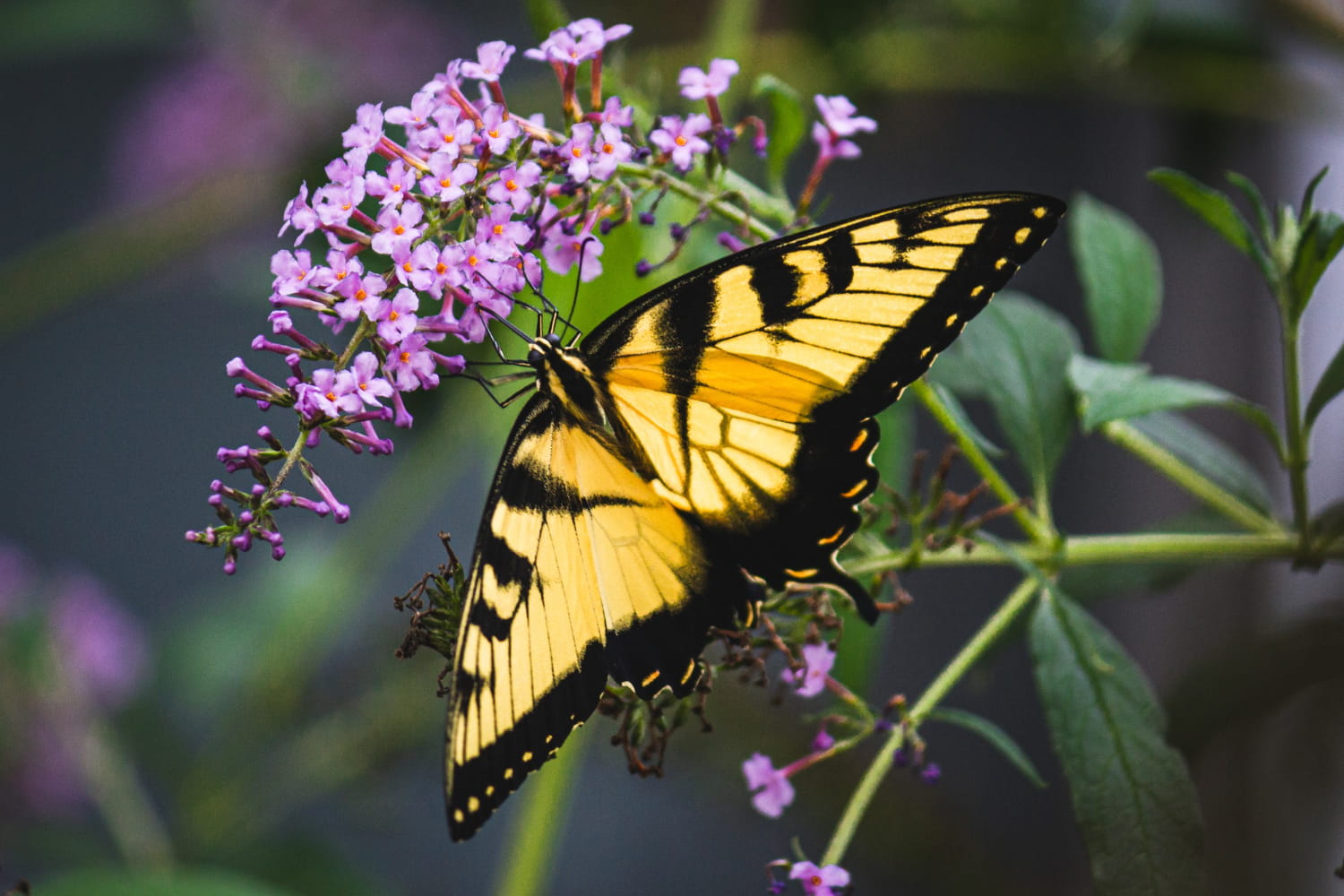
Butterflies are far more than just symbols of beauty and transformation—they are among the most fascinating creatures in the insect world. Their vibrant wings, delicate flight, and complex life cycle have captivated scientists and casual observers alike for thousands of years. You may not have known that some butterflies travel thousands of kilometers or that they can see ultraviolet light. Among the more than 180,000 known butterfly and moth species lie countless astonishing facts that reveal their true nature. Here are some of the most captivating ones.
- Butterflies belong to the order Lepidoptera, which also includes moths. The name “Lepidoptera” comes from Greek words meaning “scaly wings,” referring to the microscopic scales that cover their wings and create distinctive colors and patterns. These scales easily rub off when touched, but they serve vital functions such as camouflage, predator deterrence, and thermoregulation. Without them, a butterfly would struggle to fly properly or survive in the wild.
- A butterfly’s life cycle consists of four distinct stages: egg, caterpillar (larva), chrysalis (pupa), and adult. This complete metamorphosis is one of nature’s most remarkable transformations. Inside the chrysalis, the caterpillar’s body essentially dissolves into a nutrient-rich soup, and from specialized cells called imaginal discs, an entirely new organism forms. Depending on the species, this process can take anywhere from a few days to several months.
- Some butterflies, like the monarch, undertake extraordinary migrations spanning over 4,000 kilometers. Monarchs from North America travel each autumn to mountainous forests in central Mexico to overwinter. This journey is completed across multiple generations, though the final generation—born in late summer—lives up to eight months and makes the return trip north the following spring. Their navigational abilities remain a scientific mystery.
- Butterflies possess compound eyes made up of thousands of individual lenses and can see ultraviolet light. To them, flowers appear dramatically different than they do to humans, as many plants feature ultraviolet “nectar guides” that direct pollinators to the nectar source. This visual capability allows butterflies to locate food efficiently, even in dense vegetation. Ultraviolet patterns on their own wings also play a crucial role in mating behavior.
- Butterflies taste with their feet, not their tongues, because their taste receptors are located on their legs. When a butterfly lands on a surface, it immediately determines whether the plant is suitable for laying eggs or contains nectar. This is essential for survival, as caterpillars of many species can feed only on specific host plants. This sensory adaptation ensures butterflies choose optimal sites for the next generation.
- Most butterflies live only a few weeks, although notable exceptions exist. For instance, monarch butterflies that emerge in autumn can live up to eight months. In contrast, some tropical species survive for just 24 hours. Lifespan varies greatly depending on climate, predation, and food availability.
- Butterflies do not have lungs; instead, they breathe through a network of tiny tubes called tracheae. Air enters their bodies through small openings along the sides of the thorax and abdomen, known as spiracles. This system delivers oxygen directly to cells, making respiration highly efficient. This adaptation supports their high-energy flight despite their tiny size.
- Butterfly wings are actually transparent—their colors come entirely from the overlapping scales. When held up to light, the wing membrane appears almost glass-like. The precise arrangement of these scales creates optical effects ranging from metallic sheens to iridescent flashes. In some species, wings are nearly scale-free, rendering the insects almost invisible in flight.
- Butterflies play a significant role in pollinating plants, though they are generally less efficient than bees. They prefer large, brightly colored, fragrant flowers, often visiting them in the late afternoon or early evening. While feeding on nectar, pollen sticks to their legs and bodies and is transferred to other blossoms. Without butterflies, many wildflowers would struggle to reproduce.
- In certain butterfly species, males produce special aromatic chemicals called pheromones to attract females. These substances are released from specialized scent glands on the wings or body and disperse into the air. Females can detect these pheromones from several kilometers away. This chemical communication ensures successful mating, even in dense forest habitats.
- Butterflies regulate their body temperature by adjusting their orientation to the sun. As cold-blooded creatures, they must warm up to a certain threshold before they can fly. On cool mornings, butterflies often bask with wings spread wide to absorb maximum sunlight. During hot weather, they hold their wings vertically to minimize sun exposure and avoid overheating.
- Some butterflies mimic toxic species to avoid predators—a phenomenon known as Batesian or Müllerian mimicry. For example, the harmless viceroy butterfly closely resembles the poisonous monarch. Birds that have learned to avoid the monarch will also steer clear of look-alikes, giving mimics a survival advantage without producing toxins themselves.
- Butterflies cannot eat solid food; their proboscis is adapted only for sipping liquids. They primarily feed on nectar but also drink juice from rotting fruit, dew, or even dissolved minerals from mud and sand—a behavior called “puddling.” This is especially common among males, who seek sodium and amino acids to enhance reproductive success and pheromone production.
- In ancient cultures, butterflies often symbolized the soul, rebirth, or passage to another realm. In Greek mythology, the word “psyche” meant both “soul” and “butterfly.” In Japanese tradition, butterflies represented joy and marital bliss, frequently appearing in wedding decorations. These symbolic meanings continue to resonate in many societies today.
- The world’s largest butterfly is the Queen Alexandra’s birdwing, with a wingspan reaching up to 28 centimeters. It inhabits the rainforests of Papua New Guinea and nearby islands. The smallest known butterfly is a micro-moth species with a wingspan of just 2–3 millimeters. These extremes illustrate the incredible diversity within the Lepidoptera order.
These astonishing facts about butterflies reveal how intricate and refined even the tiniest creatures can be. You may not have realized that every flutter of a butterfly’s wings is the result of millions of years of evolution, and every hue on its wings serves a purpose. These captivating insights remind us how vital it is to protect biodiversity—because even the most delicate beings play an essential role in the health of our planet.


