
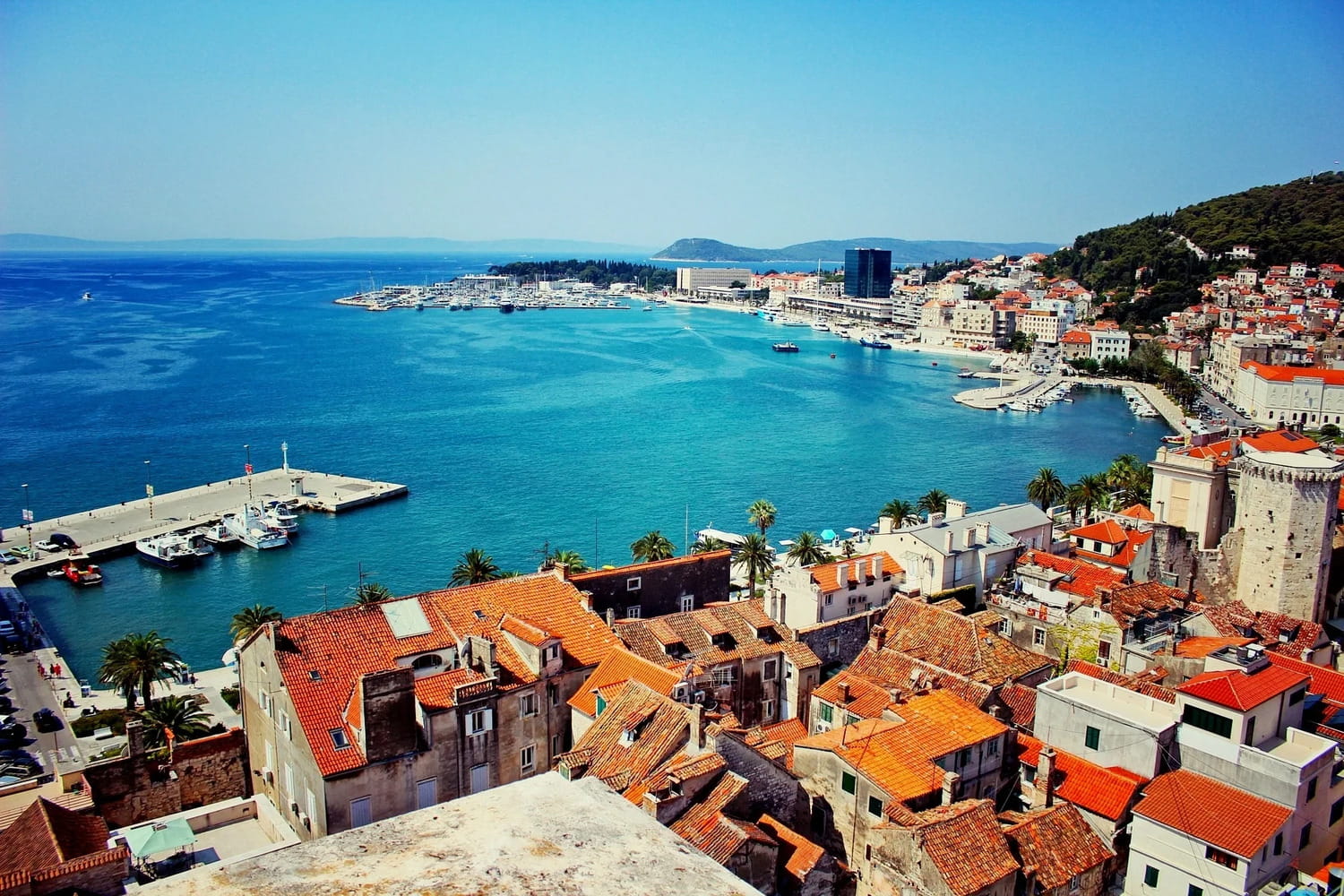
Dalmatia is far more than just a picturesque stretch of Croatia’s coastline—it is a true treasure trove of history, culture, and natural beauty. Nestled along the Adriatic Sea, this region has served for centuries as a crossroads of civilizations, where East met West, antiquity blended with modernity, and mountains embraced the sea. You may not have known that the Roman Emperor Diocletian was born here, or that the first Croatian king was buried in the ancient town of Nin. Hidden among thousands of islands, vineyards, olive groves, and medieval towns lies an astonishing wealth of fascinating facts that reveal the authentic soul of this remarkable region. Here are some of them.
- Dalmatia derives its name from the Illyrian tribe of the Dalmatae, who inhabited these lands long before the arrival of the Romans. This tribe was renowned for its military prowess and ability to defend the rugged, mountainous terrain. After prolonged conflicts, the Romans eventually subdued the Dalmatae and incorporated their territory into the province of Illyricum. It is precisely this historical origin that preserved the region’s name through the ages.
- Dalmatia is home to Croatia’s oldest town—Nin—founded as early as the 9th century BCE. During the early Middle Ages, Nin served as a crucial political and religious center of the Croatian kingdom. It was here that the first Croatian kings were crowned, and the world’s smallest cathedral—the Church of St. Anselm—still stands today. Despite its modest size, Nin holds immense significance for Croatian national identity.
- The city of Split houses the Palace of the Roman Emperor Diocletian, constructed at the end of the 3rd century CE. This palace ranks among the best-preserved Roman monuments in the world and remains an integral part of a living urban center. Many homes in Split’s historic core are literally built into the palace walls, creating a unique fusion of ancient architecture and contemporary city life. UNESCO has recognized this complex as a World Heritage Site.
- Dalmatia is widely regarded as the birthplace of the famous Dalmatian dog, although the exact origins of the breed remain debated among canine experts. Regardless, it was in this region that the breed gained prominence due to its endurance and loyalty. In the 19th century, Dalmatians commonly accompanied aristocratic carriages, and later became iconic symbols of fire brigades. Today, they are internationally associated with Dalmatia itself.
- Along the Dalmatian coast lie over 1,000 islands, of which only about 50 are inhabited. Among them are Brač, Hvar, Korčula, and Vis—each with its own distinct history and cultural character. Korčula, for instance, is traditionally claimed as the birthplace of Marco Polo, though historians continue to dispute this assertion. These islands are celebrated not only for their scenic beauty but also for winemaking, olive oil production, and traditional crafts.
- In the city of Zadar stands a unique open-air musical instrument known as the Sea Organ. Designed in 2005 by architect Nikola Bašić, it produces sound through waves passing through a system of tubes beneath stone steps along the waterfront. The resulting tones are entirely improvised and vary with wind strength and tidal movements. This installation has become one of Croatia’s most beloved tourist attractions.
- Dalmatia is one of Europe’s sunniest regions, receiving more than 2,700 hours of sunshine annually. This abundant sunlight supports agriculture, particularly the cultivation of grapes, olives, and figs. Local wines such as Plavac Mali enjoy high regard among sommeliers and enthusiasts of natural winemaking. The climate also makes the region ideal for tourism throughout much of the year.
- Dubrovnik, the former capital of the Republic of Ragusa, implemented one of the world’s earliest quarantine laws. In the 14th century, the city mandated a 30-day isolation period for all ships arriving from plague-affected areas. This period was later extended to 40 days, giving rise to the term “quarantine.” This system helped Dubrovnik avoid many of the plague outbreaks that devastated other European cities.
- Dalmatia is the cradle of one of the world’s oldest winemaking traditions. Archaeological excavations on the island of Hvar have revealed evidence of grape cultivation dating back to the Bronze Age. The local Plavac Mali grape variety is genetically linked to the ancient Zinfandel lineage. Wines from this region are noted for their robust flavor and high alcohol content, making them favorites among connoisseurs.
- Dalmatia preserves unique forms of traditional polyphonic singing known as “klapa” or “gralica,” inscribed on UNESCO’s Representative List of the Intangible Cultural Heritage of Humanity. This style is characteristic of the Konavle region and the island of Krk, though its roots extend along the Dalmatian coast. Performed by men divided into two groups—one initiating the melody and the other responding in counterpoint—it has been passed down orally through generations.
- For several centuries, Dalmatia was part of the Venetian Republic, a legacy that profoundly influenced its architecture, language, and culture. Cities like Šibenik and Zadar feature Venetian fortresses, loggias, and churches. Even modern Croatian retains numerous words borrowed from the Venetian dialect. This cultural layer makes Dalmatia a distinctive meeting point of Slavic and Romance traditions.
- In Šibenik stands the Cathedral of St. James, the only cathedral in Europe built entirely of stone without the use of brick or wood. Construction spanned over a century, with Juraj Dalmatinac (George the Dalmatian) serving as its principal architect and a leading figure of the local Renaissance school. The cathedral astonishes with its technical complexity and harmonious blend of Gothic and Renaissance styles. It is also a UNESCO World Heritage Site.
- Dalmatia hosts one of Europe’s cleanest bodies of water—Vransko Lake, the largest natural lake in Croatia. Located between Zadar and Šibenik, it serves as a vital stopover for migratory birds. Designated a nature park, the lake is famed for fishing, especially eel and carp. Its waters also nourish surrounding agricultural lands.
- Dalmatia maintains a tradition of producing “pršut”—air-dried ham cured over several months under the influence of the bora, a local cold wind. This delicacy is a staple of regional cuisine and is often served with olive oil and Paški cheese. Each area has its own recipe, but the most renowned pršut comes from the regions around Drni and Sinj. The product holds Protected Geographical Indication status within the European Union.
- The town of Trogir boasts an almost untouched medieval urban fabric, forming a genuine labyrinth of narrow streets and small squares. Situated on a tiny island between the mainland and the island of Čiovo, Trogir was founded by the Greeks as early as the 3rd century BCE. Visitors can admire a rare synthesis of Greek, Roman, Venetian, and Austrian architectural influences. Trogir is also inscribed on UNESCO’s World Heritage List.
These remarkable facts about Dalmatia illustrate just how rich the region is—not only in natural resources but also in cultural heritage. You may not have realized that behind every stone, every alleyway, and every vineyard lies a centuries-old story still alive today. These captivating insights only partially unveil the depth and beauty of this region, leaving ample room for every traveler to make their own discoveries.


