
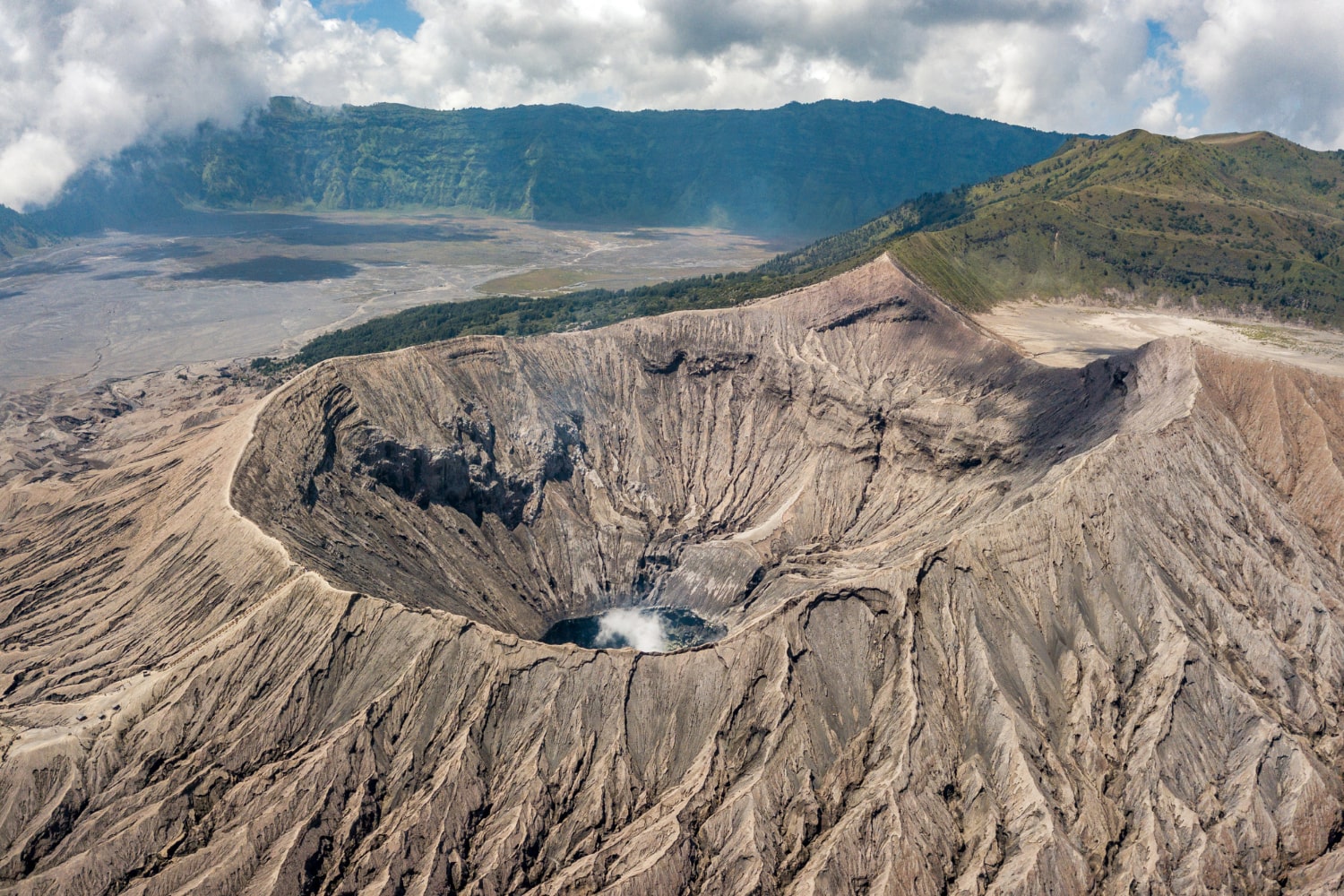
Craters have fascinated people for centuries because they are visible traces of dramatic events that occurred millions or even billions of years ago. Interesting facts about craters help explain how the surfaces of planets and moons were shaped over immense spans of time. Incredible facts show that craters are not all created in the same way and can form through very different processes. Fascinating facts reveal that these formations are not only scars from space impacts but also records of internal planetary activity. You may not have known how complex and diverse the world of craters truly is.
- Craters can form as a result of impacts by meteorites, asteroids, or comets. During such collisions, enormous amounts of energy are released in a fraction of a second. Temperatures at the impact site can exceed the temperature of the Sun’s surface. This is why melted and recrystallized minerals are often found around craters.
- Not all craters have a cosmic origin. Some of them are formed by volcanic activity. These craters appear after explosions or collapses of underground magma chambers. Their shape and internal structure usually differ from those of impact craters.
- Impact craters can be much larger than the objects that created them. This happens because the energy of the collision spreads outward in all directions. Even a relatively small meteorite can produce a crater many times larger than itself. As a result, the size of a crater does not directly reflect the size of the impacting body.
- The surface of the Moon is covered with craters far more densely than the surface of Earth. This is due to the absence of a thick atmosphere and active geological processes. On Earth, craters are gradually erased by erosion, water, and tectonic movement. On the Moon, craters can remain almost unchanged for billions of years.
- The largest known craters on Earth reach hundreds of kilometers in diameter. Many of them are so ancient that they are difficult to identify without specialized studies. Their outlines are often hidden beneath layers of sedimentary rock. Modern geophysical techniques made their discovery possible.
- Large impact craters often contain a central uplift. This feature forms when the crust rebounds upward after the initial compression. The process is similar to the splash created when a stone is dropped into water. Central peaks are a characteristic sign of powerful impacts.
- Some craters are surrounded by multiple concentric rings. These are known as multi-ring craters. They form during extremely energetic collisions that affect vast areas of the crust. Such structures can be observed on the Moon, Mars, and the moons of giant planets.
- Over time, some craters fill with water and become lakes. These lakes often have nearly perfect circular shapes. Because of the crater’s geometry, they can be exceptionally deep. Many of them develop into unique and isolated ecosystems.
- Craters play a key role in studying the history of the Solar System. Scientists estimate the age of planetary surfaces by counting and analyzing craters. A surface with more craters is generally considered older. This method helps reconstruct the sequence of cosmic events.
- Impact craters are often associated with the formation of shock minerals. These minerals undergo structural changes under extreme pressure. Their presence provides direct evidence of a powerful impact. Geologists rely on them to confirm the extraterrestrial origin of craters.
- A planet’s atmosphere strongly influences the number of craters on its surface. A dense atmosphere destroys many small meteoroids before they reach the ground. This is why Earth has far fewer small craters than the Moon. It clearly demonstrates the protective role of the atmosphere.
- Some craters were created by a series of closely spaced impacts. A single cosmic body can break apart before reaching the surface. Its fragments strike the ground almost simultaneously. This results in clusters known as crater fields.
- Craters can preserve information about the composition of cosmic bodies. Rocks around them may contain elements not naturally found on Earth. These materials help scientists study the chemistry of asteroids and comets. In this way, craters act as natural research laboratories.
- On Mars, many craters show signs of ancient water activity. Some display erosion patterns caused by flowing liquid. This indicates that the planet once had different climatic conditions. Craters provide valuable clues about the history of water on Mars.
- Craters also exist beneath Earth’s oceans. Most of them are hidden under thick layers of water and sediment. Detecting them requires advanced scientific methods. Their existence confirms that cosmic impacts occurred in oceanic regions as well.
- Certain craters are linked to mass extinction events. Extremely powerful impacts could trigger global climate changes. Dust and aerosols thrown into the atmosphere blocked sunlight. This led to cooling and the disappearance of many life forms.
- Craters can become sites of valuable mineral deposits. Impact processes may concentrate specific elements in one location. In some regions, economically important resources are found near crater structures. This makes craters significant not only scientifically but also economically.
- The shape of a crater changes over time. Wind and water erosion gradually soften its edges. Tectonic forces can distort the original structure. As a result, very old craters often have blurred and irregular outlines.
- Craters are important targets for space missions. They allow scientists to study the geology of other celestial bodies without deep drilling. Landing sites are often chosen near craters. These areas provide easier access to ancient rock material.
Craters can be seen as natural archives of cosmic history preserved on planetary surfaces. Interesting facts about them help reveal the Universe as a constantly changing and dynamic system. Incredible and fascinating facts show that even silent depressions can tell powerful stories about the past. You may not have known this before, but craters play a key role in helping humanity understand its place in space.


