
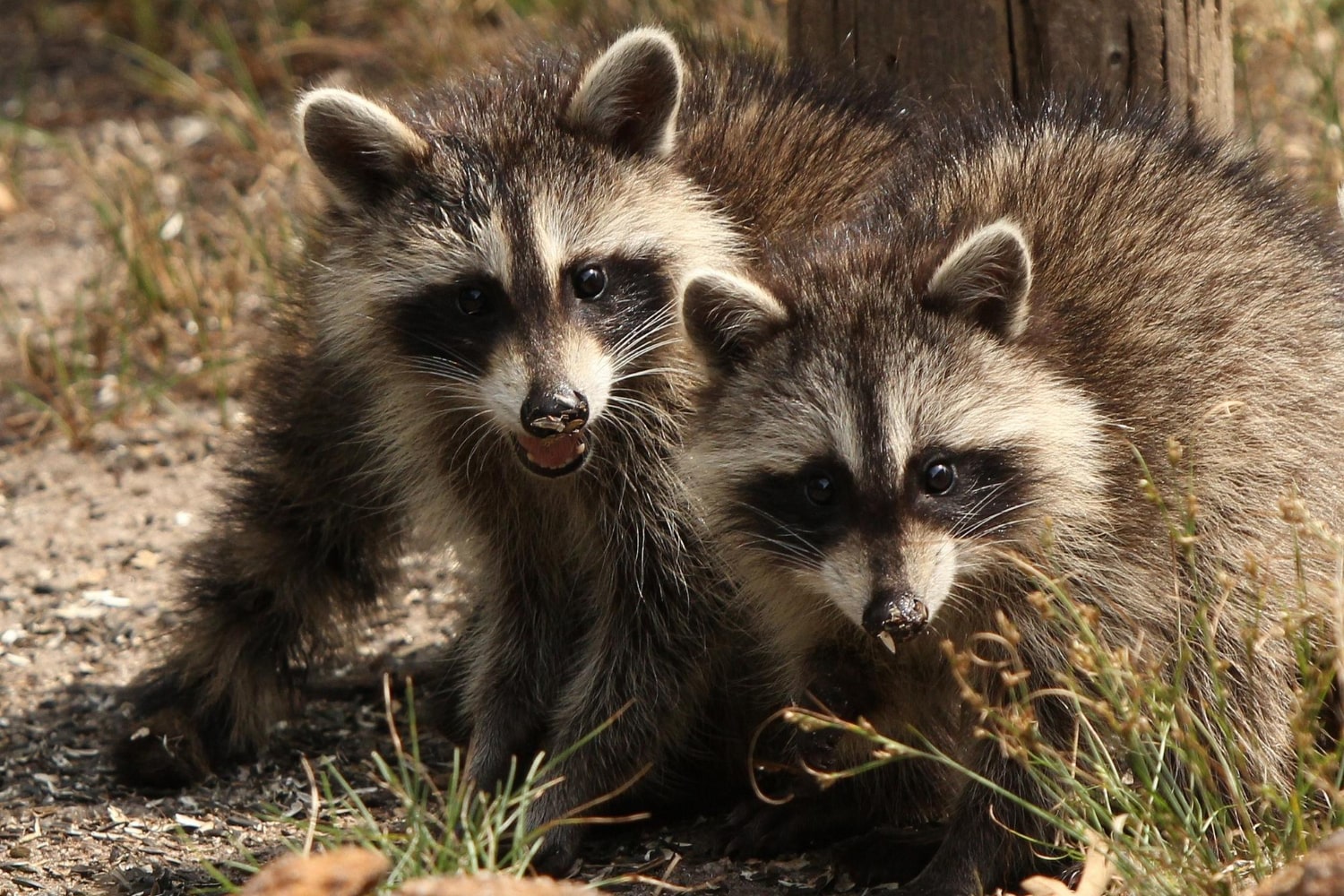
Raccoons are among the most resourceful and adaptable mammals on our planet, having earned a reputation as the true tricksters of the animal kingdom. These charming creatures with their characteristic black mask on their face and striped tail amaze with their ingenuity and ability to survive in the most diverse conditions. You may not have known that raccoons possess extraordinarily developed front paws that rival human hands in sensitivity. Fascinating facts about these animals will open up a world of incredible abilities and behavioural characteristics that make raccoons true masters of survival.
- The scientific name of the common raccoon Procyon lotor translates as one who washes before himself, reflecting the characteristic habit of these animals to rinse food in water. In reality, raccoons do not wash food to clean it but moisten it to increase the tactile sensitivity of their paws. Water activates the nerve endings on the finger pads, allowing the raccoon to better feel the texture and quality of food. This behaviour is observed even in captivity when the food is already completely clean.
- The front paws of raccoons have five long flexible fingers that function almost like human hands. Raccoons are capable of opening door handles, unscrewing jar lids, unfastening locks, and even lifting latches. This extraordinary dexterity makes them true experts at breaking into rubbish bins and human dwellings. Research has shown that raccoons can remember ways to solve complex tasks for at least three years.
- Raccoons possess an extremely developed tactile intelligence, and two-thirds of their sensory cortex is responsible for processing information from the front paws. The number of nerve endings on a raccoon’s finger pads exceeds that of most other mammals by four to five times. Underwater, the sensitivity of their paws increases even more, which explains the habit of rinsing objects. This developed sense of touch compensates for relatively poor vision at close range.
- Raccoons are omnivorous animals with an extraordinarily diverse diet that includes over 100 different types of food. They consume fruits, nuts, insects, fish, frogs, birds, eggs, small mammals, and virtually any food waste. Such flexibility in nutrition has allowed raccoons to successfully adapt to life in cities. In urban conditions, their diet can consist of up to 70 percent food of anthropogenic origin.
- The black mask on a raccoon’s face performs an important function by reducing light glare and improving night vision. Similar to the black stripes under athletes’ eyes, this mask absorbs light and helps the animal see better in darkness. Raccoons are predominantly nocturnal animals, although in urban conditions they can often be seen during the day as well. Their eyes contain a special reflective layer that significantly enhances the ability to see in low light conditions.
- The striped tail of a raccoon typically has five to seven black rings and serves for balance when climbing trees. The tail also plays a role in communication between individuals and helps retain heat during sleep. When a raccoon curls up into a ball, it wraps itself with its fluffy tail for additional insulation. Tail length can range from 20 to 40 centimetres depending on the subspecies.
- Raccoons are able to rotate their hind feet 180 degrees, which allows them to descend from trees head first. This unique anatomical feature makes them one of the few mammals capable of such a manoeuvre. Sharp claws and flexible joints make raccoons excellent climbers. They can fall from heights of up to 12 metres without serious injury thanks to their flexibility and soft landing.
- The average lifespan of raccoons in the wild is only two to three years due to predators, diseases, and road traffic accidents. In captivity, raccoons can live up to 20 years with proper care. The main natural enemies of raccoons are coyotes, bobcats, owls, and alligators. Despite their short lives, the raccoon population remains stable due to high fertility.
- Raccoons are among the few animals whose population significantly increased after the colonisation of North America by Europeans. Deforestation and agricultural development created ideal conditions for these adaptable creatures. Cities with their rubbish bins and shelters have become a true paradise for raccoons. The population density of raccoons in urban areas can exceed that in natural forests by twenty times.
- Female raccoons give birth to two to five young in early spring after a gestation period of approximately 63 days. The babies are born blind and deaf but already have the characteristic mask on their face. The mother cares for the young for about a year, teaching them to hunt and find food. Young males typically leave their mother earlier, while females may stay nearby longer.
- Raccoons produce over 50 different sounds for communication, including squealing, growling, whimpering, and characteristic chittering. Young ones use high-frequency sounds to communicate with their mother that predators cannot hear. Adult males often produce low growling to establish dominance. During the mating season, raccoons become particularly noisy.
- During the winter period, raccoons enter a state similar to hibernation called torpor. Unlike true hibernation, their body temperature drops by only a few degrees. During torpor, raccoons can lose up to half their weight, living off accumulated fat. On warm winter days, they may wake up and go out in search of food.
- Raccoons are carriers of rabies and rank second after bats in the number of cases of this disease in North America. They can also carry parvovirus, leptospirosis, and a specific parasite called raccoon roundworm. This is precisely why experts do not recommend keeping raccoons as pets. Contact between wild raccoons and domestic animals can be dangerous to the health of the latter.
- Raccoons were introduced to Europe and Asia in the 20th century and quickly became an invasive species in many countries. In Germany, the raccoon population exceeds one million individuals and continues to grow. In Japan, raccoons introduced as pets following a popular anime series now cause significant damage to temples and agriculture. The European Union has placed raccoons on the list of invasive alien species of concern.
- The intelligence quotient of raccoons in some respects approaches the level of primates. Experiments have shown that raccoons can solve complex multi-stage tasks and remember solutions for years. They are capable of distinguishing symbols and learning through observation of other individuals. Studies from the early 20th century showed that raccoons can open complex locks faster than some primates.
- Raccoons possess the ability to adapt their behaviour to human presence, becoming more nocturnal in densely populated areas. They quickly learn to avoid traps and dangerous situations. Urban raccoons demonstrate greater boldness and ingenuity compared to their rural counterparts. This behavioural plasticity is the key to their success as city dwellers.
- Raccoons play an important ecological role as seed dispersers and controllers of insect and rodent populations. Their burrowing activity creates shelters for other animal species. Raccoons also serve as prey for larger predators, maintaining ecosystem balance. At the same time, in some regions they can negatively affect populations of ground-nesting birds.
- Raccoon fur was valued by Native Americans and European settlers for centuries. The famous caps made from raccoon fur became a symbol of American pioneers and trappers. In the 19th century, the raccoon fur trade was an important part of the North American economy. Today, raccoons continue to be subjects of the fur industry, although on a much smaller scale.
Incredible facts about raccoons demonstrate how unique and adaptable these animals are, successfully coexisting with humans in the most diverse environments. From their extraordinary tactile abilities to their impressive intelligence, raccoons continue to amaze researchers and delight people around the world. These captivating details remind us of nature’s astonishing ability to create creatures that can thrive even in conditions radically altered by human activity.


