
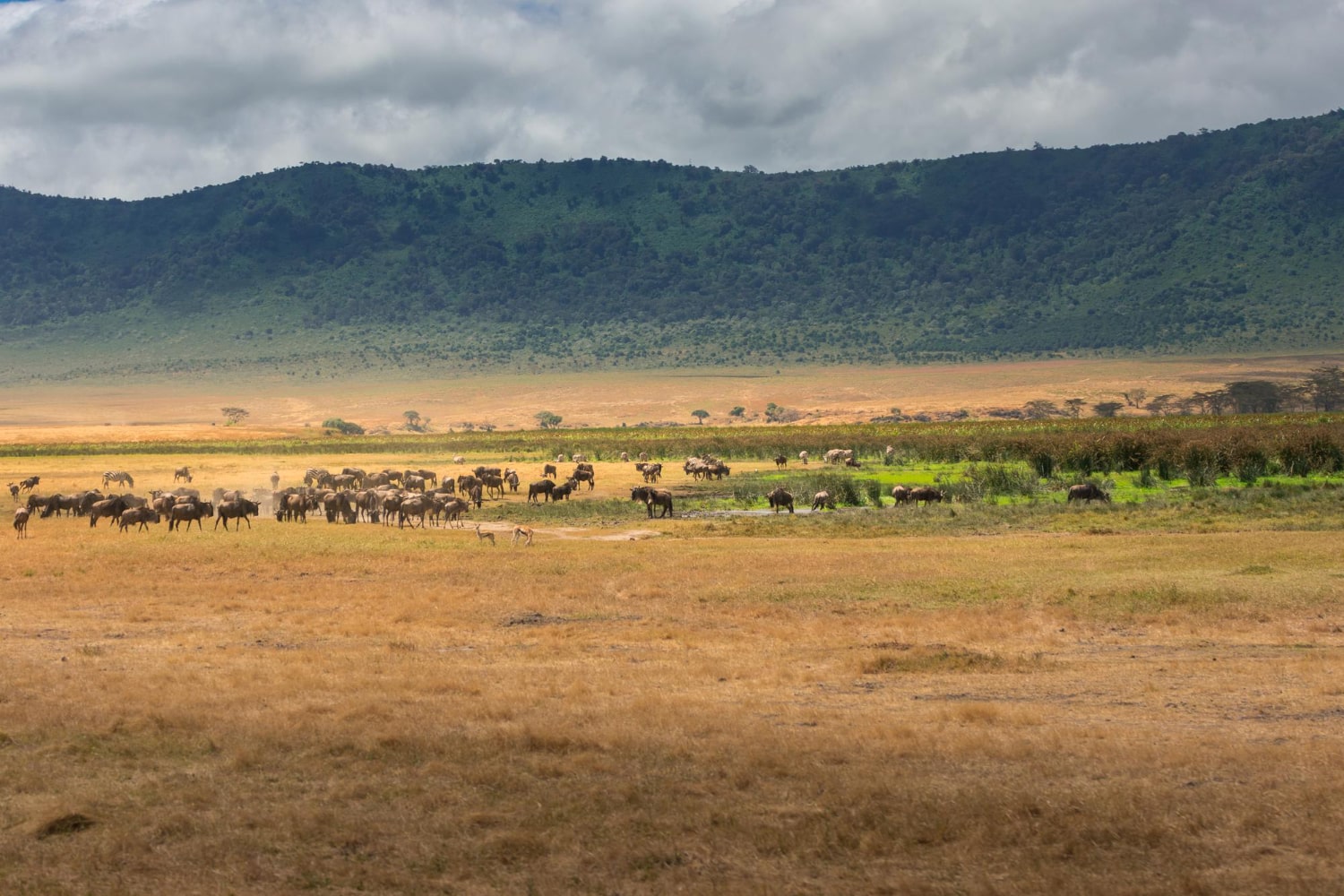
Savannas are often imagined as endless plains with scattered trees and herds of wild animals, yet in reality they are far more complex and diverse. They represent one of the most important biomes on Earth, where life has adapted to constant contrasts between rainfall and drought. Interesting facts about savannas reveal a delicate balance between climate, vegetation, animals, and fire. Here, fascinating facts concern not only wildlife, but also soils, seasonal cycles, and human interaction with nature. You may not have known that savannas play a crucial role in maintaining the ecological stability of entire continents.
- Savannas cover vast areas across several continents, including Africa, South America, Australia, and parts of Asia. They are most commonly found between tropical rainforests and deserts. This transitional position creates unique environmental conditions. As a result, savannas vary greatly in appearance and structure around the world.
- The climate of savannas is defined by a clear alternation between wet and dry seasons. Rainfall can fluctuate significantly throughout the year. Plants and animals must adapt to long periods of limited water availability. This seasonal rhythm shapes all aspects of life within the savanna.
- Grasses form the foundation of savanna vegetation. They are capable of rapid regrowth after grazing or natural fires. Their root systems often extend deep into the soil. This adaptation allows them to survive prolonged droughts.
- Trees in savannas grow widely spaced from one another. This arrangement reduces competition for water and nutrients. Many species have thick bark or small leaves. These traits help them withstand heat and frequent fires.
- Fire is a natural and essential component of savanna ecosystems. It may occur through natural causes or human activity. While fire removes dry vegetation, most adapted plants survive and recover quickly. This process prevents savannas from turning into dense forests.
- Savannas are home to some of the largest land animals on the planet. Elephants, giraffes, rhinoceroses, and powerful predators inhabit these open landscapes. The wide spaces encourage herd behavior among many species. Living in groups increases survival in an environment filled with constant threats.
- Many savanna animals undertake seasonal migrations. They move in search of rainfall and fresh vegetation. Some migration routes stretch for hundreds of kilometers. These movements are vital for maintaining ecological balance.
- Predators in savannas play a key role in regulating herbivore populations. They usually target weaker or sick individuals. This reduces the spread of disease and overpopulation. Such interactions clearly demonstrate natural selection at work.
- Savanna soils are not always highly fertile. Heavy rains can wash nutrients out of the upper layers. Plants have adapted to use available resources efficiently. This is one reason savannas remain open landscapes rather than dense woodlands.
- Insects are extremely important to savanna ecosystems. Termites, for example, build complex underground structures. They improve soil structure and enhance aeration. These processes support plant growth across large areas.
- Savannas are among the world’s centers of biodiversity. Thousands of plant and animal species coexist within these ecosystems. Each species occupies a specific ecological niche. The loss of even one element can disrupt the entire system.
- Humans have lived in savannas for thousands of years. Pastoralism and agriculture developed in these regions. However, excessive land use can lead to soil degradation. This creates serious environmental challenges.
- Savannas play a significant role in the global carbon cycle. Plants absorb carbon dioxide during periods of growth. Fires and the decomposition of organic matter release it back into the atmosphere. This balance influences the Earth’s climate.
- The boundaries of savannas can change over time due to climate fluctuations. Variations in rainfall may cause them to expand or shrink. These shifts directly affect wildlife and human communities. Savannas act as sensitive indicators of global environmental change.
- Savannas have long inspired myths, art, and scientific exploration. Their landscapes have become symbols of wild nature. They are often associated with freedom and primal beauty. For this reason, savannas hold a special place in human imagination.
Savannas may appear simple at first glance, yet beneath their open horizons lies a finely balanced and dynamic system. Their captivating facts help explain how nature sustains life under challenging conditions. You may not have known many of these details, but they reveal the true value of these ecosystems. Interesting facts about savannas remind us that even open landscapes with sparse vegetation are essential to life on Earth.


