The Bering Sea is one of the most mysterious and unique bodies of water on our planet, about which you may not have known many fascinating things. This harsh northern sea conceals incredible natural treasures and amazing features that astound even experienced researchers. From the richest fishing grounds to unique ecosystems, the Bering Sea constantly reveals new facets of its grandeur. Located between two continents, it plays a key role in the climatic processes of the Northern Hemisphere and the lives of millions of marine creatures. Discover the most interesting facts about this incomparable corner of the World Ocean.
- The Bering Sea was named after Danish navigator Vitus Bering, who explored these waters under the Russian flag in 1741. Bering’s expedition became the first scientifically documented exploration of this region and proved the existence of a strait between Asia and America. Tragically, Bering himself died on a deserted island during the return from the expedition, but his name remained on the world map forever.
- The area of the Bering Sea exceeds 2.3 million square kilometers, making it one of the largest marginal seas of the Pacific Ocean. In terms of size, it surpasses many European countries combined. The maximum depth of the sea reaches 4,151 meters, while the average depth is approximately 1,600 meters.
- The Bering Sea is one of the most productive marine ecosystems in the world in terms of biomass quantity. About half of all fish catches in the USA are concentrated here, including pollock, cod, salmon, and flounder. Over 2 million tons of seafood are harvested from these waters annually, providing employment for thousands of people.
- The waters of the Bering Sea are home to the largest population of marine mammals in the Northern Hemisphere. Gray whales, orcas, sea lions, seals, and walruses can be found here, creating unique colonies along the coast. Particularly impressive are the migrations of gray whales, which travel thousands of kilometers through this sea during their seasonal movements.
- The Bering Strait, connecting the sea with the Arctic Ocean, is the narrowest point between Eurasia and North America. The width of the strait is only 86 kilometers, and in ancient times there was a land bridge here through which the ancestors of Native Americans crossed from Asia. This so-called Beringia Bridge existed during the Ice Age approximately 20,000 years ago.
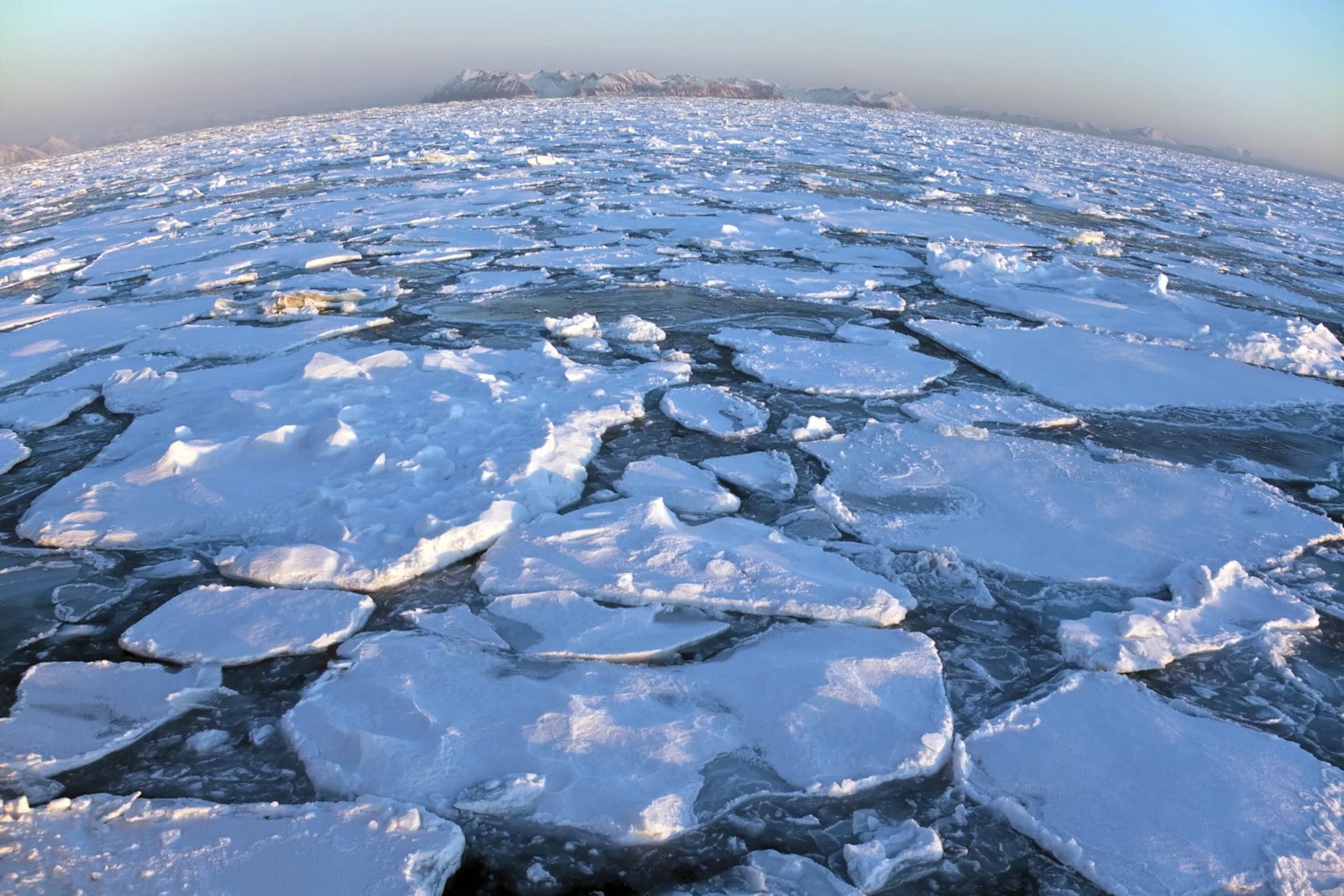
- The water temperature in the Bering Sea ranges from minus 1.7 degrees Celsius in winter to 10-12 degrees in summer. Such climate severity creates unique conditions for the formation of sea ice, which covers up to 90 percent of the sea’s surface during the winter period. The ice cover plays a critical role in regulating the temperature of the entire North Pacific.
- Enormous canyons up to 3,500 meters deep are located on the bottom of the Bering Sea. These underwater gorges create special conditions for the circulation of water masses and the formation of unique ecosystems. The canyons serve as corridors for the migration of deep-sea fish and other marine organisms.
- The Bering Sea is home to more than 450 species of fish and invertebrates. Among them are unique species that are not found anywhere else on the planet, including special subspecies of king crab. The sea’s biological diversity is supported by a complex system of ocean currents that bring nutrients from the ocean depths.
- The Bering Sea shelf contains significant reserves of oil and natural gas. According to geologists’ estimates, there may be up to 30 billion barrels of oil here, however extraction is complicated by harsh climatic conditions. Environmentalists warn that development of these deposits could seriously affect the region’s unique ecosystem.
- Some of the world’s largest tides are observed in the Bering Sea. The height of the tidal wave in some places can reach 7-8 meters, creating powerful currents and affecting ship navigation. These tides play an important role in mixing water masses and maintaining the high productivity of the marine ecosystem.
- The Pribilof Islands in the center of the Bering Sea are the world’s largest colony of fur seals. Approximately one million animals arrive on these islands annually for breeding, creating an incredible spectacle. These islands were discovered in 1786 by Russian navigator Gavriil Pribilov and were a center of the fur trade for a long time.
- The Bering Sea plays a key role in the global circulation of ocean waters. The only connection between the Pacific and Arctic Oceans passes through the Bering Strait, ensuring the exchange of water masses of different temperatures and salinity. This process affects the climate of the entire Northern Hemisphere.
- The largest population of seabirds in the world lives in the waters of the Bering Sea. Over 30 million birds of various species nest on rocky coasts and islands, forming enormous colonies. Among them are puffins, murres, albatrosses, and gulls, which depend on the sea’s rich fish resources.
- The average salinity of Bering Sea water is 32-33 parts per thousand, which is somewhat lower than the oceanic norm. This is explained by the significant inflow of fresh water from Siberian rivers, especially the Anadyr and Yukon rivers. The mixing of fresh and salt water creates special conditions for the development of unique life forms.
- The Bering Sea is one of the most dangerous areas for navigation due to storm winds and high waves. Wave height during storms can exceed 15 meters, posing a serious threat even to large vessels. Many ships have perished in these waters, including numerous vessels from the crab fishing fleet.
- Archaeological evidence of human habitation dating back more than 10,000 years has been found on the islands of the Bering Sea. Indigenous peoples, the Aleuts and Yupik, developed a unique maritime culture that allowed them to survive in the harsh conditions of the Arctic. Their traditional knowledge about the sea and its inhabitants is still being studied by scientists.
The Bering Sea is not just a cold body of water in the north of the planet, but a true treasure of nature with incredible features. Interesting facts about this sea reveal it as a unique ecosystem that plays a critical role in the life of Earth and requires special attention and protection. Fascinating discoveries in this region continue today, reminding us of how many secrets the World Ocean still holds. Now you know about the amazing features of the Bering Sea that make it one of the most important and interesting corners of our planet.


