
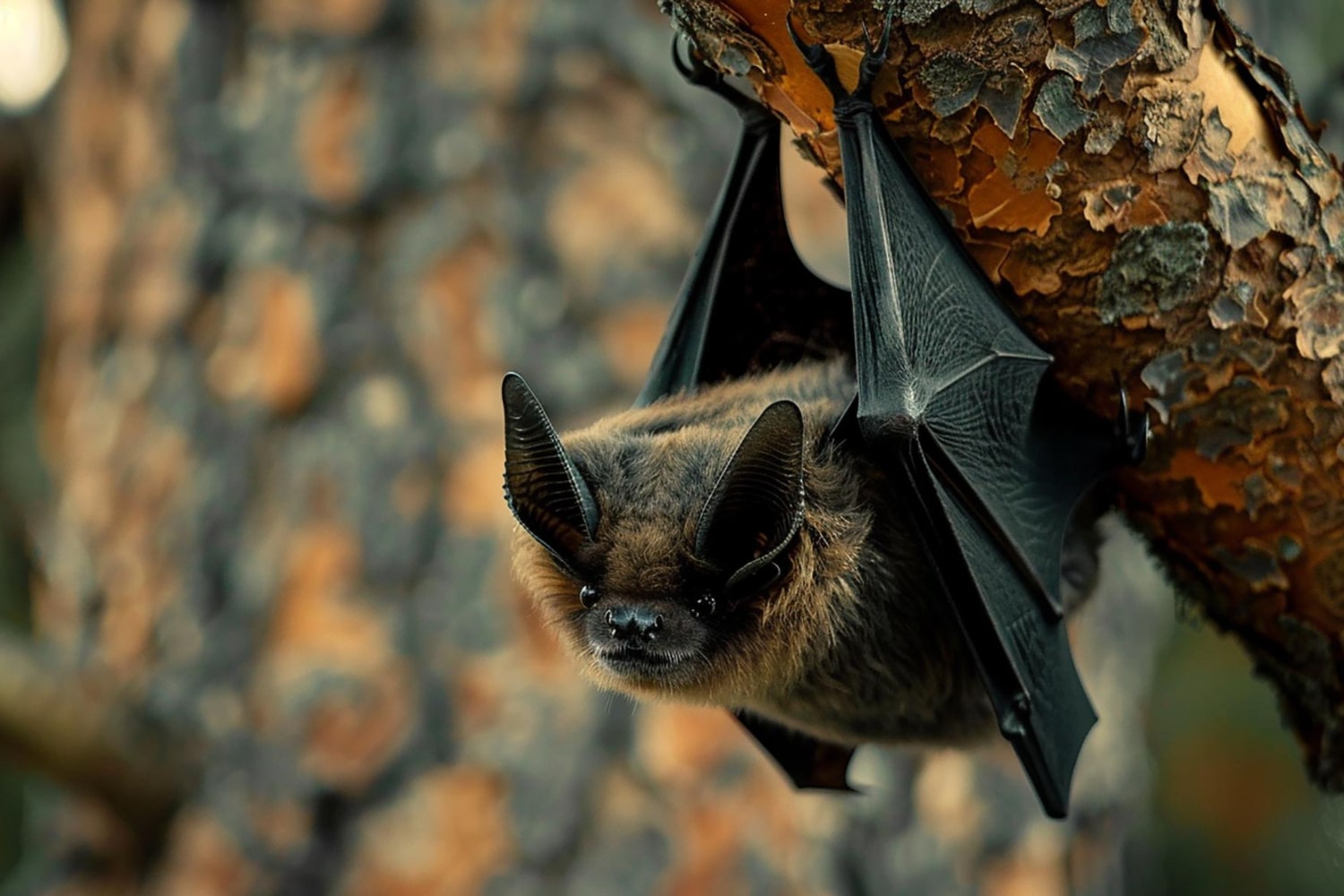
Bats have long inspired mixed feelings in people, ranging from fascination to fear, yet behind the myths lies a truly remarkable reality. These animals are unique mammals that have mastered active flight and adapted perfectly to life in the dark. Many interesting facts about bats show how essential they are to natural ecosystems around the world. You may not know that without bats, many environments would function very differently. Below is a collection of fascinating facts that help reveal the true nature of these nocturnal creatures.
- Bats are the only mammals capable of true powered flight. Their wings are formed by a thin skin membrane stretched between elongated fingers. This structure allows them to perform precise and complex maneuvers in the air. As a result, bats can hunt effectively even in complete darkness.
- There are more than 1,400 known species of bats worldwide. They make up roughly one fifth of all mammal species on Earth. Bats live on every continent except Antarctica. Such diversity makes them one of the most successful groups of mammals.
- Most bats navigate using echolocation. They emit high-frequency sounds and interpret the returning echoes. This ability allows them to determine the size, shape, and distance of objects around them. With echolocation, bats can detect even extremely small obstacles.
- The diet of bats varies greatly depending on the species. Many bats feed on insects, significantly reducing their populations. Others consume fruit, nectar, or pollen. Some species are even adapted to catching fish or small vertebrates.
- Insect-eating bats provide enormous benefits to humans. A single bat can consume hundreds or even thousands of insects in one night. This helps control agricultural pests naturally. In some regions, bats are considered essential allies for farmers.
- Fruit-eating bats play a crucial role in plant dispersal. They spread seeds over long distances through the fruits they consume. This process supports the natural regeneration of forests. Many tropical plant species depend heavily on bats for reproduction.
- Bats possess an extremely sensitive sense of hearing. Some species can detect sound frequencies far beyond the range of human hearing. Their brains process complex acoustic information almost instantly. This ability makes bats some of the most efficient navigators in the animal kingdom.
- Despite common fears, most bats are not dangerous to humans. They generally avoid contact and become aggressive only when threatened. Attacking people is not typical behavior for bats. Many negative perceptions come from myths and misunderstandings.
- Bats often live much longer than other mammals of similar size. Some species can survive for 30 to 40 years. This exceptional longevity is considered a biological mystery. Scientists study bats to better understand aging and disease resistance.
- Many bat species enter hibernation or long periods of torpor. During this time, their metabolism slows dramatically. This allows them to survive cold seasons and food shortages. Such adaptation is a key factor in their survival.
- Bat colonies can consist of thousands or even millions of individuals. They commonly roost in caves, tree hollows, or abandoned buildings. Living together helps them conserve body heat. These colonies often have complex social structures.
- Bats communicate with each other using sounds, scents, and physical contact. They use different signals for warning, mating, and territorial behavior. Some species even have individual vocal signatures. This demonstrates a highly developed communication system.
- In the cultures of various societies, bats have held different symbolic meanings. In some traditions, they were associated with darkness and mystery. In others, they symbolized luck, happiness, and longevity. These interpretations developed over many centuries.
- Bats play an important role in pollination. Certain plants open their flowers only at night to attract bats. While feeding on nectar, bats transfer pollen between plants. This enables the reproduction of many plant species.
- Today, many bat species are threatened with extinction. The main causes include habitat destruction and human activity. Climate change also has a negative impact on bat populations. Protecting bats has become an important task for conservationists.
Bats are far more complex and beneficial animals than they may appear at first glance. Interesting facts reveal their deep connection to healthy ecosystems. Remarkable facts show their influence on nature, agriculture, and human culture. Fascinating facts about bats prove that these animals deserve respect and protection rather than fear.


