
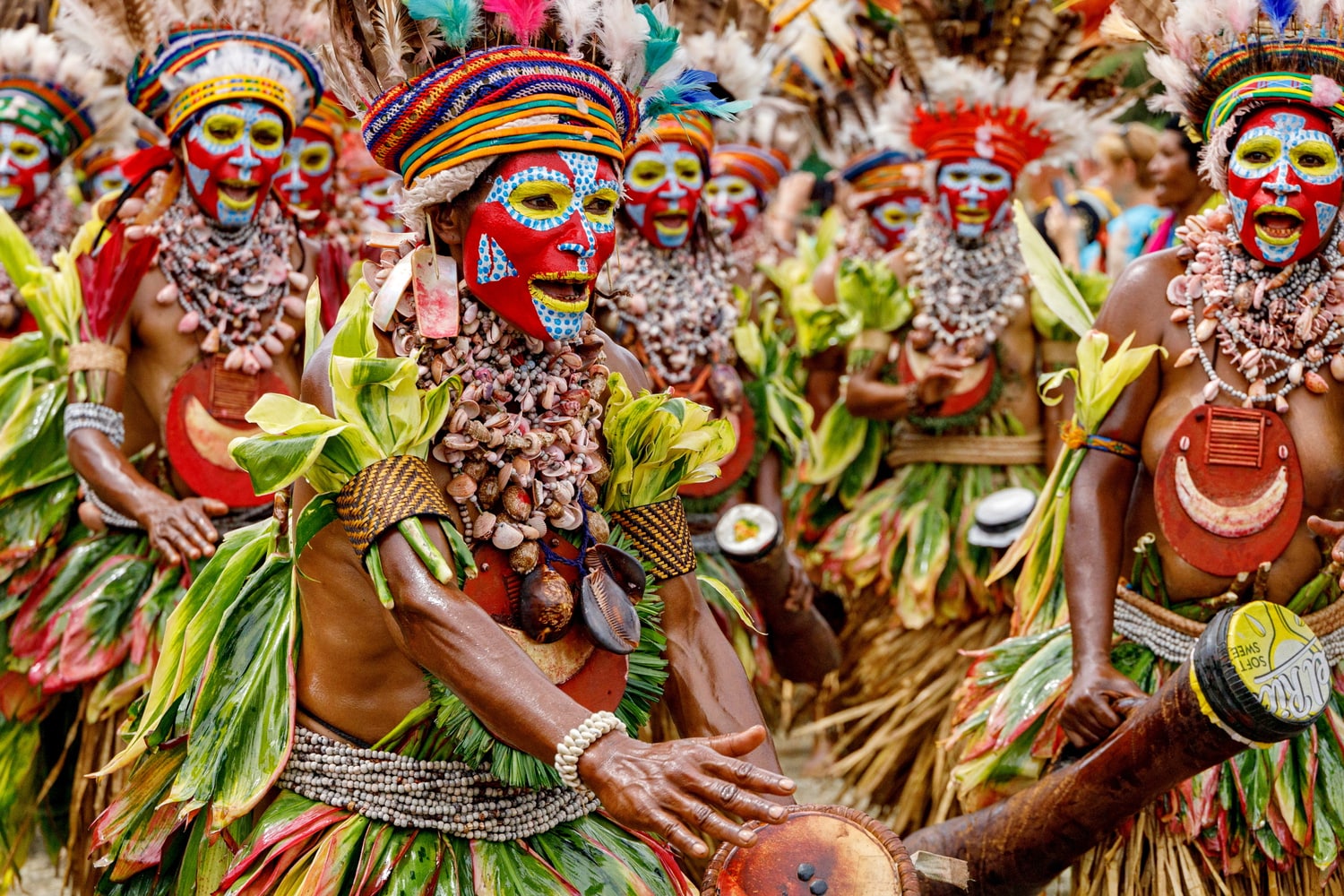
New Guinea is one of those places on Earth that still preserves a strong sense of mystery. The island amazes with its contrasts of nature, cultures, and ways of life that developed over thousands of years with very limited outside influence. Interesting facts about this region often surprise even experienced travelers, and there are many things you may not know from standard geography lessons. Incredible facts reveal how deeply nature and human history are intertwined here. Fascinating facts about New Guinea help us better understand the richness and diversity of our world.
- New Guinea is the second largest island in the world after Greenland. It lies in the western Pacific Ocean and is divided between two political entities. The western part belongs to Indonesia, while the eastern part forms the independent state of Papua New Guinea.
- The island is famous for its extraordinary linguistic diversity. More than 800 languages are spoken across its territory, representing roughly one tenth of all the world’s languages. Many of these languages are used only in a single village or a small cluster of neighboring communities.
- New Guinea has one of the oldest records of human settlement on the planet. Archaeological evidence suggests that people have lived here for over 40,000 years. This makes the island a key region for understanding early human migration and adaptation.
- Mountainous areas of New Guinea remained isolated from the outside world for a very long time. Some highland tribes encountered Europeans for the first time only in the twentieth century. As a result, many traditional customs and social structures survived with minimal change.
- The island is covered by some of the wettest tropical rainforests on Earth. Heavy rainfall creates ideal conditions for lush vegetation and complex ecosystems. These forests are home to thousands of endemic plant and animal species.
- The wildlife of New Guinea differs significantly from that of Asia and Australia. The island is home to marsupials, birds of paradise, and unique species of tree kangaroos. Many animals found here do not exist anywhere else in the world.
- Birds of paradise have become a powerful symbol of New Guinea. Their vivid plumage and elaborate courtship dances have fascinated scientists for generations. For many local communities, these birds also carry deep cultural and spiritual meaning.
- New Guinea has a remarkably varied climate. Coastal regions experience hot and humid tropical conditions, while the highlands can be cool and occasionally experience frost. This creates sharply different living environments within a relatively compact area.
- A massive mountain chain stretches across the center of New Guinea for more than one thousand kilometers. Several peaks rise above four thousand meters in elevation. These mountains strongly influence the island’s climate and weather patterns.
- Sweet potato cultivation plays a central role in the diet of many New Guinean communities. It is especially important for people living in the highlands. This crop allowed permanent settlement in remote and challenging environments.
- Traditional initiation rituals are still practiced in many parts of New Guinea. These ceremonies may last for several days or even weeks. They mark the transition from childhood to adulthood and reinforce social identity.
- The island is known for its complex network of tribal relationships. Alliances and conflicts between communities developed over centuries. These interactions shaped languages, artistic traditions, and social rules.
- In some societies, land is owned collectively rather than by individuals. This communal approach influences how resources are managed and how decisions are made. Shared ownership remains a core element of social organization.
- Traditional adornments are crafted from natural materials. Feathers, bones, shells, and plant fibers are commonly used. Each decorative element carries symbolic meaning tied to status, ancestry, or ritual.
- New Guinea is considered one of the world’s major centers of biodiversity. The island hosts an immense variety of plants, insects, and amphibians. Many species remain poorly studied by modern science.
- In the interior regions, slash-and-burn agriculture was practiced for generations. This method allowed communities to use forest resources efficiently. Over time, it helped shape the landscape of large areas.
- Many traditional art forms are closely linked to mythology. Masks and carved figures are used during ceremonies and communal gatherings. They reflect beliefs about spirits and the importance of ancestors.
- Some communities had extremely limited contact with the outside world until the mid twentieth century. The sudden arrival of modern technology transformed daily life in a very short period. This created a unique blend of ancient traditions and contemporary influences.
- New Guinea played a significant role during the Second World War. Fierce battles took place between Allied forces and Japan on the island. Remnants of this history can still be found deep in the jungle.
- The island is rich in natural resources. Gold, copper, and other minerals are extracted from its भूमि. Resource development has brought major economic and social changes to many regions.
- Oral history traditions remain strong in certain communities. Stories, legends, and genealogies are passed down through generations. They function as living records of the past.
- The food culture of New Guinea is highly diverse. In addition to root crops, people rely on fish, fruits, and wild plants. Diets vary greatly depending on geography and climate.
- New Guinea is recognized as one of the regions where agriculture developed independently. Several cultivated plants originated here without influence from other parts of the world. This highlights the adaptability and ingenuity of local populations.
- Today, the island faces serious environmental challenges. Deforestation and industrial activities threaten fragile ecosystems. At the same time, efforts to protect New Guinea’s unique natural heritage are gaining momentum.
New Guinea demonstrates just how diverse and complex our planet can be. Interesting facts about the island reveal a deep connection between nature, culture, and history. Incredible facts from the lives of its peoples encourage a broader perspective on human development. Fascinating facts about New Guinea remind us that even in the modern age, there are places capable of inspiring genuine wonder.


