
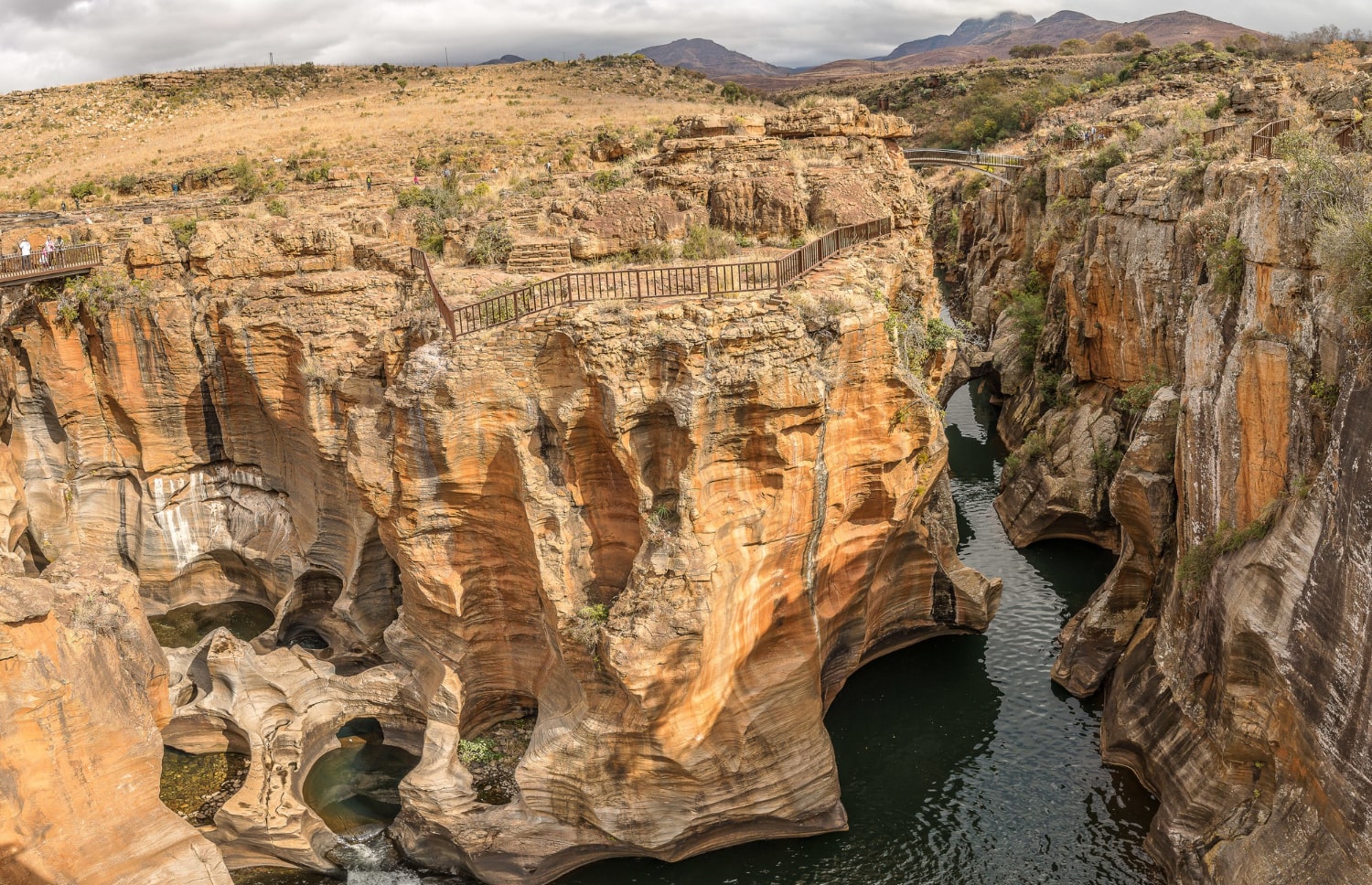
Canyons have fascinated people for centuries with their immense scale, dramatic shapes, and the sense of deep time they convey. They appear to be silent witnesses to Earth’s history, shaped over millions of years by powerful natural forces. Many interesting facts about canyons are connected not only with geology, but also with climate, biodiversity, and human interaction with the landscape. Among them are truly incredible facts that can change how we perceive familiar natural scenery. You may not know just how complex and diverse these formations really are.
- Canyons are formed mainly through long-term erosion caused by water, wind, and ice. In most cases, rivers play the central role by slowly cutting into layers of rock. This process can last for millions of years and remain almost imperceptible on a human timescale. For this reason, canyons are often described as natural records of Earth’s geological history.
- The depth of some canyons reaches several kilometers. Such enormous dimensions create dramatic elevation changes within a relatively small area. As a result, different microclimates can develop inside a single canyon. Temperature and humidity may vary significantly with changes in height.
- The walls of canyons often display visible layers of rock formed in different geological periods. Each layer represents a distinct chapter in the planet’s past. Scientists study these natural cross sections to better understand Earth’s history. This makes canyons extremely valuable for geological research.
- Canyons can form not only on land, but also beneath the surface of the oceans. Submarine canyons exist on the seafloor and are often larger than their land-based counterparts. They play an important role in shaping underwater landscapes. These structures also influence ocean currents and the movement of nutrients.
- Many canyons are home to unique plant and animal species. Isolation and specific environmental conditions encourage the development of endemic life forms. Some species exist only within a single canyon system. This makes canyons important centers of biodiversity.
- Rivers flowing along canyon floors are often fast and powerful. This is due to the steep gradient of the terrain. Such conditions limit navigation but promote the formation of rapids and waterfalls. Fascinating facts about canyons are frequently linked to the energy and movement of water within them.
- The color of canyon walls depends on the composition of the surrounding rocks. Red, yellow, and brown tones are commonly caused by the presence of iron. Lighter layers are usually formed from limestone or sandstone. Changes in sunlight throughout the day make these colors especially striking.
- Canyons can have a noticeable influence on local weather conditions. They may channel air currents and intensify winds. In some regions, this leads to frequent temperature inversions. These effects contribute to the formation of unique local climates.
- In ancient times, canyons served as natural fortifications. People used them as shelters or defensive barriers. Steep walls made access difficult for enemies. You may not know that many early settlements developed near canyon landscapes.
- In many cultures, canyons were considered sacred places. They were believed to be locations of spiritual power or homes of supernatural beings. Myths and legends often connected these landscapes with deities. Such beliefs are still preserved in the traditions of certain communities.
- Some canyons continue to change actively even today. Floods can dramatically accelerate erosion processes. In a relatively short period, the terrain can undergo visible transformation. This shows that canyon formation is still an ongoing process.
- The width of a canyon can vary greatly along its length. In narrow sections, sunlight barely reaches the bottom. In other areas, the canyon may widen to several kilometers. This variation creates diverse landscapes within a single canyon system.
- Canyons are popular destinations for tourists from around the world. People are drawn by breathtaking views and the feeling of nature’s vast scale. However, heavy tourism can damage fragile ecosystems. For this reason, many canyons are protected areas.
- Fossils are often discovered within canyon walls. They preserve traces of ancient plants and animals. These findings allow scientists to reconstruct ecosystems from distant eras. Incredible facts about canyons are frequently revealed through such discoveries.
- Canyons can result not only from water erosion, but also from tectonic activity. Movements of the Earth’s crust create cracks and faults. Over time, erosion deepens these features. The combination of processes produces complex geological structures.
- Sound behaves in a distinctive way within canyons. Echoes can reflect repeatedly off the rock walls. This creates unusual acoustic effects. Some canyons are well known for their unique sound properties.
- Vegetation within canyons is often arranged in vertical zones. Moisture-loving plants grow near the bottom. Higher up, species adapted to dry conditions dominate. This layering clearly reflects the influence of altitude and climate.
- Some canyons are so deep and difficult to access that their floors remained unexplored for a long time. Early expeditions involved significant danger. Modern technology has made exploration safer and more efficient. Even so, many areas still hold hidden secrets.
Canyons are true natural archives where geology, climate, and life intersect. Interesting facts about them reveal how multifaceted these formations really are. Incredible facts and fascinating observations help us see canyons not simply as deep valleys, but as complex natural systems. If you look closely, you may discover how many stories are written within their towering stone walls.


