
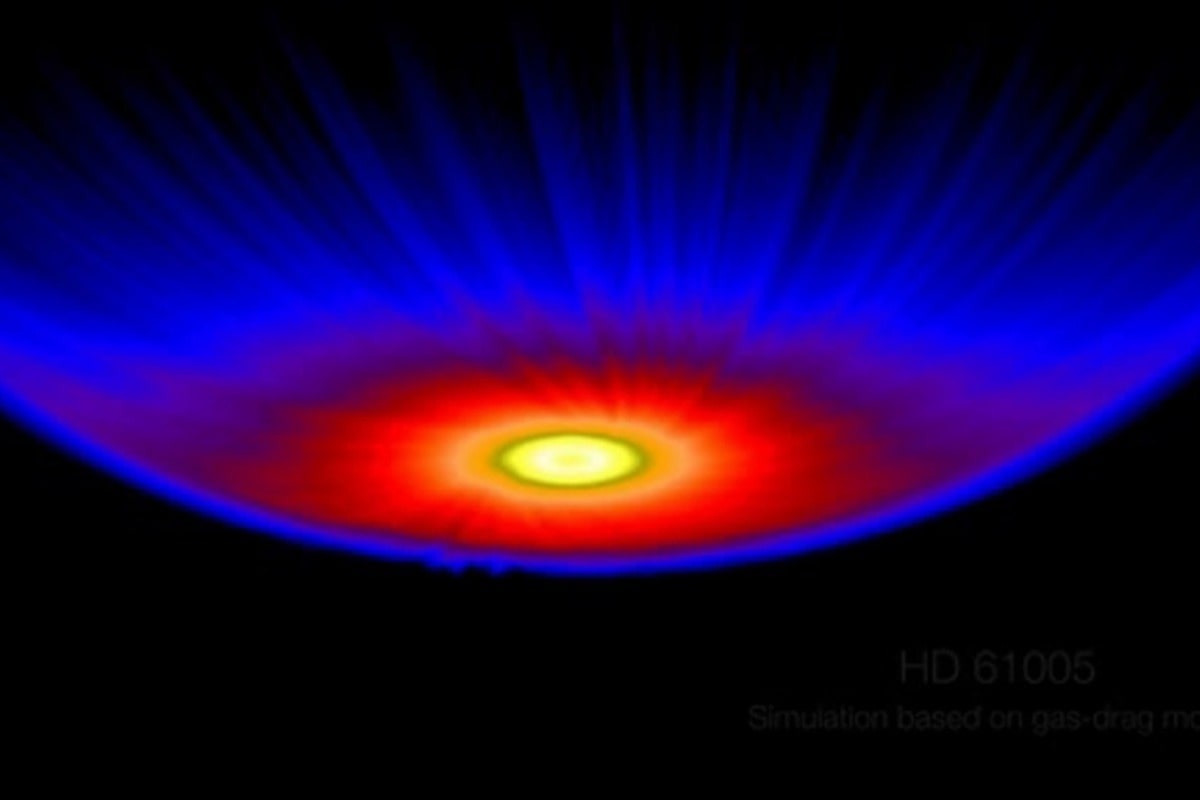
The interstellar wind is one of the least visible yet most significant phenomena shaping the dynamics of cosmic space. It consists of streams of particles moving between stars and interacting with magnetic fields, gas clouds and even the heliosphere of our Solar System. These interesting facts reveal how complex and variable the interstellar environment can be, governed by unique physical conditions. Understanding this phenomenon helps explain the formation of galactic structures, the behaviour of cosmic matter and the motion of stellar systems. Below is a collection of captivating information you might not have known about the interstellar wind.
- The interstellar wind is formed from streams of charged particles generated by supernova explosions and by the influence of stellar radiation on interstellar gas. These particles, primarily protons and electrons, travel at extremely high speeds. They create intricate flows that stretch across interstellar space. Their formation is an essential component of galactic evolution.
- The medium through which the interstellar wind travels contains gas, dust and plasma distributed unevenly throughout the galaxy. This irregular structure creates natural obstacles for moving particles. Collisions with dust grains and gas clouds alter the properties of the flow. These interactions allow scientists to examine the physical state of interstellar matter.
- The speed and direction of the interstellar wind are significantly influenced by the magnetic fields of the Milky Way. Magnetic lines cause charged particles to adjust their trajectories. This process produces spiral structures spanning many light-years. The behaviour of these particles provides insight into the nature of the galactic magnetic field.
- The interstellar wind plays a key role in shaping the heliosphere, the region of space where the solar wind dominates. As interstellar streams reach its boundary, they slow down and compress it. This interaction changes the heliosphere’s size and structure. It also helps determine the true extent of the Sun’s influence.
- The spacecraft Voyager 1 was the first to record entry into interstellar space, where the solar wind no longer prevails and interstellar flows become dominant. Measurements showed a sudden increase in plasma density. This became the first direct evidence of the existence of the interstellar medium. The collected data remains crucial for studying cosmic processes.
- The interstellar wind carries not only charged particles but also dust grains formed after supernova explosions. These grains serve as the raw material for new stars and planets. Over time they mix with matter in the galactic disk and create complex structures. This continuous recycling of matter is fundamental to cosmic evolution.
- Streams of interstellar wind can create shock fronts when they collide with other flows or gas clouds. These fronts heat the surrounding medium to extreme temperatures. They can also generate X-ray radiation. This makes them valuable tools for understanding energetic processes deep within the galaxy.
- Magnetohydrodynamic waves are a distinctive feature of the interstellar wind. They arise through interactions between particles and magnetic fields. These waves influence how energy is distributed throughout interstellar space. Studying them helps explain the behaviour of cosmic plasma.
- The interstellar wind can reshape galactic nebulae as it passes through them. It disperses gas and produces curved, extended formations. These changes are visible even from thousands of light-years away. They demonstrate the dynamic nature of the interstellar environment.
- In certain regions the interstellar wind can reach hundreds of kilometres per second. This makes it one of the fastest natural flows in the galaxy. Such extreme speeds result from the powerful energy released by supernovae. These streams have the ability to alter the structure of interstellar space.
- The interstellar wind transports high-energy cosmic rays that influence planetary atmospheres. These particles can penetrate deep into atmospheric layers. They trigger chemical reactions and affect the formation of ozone layers. In some cases they may even influence climate conditions.
- The interstellar wind contributes to the movement of cosmic dust throughout the galaxy. Dust grains travel along with the particle stream. This leads to their even distribution within the galactic disk. In this way new clouds capable of forming stars begin to emerge.
- When the interstellar wind interacts with gas clouds, it can heat and excite them. In this state the gas emits light. This emission, known as line emission, helps astronomers determine the chemical composition of galactic gas. It also provides valuable data on the chemical evolution of galaxies.
- The interstellar wind can affect the motion of stars as they travel through dense regions of the interstellar medium. A star’s velocity may shift slightly during such passages. Although these changes are small, they accumulate over millions of years. This reveals how stellar systems interact with their cosmic surroundings.
The interstellar wind is a crucial component of the galactic environment, shaping structure, energy flow and the movement of matter on vast scales. These interesting facts highlight its complexity, its influence on numerous cosmic processes and its importance for understanding the Universe. Ongoing research into the interstellar wind continues to unveil new aspects of cosmic nature and deepens our knowledge of the space between the stars.


