
Swimming is one of the oldest and most versatile human skills, combining strength, endurance and fluid, harmonious movement. It serves not only as a means of traveling through water but also as an important element of sport, wellbeing and relaxation. Throughout history, swimming has developed across many cultures, taking on various forms and meanings. Today it offers many fascinating aspects you might not know. Below you will find interesting facts that reveal the world of swimming from a new perspective.
- The origins of swimming date back to prehistoric times, as shown by ancient cave drawings depicting people in the water. Humans mastered swimming long before organized sports appeared. This skill was essential for survival during hunting and migration. It highlights how deeply connected early humans were to aquatic environments.
- Ancient Egyptians and Greeks considered swimming an important part of education. In Greece even future warriors learned to swim confidently, as it was viewed as a sign of discipline and physical readiness. The Romans built special pools for training and leisure. These civilizations laid the foundation for the development of modern swimming.
- Swimming became part of the very first modern Olympic Games in 1896. At that time competitions were held in open water, which created major challenges for athletes. Wind, waves and cold water significantly influenced the results. Only later were events moved to controlled pool environments.
- Modern swimming pools follow strict standards to ensure equal conditions for all participants. Lane width, pool length, water depth and temperature are precisely regulated by international organizations. These requirements allow for objective and comparable results. They also increase fairness and accuracy in competitive swimming.
- Freestyle is one of the fastest and most energy-efficient strokes. Alternating arm and leg movements create continuous forward propulsion. Breathing is coordinated with head rotation, helping swimmers maintain rhythm. This stroke is widely used by professionals across different distances.
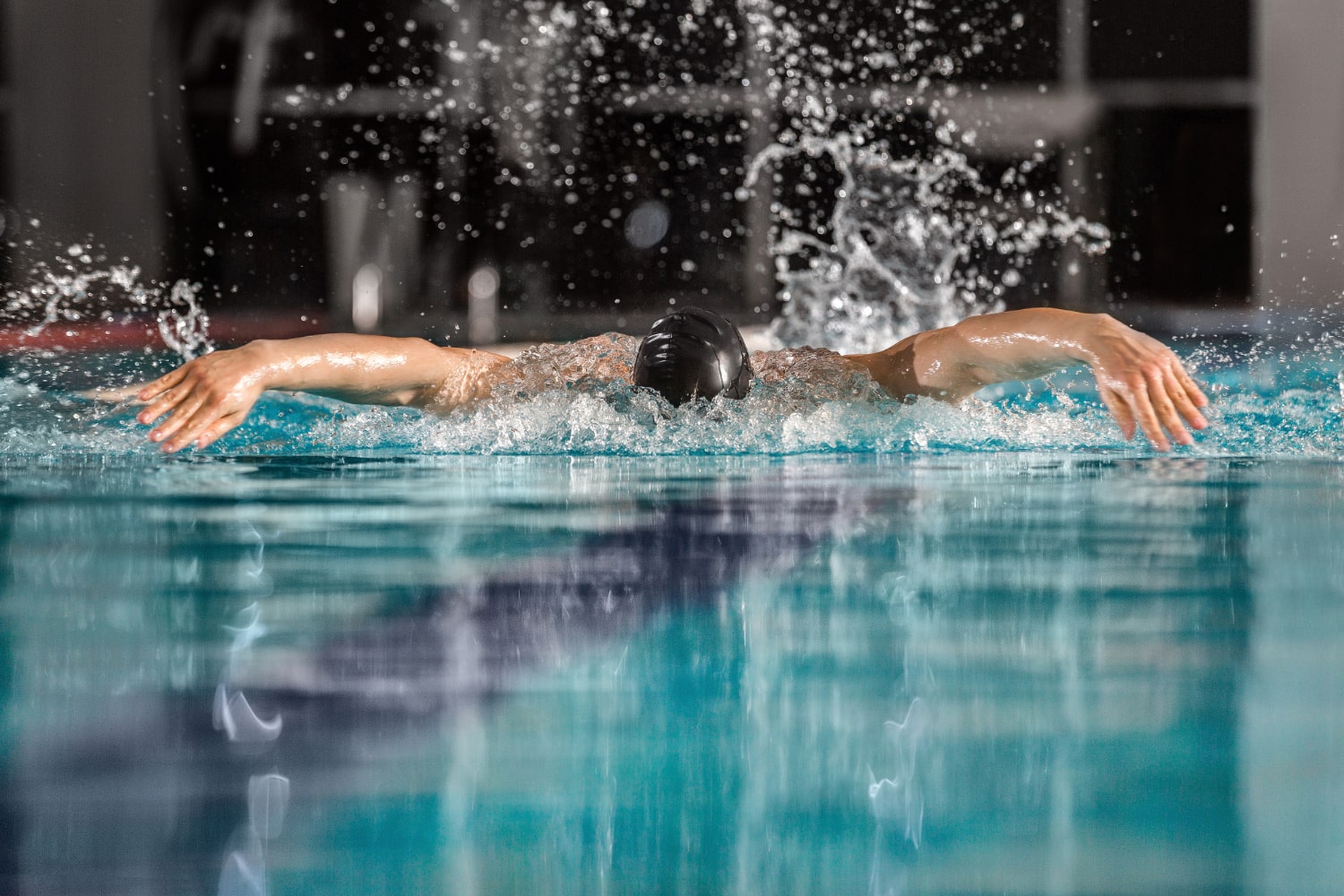
- Butterfly is considered one of the most demanding strokes because it requires simultaneous arm movement and a wave-like motion of the entire body. It places great emphasis on strong back, shoulder and core muscles. The butterfly stroke develops exceptional coordination and is visually impressive. Watching it in competitions always leaves a strong impression.
- Breaststroke is the slowest stroke but stands out for its stability and high level of control. It is often taught first because its movements feel natural to beginners. This stroke helps swimmers stay comfortably on the surface and maintain direction. It is suitable for both fitness and competitive swimming.
- Swimming engages almost all major muscle groups, making it one of the most effective forms of physical exercise. Water resistance forces the body to work harder while reducing joint strain. Because of this, swimming is beneficial for people of all ages and abilities. It simultaneously strengthens the heart, lungs and muscles.
- Regular swimming reduces stress thanks to rhythmic movement and the calming effect of water. Being in water naturally relaxes the nervous system. During swimming endorphins are released, improving mood and overall wellbeing. This is why swimming is often recommended as part of recovery programs.
- Many professional swimmers start training in early childhood, when muscle memory forms most effectively. Early practice helps develop flexibility, proper breathing techniques and a natural feel for water. Training at a young age occurs in a gentle manner to avoid overuse injuries. These foundations often lead to future athletic success.
- Swimming records frequently improve due to advances in technology and equipment. Hydrodynamic swimsuits reduce water resistance and allow faster performance. Some models were even banned for providing excessive advantages. This shows how strongly technology influences modern swimming.
- Electronic timekeeping was introduced to swimming in the mid-20th century. It allowed results to be measured with extremely high precision, down to thousandths of a second. This accuracy is crucial in short-distance races where outcomes are often determined by tiny margins. Today electronic timing is an essential part of competitions.
- Open-water swimming differs greatly from pool swimming because of unpredictable natural conditions. Water temperature, currents, waves and even marine animals may affect performance. Athletes must demonstrate strong endurance and navigational skills. Open-water races are considered among the most challenging in the sport.
- Some of the longest open-water swims span hundreds of kilometers and last several days. Swimmers rely on support teams that monitor the route and provide necessary nutrition. These extreme challenges often become world-record achievements. They showcase the extraordinary endurance of the human body.
- Dolphin-like body movements are considered among the most hydrodynamically efficient. Many strokes incorporate a wave motion of the torso to save energy. This technique increases speed and reduces fatigue. Nature-inspired movement patterns make swimming more effective overall.
- Relay events in swimming require exceptional teamwork and coordination. Each swimmer is responsible for a segment of the distance, and the precision of transitions affects the final outcome. Synchronization and steady pacing are critical to success. Relays create a unique team-driven atmosphere in competitions.
- Swimming helps improve posture by strengthening back and core muscles. Water reduces pressure on the spine, allowing safe and balanced movement. Regular training increases flexibility and overall body stability. Because of this, swimming is highly recommended for people with sedentary lifestyles.
- The human body has natural buoyancy due to its density, which is close to that of water. Proper use of lung capacity increases flotation and reduces energy consumption. This helps swimmers maintain efficiency over long distances. Buoyancy is one of the fundamental principles supporting successful technique.
- Breathing and heart rate become more rhythmic during swimming compared to many land-based workouts. This enhances endurance and supports cardiovascular health. Water gently massages the muscles, easing fatigue. For these reasons swimming is considered an ideal long-term fitness activity.
- In many ancient cultures swimming held ritual significance and symbolized purification. Water was viewed as sacred and used in ceremonies marking important life transitions. These traditions influenced modern approaches to recreational and therapeutic swimming. Human connection with water has long been associated with strength and renewal.
The world of swimming contains countless fascinating aspects that highlight its diversity and depth. All these interesting facts help reveal the significance of swimming in human development and health. They also show how strongly people remain connected to water both physically and symbolically. Exploring this knowledge allows us to appreciate swimming as a harmonious, energetic and uniquely valuable form of movement.


