
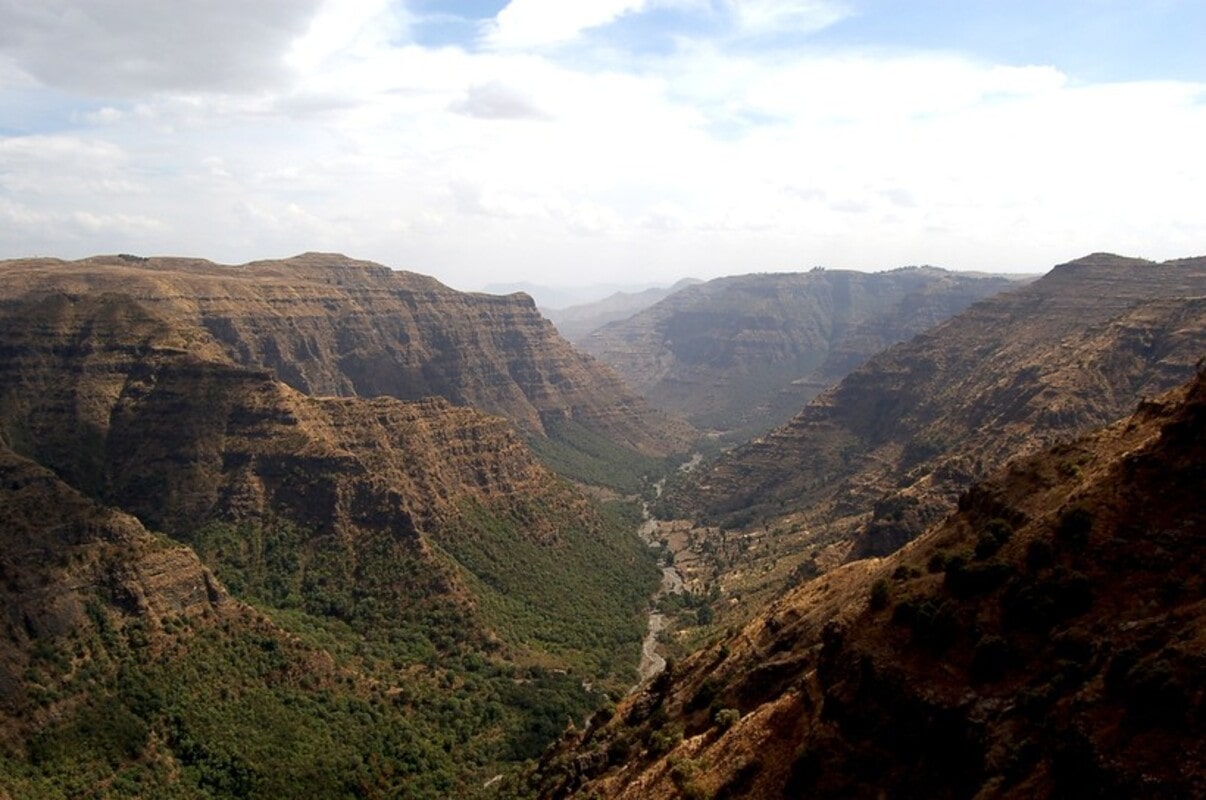
Rift valleys are among the most impressive geological formations on Earth, and they contain many interesting facts you may not have known. They form in places where lithospheric plates slowly move apart and the Earth’s crust stretches and thins. This process lasts millions of years and leads to the creation of new landforms, volcanoes, lakes and even the foundations of future oceans. These captivating facts will help you better understand the nature of rift systems, their scientific significance and their influence on human life. The world of rift valleys is so fascinating that its study constantly brings new discoveries.
- Rift valleys form as a result of the stretching of the Earth’s crust. When plates separate, fractures and depressions appear, which gradually transform into deep, elongated troughs. This process unfolds slowly and can continue for an immense period of time. Such regions often become centres of intense tectonic activity.
- One of the most famous rift systems in the world is the East African Rift. It stretches for several thousand kilometres, from the Red Sea to Mozambique. It passes through multiple African countries and shapes exceptionally diverse landscapes and ecosystems. It is one of the most extensively studied rift regions on Earth.
- Active volcanoes are common in rift valleys. In the East African Rift, volcanoes such as Nyiragongo and Kilimanjaro are prominent examples. They formed as magma rose through weakened parts of the crust. These areas continue to experience volcanic activity today.
- Rift regions often host large lakes. Water accumulates in deep depressions, forming enormous bodies of water. Lake Tanganyika is one of the deepest lakes in the world. It owes its origin to the structure of the rift.
- Some rift valleys lie beneath the oceans. Mid-ocean ridges are rift zones where oceanic plates diverge. New oceanic crust is created in these regions. This process plays a crucial role in global geodynamics.
- Rift valleys can become the birthplace of new oceans. Prolonged stretching of the crust eventually leads to the formation of cracks that fill with seawater. The Red Sea is an example of a young ocean basin. Similar processes may reshape the outlines of continents in the distant future.
- Rifting influences the topography and climate of surrounding areas. Uplifted and subsided regions create new mountains and plains. This affects wind circulation, precipitation patterns and local climates. Some rift valleys become fertile regions, while others are extremely arid.
- Seismic activity is elevated in rift zones. The stretching of the crust leads to the formation of new faults, which produce earthquakes. These earthquakes typically occur at shallow depths. They pose challenges for infrastructure and urban development.
- The Earth’s crust in rift valleys is thinner than in neighbouring regions. This is a direct result of crustal stretching and fracturing. The thin crust allows magma to rise more easily. As a result, volcanic activity in rift systems can be especially intense.
- Rift valleys often exhibit a complex structure with multiple parallel faults. These faults form stepped landscapes that can extend for hundreds of kilometres. Such structures give rise to diverse geological formations. They make rift zones exceptionally valuable for scientific study.
- Rift regions possess abundant geothermal energy. Underground heat creates geysers, hot springs and geothermal fields. These resources are used to produce clean and renewable energy. Rift zones are considered highly promising for geothermal development.
- Rift valleys are extremely important for archaeology. Eastern Africa is famous for discoveries of the earliest human ancestors found within the rift system. Fossils preserved there provide crucial insight into human evolution. These regions are central to paleoanthropological research.
- Valuable mineral deposits can form in rift zones. Magmatic activity and faulting create conditions that promote the concentration of metal ores. Some minerals accumulate over millions of years. This makes rift areas strategically important for industry.
- Rifting influences biodiversity. Deep depressions create isolated ecosystems that host unique plant and animal species. Some rift lakes contain endemic species found nowhere else on Earth. These regions serve as natural laboratories of evolution.
- Rift processes can lead to the formation of new river systems. As the landscape changes, water flows into newly created lowlands. New rivers and drainage basins emerge. This transformation reshapes the ecological structure of entire regions.
- Volcanic activity in rift valleys can continue long after the main phase of crustal stretching has ended. Magma continues to rise through older faults. This sustains volcanic activity for long periods. Some of Earth’s youngest volcanoes formed in rift zones.
- Certain rift valleys are so vast that they can be seen from space. The East African Rift, for example, is one of the largest linear structures on the planet. It stretches for thousands of kilometres. Such formations are essential for understanding the global dynamics of the Earth’s crust.
These interesting facts about rift valleys highlight how extraordinary and complex these geological formations are. You may not have known that rift zones shape the future of continents, influence climate, form unique ecosystems and preserve traces of ancient human history. They remain among the most important natural laboratories where science continues to uncover new secrets of our planet.


