
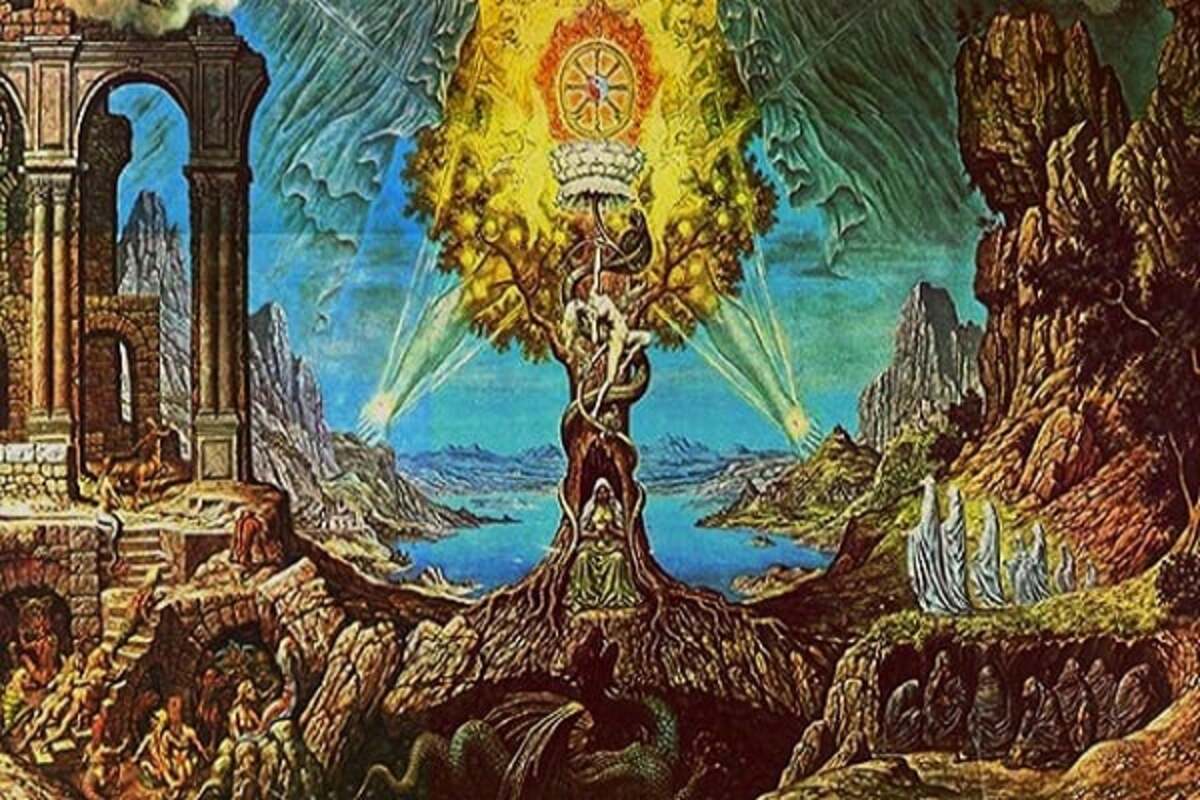
Gnosticism is one of the most mysterious spiritual and philosophical traditions, leaving a significant mark on religion, mysticism and culture across different eras. You might not know that the Gnostics created extensive worldviews that combined cosmology, ethics and the pursuit of inner knowledge. These interesting facts reveal how remarkably symbolic, bold and multidimensional their understanding of reality was. Because gnostic movements were diverse and decentralised, there was no single fixed doctrine, but many interpretations describing the nature of God, the universe and the human soul. Gnosticism remains an active field of study, offering valuable insight into the spiritual history of the ancient world.
- Gnosticism emerged in the first centuries of the Common Era at the crossroads of Hellenistic philosophy, Jewish traditions and early Christianity. Its central principle was the pursuit of inner knowledge that could lead to liberation. Gnostics believed that understanding the divine origin of the soul freed a person from the limitations of the material world. This view set them apart from orthodox religious movements.
- In gnostic cosmology, the material world was considered an imperfect creation of a lower divine being known as the Demiurge. He was not regarded as evil, but rather as limited and unaware of the true spiritual reality. For this reason, the physical world was seen as a trap for the soul. Liberation meant ascending to a higher spiritual realm.
- Gnostics believed in a supreme Divine Fullness from which emanated spiritual beings called aeons. Each aeon embodied a specific attribute of divinity, such as Wisdom or Light. The relationships among these aeons formed a complex structure of the spiritual universe. This framework helped explain the origins of evil and suffering.
- One of the most important figures in gnostic mythology was Sophia, the aeon of Wisdom. In many gnostic texts, her desire for deeper knowledge led to the accidental creation of the Demiurge. Her story symbolised the soul’s longing for God and the tragedy of separation from the spiritual world. Sophia represented both a cosmic fall and the hope of return.
- Gnosticism consisted of many schools, including Valentinianism, Sethianism and the Ophites. Each developed its own texts, myths and rituals. The core belief uniting all gnostic traditions was that salvation comes through knowledge. This diversity makes gnosticism an exceptionally complex and wide-ranging system.
- Gnostic communities flourished in regions such as Egypt, Syria and Asia Minor, where they interacted with various religious and philosophical movements. Their texts were written mainly in Greek and Coptic. These writings are valuable sources for historians of religion. They provide insight into the spiritual atmosphere of the ancient Mediterranean world.
- In 1945, a collection of gnostic manuscripts was discovered near Nag Hammadi in Egypt, becoming a major scientific breakthrough. This library contained lost Gospels, treatises and prayers. The discovery transformed scholarly understanding of early Christianity. Among the most famous texts are the Gospel of Thomas and the Apocryphon of John.
- Gnostics often used symbolic language, metaphors and allegories to express their ideas. They believed that true knowledge was accessible only to those who could interpret hidden meanings. For this reason, gnostic writings can be challenging to understand. Their symbolic depth gives them exceptional richness.
- Gnostic ideas strongly influenced the development of early Christian doctrine, even though the official Church condemned gnosticism as heresy. Many theological debates of the time revolved around issues raised by gnostic thinkers. The conflict between orthodox Christianity and gnostic movements contributed to the formation of the Christian canon. This historical tension left a lasting impact on religious thought.
- Gnostics described the human soul as a spark of divine light imprisoned in a material body. They believed that a person could return to the higher realm through self-knowledge. This required intellectual effort and inner discipline. For this reason, gnosticism was often seen as a path for seekers and thinkers.
- In several gnostic texts, Jesus is portrayed not as a sacrificial redeemer but as a teacher of hidden knowledge. His mission was to reveal the true nature of reality. His teachings were considered accessible only to the initiated. This interpretation differed significantly from orthodox Christian doctrine.
- Gnostic practices included meditation, rituals of purification and exercises aimed at awakening spiritual awareness. These practices were meant to prepare the soul for liberation from the material world. They emphasised the individual nature of the spiritual journey. Such an approach was innovative for its time.
- Gnosticism blended elements of philosophy, religion and mysticism, drawing from Platonism, Stoicism and Eastern traditions. This synthesis made the doctrine flexible and easily adaptable to various cultures. Its ideas therefore influenced many later spiritual movements.
- In the Middle Ages, gnostic concepts shaped movements such as Manichaeism and Bogomilism. Elements of gnostic thought can also be found in Christian mysticism. Gnostic symbolism later inspired alchemical and esoteric traditions. This demonstrates the enduring legacy of gnostic teachings.
These interesting facts show how complex and multifaceted the gnostic tradition truly was. You might not know that its ideas influenced religion, philosophy and mysticism for many centuries. Gnosticism offers a unique key to understanding the spiritual quests of ancient civilizations. It continues to attract scholars with its distinctive cosmology and rich symbolism.


