
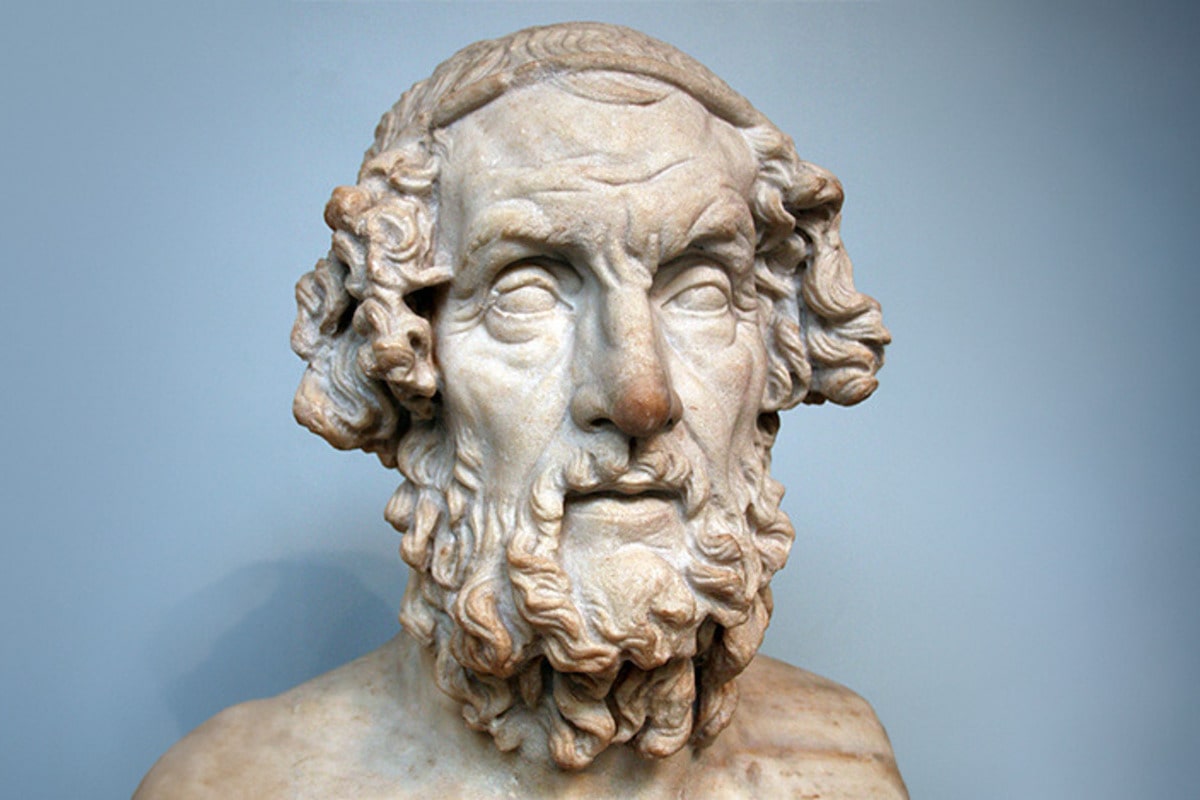
The figure of Homer has remained one of the most mysterious and influential in the history of world literature for many centuries. His name evokes admiration and curiosity, and his works became the foundation of the entire European cultural tradition. In this article you will discover interesting facts you may not have known and understand how profoundly Homer shaped literature, art and intellectual thought. The many uncertainties surrounding his life only deepen scholars’ interest. These captivating details will help you appreciate the significance and uniqueness of Homer’s legacy.
- Homer is traditionally regarded as the author of the two greatest epic poems of antiquity the Iliad and the Odyssey. These works emerged from a centuries-old oral tradition in which rhapsodes recited long passages from memory. Each performer could modify parts of the story, creating new variants along the way. As a result the texts that have survived today represent a long process of literary evolution.
- Some ancient traditions suggest that Homer may have been blind because several of his characters possess the same trait. Over time this image evolved into a symbolic portrayal of a poet who sees the world with imagination rather than sight. The legend of his blindness reinforced the perception of his wisdom and exceptional sensitivity. It also became a metaphor for inner vision.
- In antiquity many Greek cities claimed to be the birthplace of Homer. Among them were Chios, Smyrna, Colophon and Argos. This rivalry shows the immense prestige associated with his name. Each city sought to emphasize its connection to the origins of Greek culture.
- Scholars have debated for centuries whether the Iliad and the Odyssey were written by the same author. This debate known as the Homeric question has become one of the central issues in classical philology. Some researchers point to stylistic and structural differences as evidence of multiple authors. Others argue that both poems reflect the breadth of talent of a single creative mind.
- A defining element of Homeric style is the use of formulas fixed phrases adapted to the rhythm of the hexameter. These linguistic patterns made it possible for rhapsodes to memorize extensive passages and perform them fluently. Such a technique became the foundation of ancient epic poetry. It ensured the preservation and transmission of the poems across generations.
- Homer created complex multidimensional portraits of his characters setting a standard for future literature. His heroes experience emotional struggles doubts and inner conflicts making them remarkably realistic. For his era this psychological depth was highly innovative. It laid the groundwork for the development of psychological characterization in literature.
- The Iliad does not recount the entire Trojan War but focuses on only a few weeks of the ten-year conflict. Its main theme is the anger of Achilles and the consequences it brings to Greeks and Trojans alike. This limited time frame allows for deeper exploration of personality and motivation. It transforms the poem into both an epic and a philosophical work.
- The Odyssey features a sophisticated narrative structure where past and present intertwine through memories and storytelling. The journey of Odysseus is revealed gradually through layered narratives. This technique creates a rich dynamic world and adds multiple dimensions to the story. It also represents a highly innovative approach for ancient literature.
- Homer’s influence spread far beyond Greece and continues to shape Western culture. Philosophers poets dramatists and thinkers of many eras studied his works. Themes of honor fate perseverance and human frailty became cornerstones of European intellectual tradition. His epics also served as moral and educational texts for generations.
- During the Middle Ages the Iliad was often interpreted allegorically with scholars searching for spiritual symbolism. This approach allowed people to integrate ancient texts into a Christian worldview. Readers found hidden meanings in the actions and choices of characters. Such interpretations created new layers of understanding.
- In the Renaissance interest in Homer surged thanks to new translations of his works. His poems entered university curricula and became essential to humanistic education. Translators sought to preserve both the precision and the poetic beauty of the original. As a result Homer became a symbol of European literary heritage.
- In the modern era the Homeric question took on new relevance as scholars examined the oral nature of epic poetry. They concluded that the poems likely existed in multiple versions which evolved over centuries. This research shed light on the mechanisms of cultural memory. It also helped reassess the value of oral tradition.
- Homer’s works were illustrated extensively even in antiquity demonstrating their enormous popularity. Scenes from the Iliad and the Odyssey appeared on vases frescoes and sculptures. These images helped spread the stories to broader audiences. Today they serve as valuable visual sources for understanding ancient Greek culture.
- The epics of Homer inspired artists of the Baroque Classicist and Romantic periods. Figures such as Achilles Hector Odysseus and Penelope frequently appeared on canvases by renowned painters. These artworks shaped Europe’s perception of Greek mythology. They also reflected the enduring connection between ancient tradition and later artistic movements.
- Homer’s heroes embody both human virtues and weaknesses which keeps them relevant to modern readers. Their experiences resonate with contemporary life and everyday emotional struggles. Their decisions reveal universal motivations that drive people in various circumstances. This makes the epics a rich source of psychological insight.
- Homer’s texts contain numerous details about ancient Greek daily life customs and beliefs. These elements are invaluable to historians who study the era. Descriptions of clothing rituals food and household life help reconstruct the worldview of the time. Thus the poems hold historical as well as literary significance.
These fascinating facts about Homer demonstrate how profoundly he influenced global culture. You may not have known how deeply his works shaped literature art and philosophical traditions. His epics continue to inspire new generations who discover fresh meanings in them. Homer’s legacy grows stronger over time proving its uniqueness and timeless relevance.


