
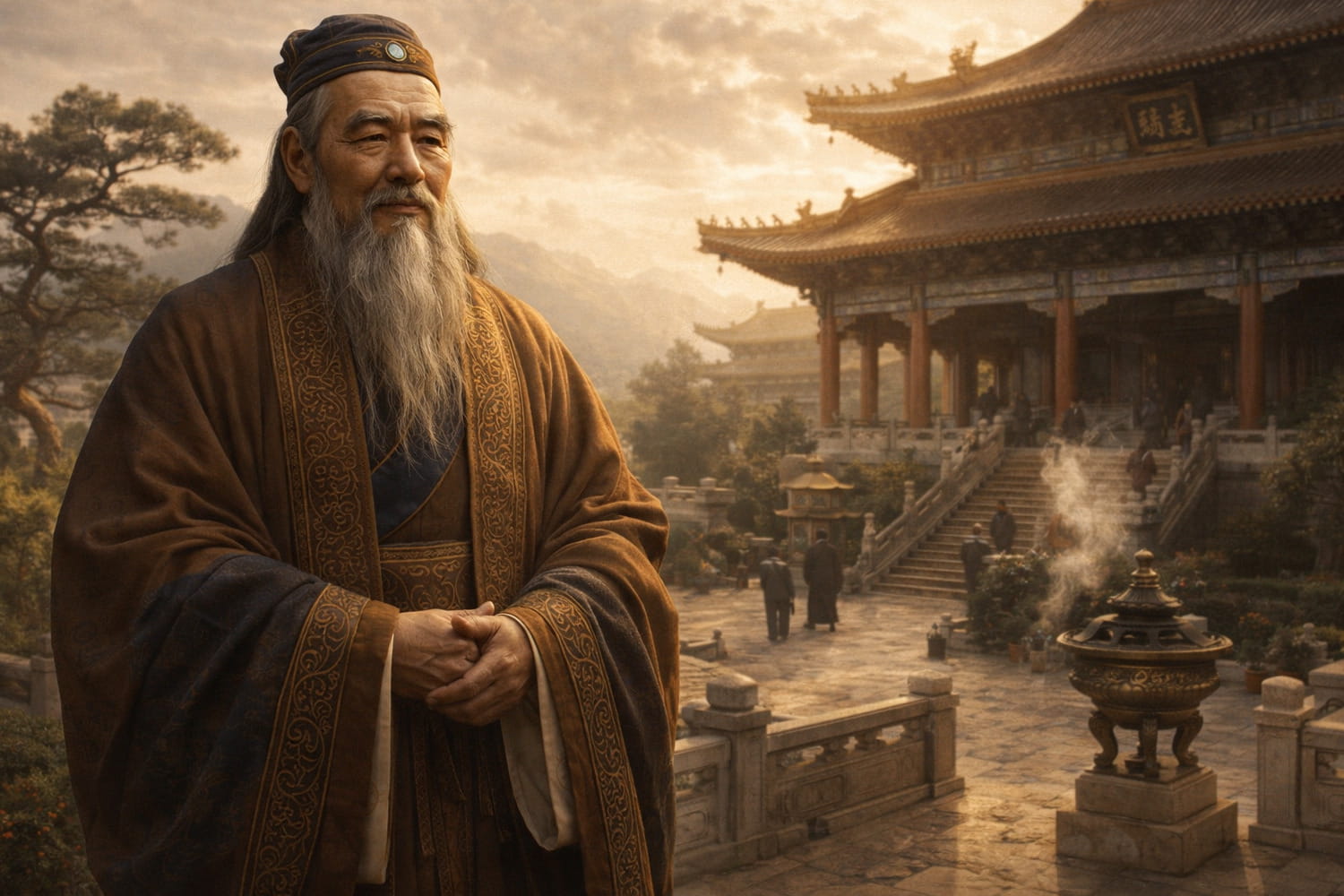
Confucianism is often perceived as an ancient religion although in reality it is a deep philosophical system that shaped the culture of East Asia. The teachings of Confucius have influenced billions of people for more than two millennia and remain relevant in the modern world. You might not know that these principles of upbringing and ethics permeate the daily life of many peoples even today. In this collection we will examine fascinating facts that will reveal the essence of this unique teaching. These incredible facts will help you better understand one of the most influential philosophies in human history.
- The founder of Confucianism lived from five hundred fifty-one to four hundred seventy-nine BC in ancient China. His real name was Kong Qiu while the title Confucius is a Latinized version that spread in the West. He was born during the Spring and Autumn period when China experienced political instability and constant wars. It was these difficult times that prompted the thinker to seek paths to harmony and moral revival of society.
- The main source of the teaching is considered to be the book Lun Yu or Analects which was compiled by students after the teacher death. This text contains dialogues of Confucius with followers and reveals key principles of his ethical system. The book consists of twenty chapters and each of them is devoted to separate aspects of life and governance. Studying this work was mandatory for everyone who sought to obtain education in imperial China.
- One of the central concepts of the teaching is ren which translates as humanity mercy or humanism. This notion calls on people to treat others with respect and compassion as they would treat themselves. Confucius believed that developing ren is the foundation for building a just and stable society. Without this quality it is impossible to achieve true harmony between people and states.
- An important role in the philosophy is played by li or ritual which regulates human behavior in various life situations. This includes not only religious ceremonies but also rules of etiquette politeness and social interactions. Observing li helps maintain order and avoid conflicts in daily life. Confucius emphasized that inner sincerity should be combined with external adherence to norms.
- The concept of xiao or filial piety is fundamental to Confucian ethics and family relationships. It requires children to respect their parents care for them in old age and preserve the memory of ancestors. This principle also extends to attitudes toward those older in age and higher in position in society. It is believed that family is the foundation of the state therefore strong family ties ensure country stability.
- The teaching describes five basic types of relationships that determine social structure and moral obligations of people. These are relationships between ruler and subject father and son husband and wife elder and younger brother as well as between friends. Each of these connections has its own rules of mutual respect and responsibility. Harmony in these relationships ensures peace and prosperity for the entire society.
- The ideal of Confucian personality is called junzi which means noble person or exemplary individual. Such a person strives for self-improvement acts according to moral principles and serves as an example for others. Junzi is guided not by personal gain but by justice and duty to society. Achieving this status requires constant work on oneself and deep study of classical texts.
- Confucius was one of the first teachers who accepted students regardless of their social origin and wealth. He believed that education should be accessible to everyone who has the desire to learn and develop. This approach laid the foundation for creating the system of state examinations in China which operated for over a thousand years. Thanks to this talented people from simple families could obtain high positions and influence in the state.
- The Five Canonical Books or Wujing form the basis of Confucian literature and include historical poetic and philosophical works. This collection includes the Book of Changes the Book of Songs the Book of Rites the Spring and Autumn Annals and the Book of History. These texts were studied by generations of Chinese intellectuals and shaped the worldview of the imperial elite. They contain the wisdom of ancient times and guidance on proper state governance.
- Confucianism spread beyond China and significantly influenced the culture of Korea Japan Vietnam and other countries in the region. In these states the principles of the teaching were integrated into local traditions and educational systems. It formed a unique East Asian way of thinking and social norms that persist to this day. Many modern values in these countries have deep Confucian roots.
- During the Cultural Revolution in China in the twentieth century Confucianism faced severe persecution and criticism as a relic of the past. Many temples and monuments were destroyed and the study of classical texts was prohibited. However after the end of this period interest in the teaching revived and it again became an important part of cultural heritage. Today the Chinese government supports the study of Confucianism as the foundation of national identity.
- Confucian temples or kongmiao are places for honoring the memory of the thinker and conducting educational activities rather than religious services. These complexes often host ceremonies honoring ancestors and teachers which emphasizes the importance of knowledge. The most famous temple is located in Confucius hometown of Qufu where unique architectural monuments are preserved. These places attract thousands of pilgrims and tourists who seek to touch ancient wisdom.
- The principle of rectification of names states that every thing and position should correspond to its name and essence. This means that a ruler should act as a true ruler and a father as a true father to maintain order. When words and reality diverge confusion and social instability arise. Confucius believed that clear definition of roles and responsibilities is the key to a harmonious society.
- Music and poetry played an important role in Confucian upbringing as means of shaping character and emotional balance. It was believed that harmonious melodies could calm the soul and promote moral development of personality. Confucius himself loved to play the ancient instrument qin and included music in the curriculum. This approach emphasizes the holistic development of a person through the combination of knowledge art and ethics.
- Confucianism places great importance on self-education and lifelong learning as a path to perfection and wisdom. The teaching calls for constantly analyzing one actions improving knowledge and striving for truth. Even in old age a person should continue to learn and pass on experience to younger generations. This principle remains relevant in the modern world where knowledge changes and updates rapidly.
These fascinating facts demonstrate how deep and comprehensive this ancient teaching is which continues to inspire millions of people. You might not know that Confucianism combines practical advice for everyday life with high philosophical ideals. We hope this information will inspire you to explore Eastern philosophy more deeply and find answers to modern challenges within it. These interesting facts open new horizons for understanding the cultural heritage of humanity and its significance for the future.


