
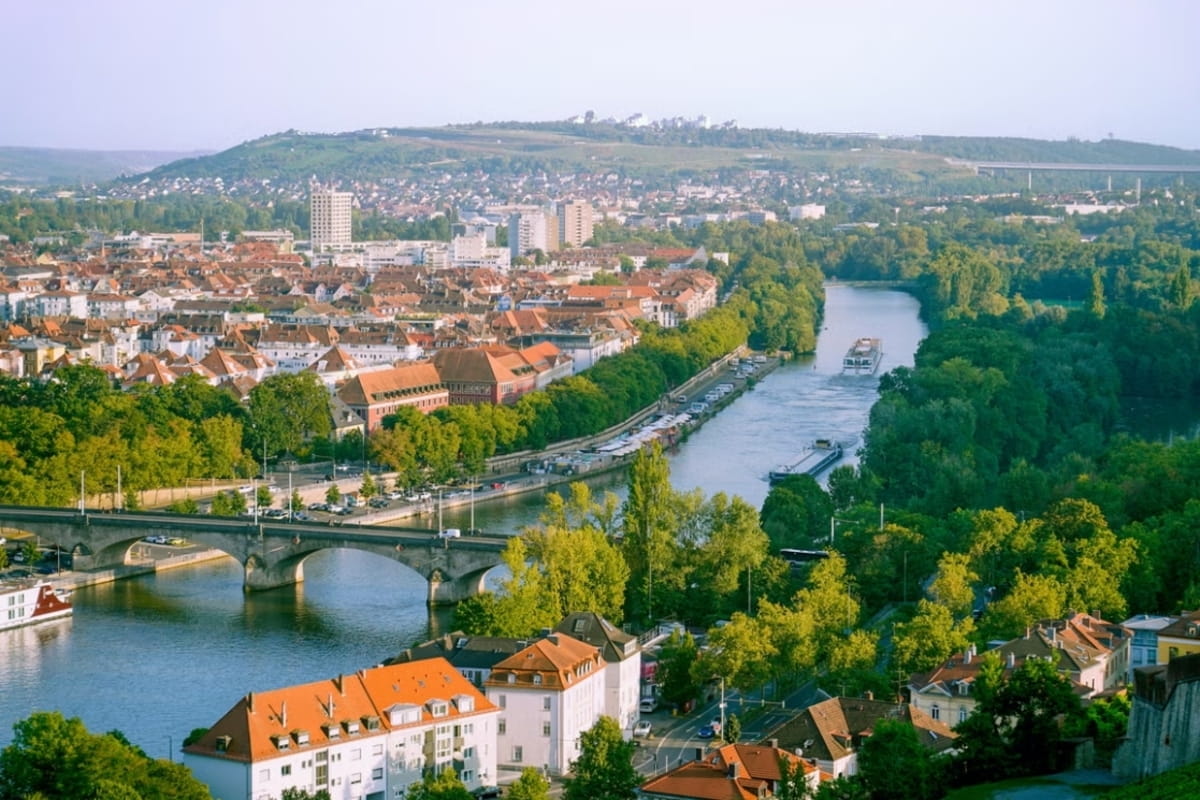
Bavaria is a federal state of Germany that has long become a symbol of everything humanity associates with this country: fairy-tale castles, frothy beer, Alpine meadows, and cheerful folk festivals. Yet behind this picturesque facade lies a far deeper and more complex history stretching back to the times of the ancient Celts and the Roman Empire. Fascinating facts about Bavaria are capable of surprising even those who consider themselves connoisseurs of this region, for this land is full of unexpected discoveries and paradoxes. Bavaria is simultaneously a bastion of conservative traditions and one of the most economically developed and innovative regions in the whole of Europe. We present a collection of interesting facts about Bavaria that you may never have known.
- Bavaria is the largest federal state in Germany by area and occupies approximately 20 percent of the entire territory of the country. Its area exceeds 70,500 square kilometres, which is greater than the area of such countries as Ireland or the Czech Republic. At the same time, the population of Bavaria exceeds 13 million people, making it the second most populous state after North Rhine-Westphalia.
- Munich — the capital of Bavaria — is the third largest city in Germany after Berlin and Hamburg. The city is situated at an altitude of approximately 520 metres above sea level, and on a clear day the Alps can be seen from there with the naked eye. Despite its image as a traditional Bavarian city, Munich is one of the wealthiest and most expensive cities to live in across the whole of Europe.
- Neuschwanstein Castle, built in the nineteenth century on the orders of King Ludwig II, has become one of the most famous castles in the world and attracts more than 1.5 million tourists annually. This castle inspired Walt Disney to create the image of an enchanted castle for his animated films and the logo of the Disney company. Despite its fairy-tale appearance, the construction of the castle proved so extraordinarily costly that it became one of the reasons for the coup and the removal of Ludwig II from power.
- Bavaria is the birthplace of Oktoberfest — the largest folk beer festival in the world, held annually in Munich. The first Oktoberfest took place in 1810 in honour of the wedding of Crown Prince Ludwig and Princess Therese of Saxony. Every year the festival is attended by between 6 and 7 million guests from around the world, who together consume more than 7 million litres of beer.
- The brewing culture of Bavaria is so ancient and significant that in 1516 the famous Reinheitsgebot — the celebrated beer purity law considered the oldest food-related law still in effect in the world — was enacted here. The law stipulated that beer could be brewed exclusively from water, barley malt, and hops. Although today this law in its original form is not mandatory for all producers, the majority of Bavarian breweries voluntarily adhere to its principles as a mark of quality.
- Bavaria is one of the wealthiest and most economically successful federal states in Germany. Were Bavaria an independent country, it would rank among the twenty richest economies in the world by gross domestic product. The headquarters of such global giants as BMW, Siemens, Allianz, and MAN are located here.
- The company BMW, whose name stands for Bayerische Motoren Werke — Bavarian Motor Works — was founded in Munich in 1916 and remains a symbol of Bavarian industrial might. The company’s headquarters in Munich is renowned for its distinctive four-cylinder building resembling a car engine and is one of the most recognisable architectural landmarks of the city. Today BMW is one of the most expensive automotive brands in the world.
- Bavaria borders Austria and the Czech Republic and has the longest border with foreign states of all the federal states of Germany. Thanks to this advantageous geographical position, Bavaria has for centuries been an important commercial and cultural intermediary between the North and the South of Europe. Bavarian culture has been significantly influenced by both Austrian and Bohemian traditions.
- The Bavarian Alps are home to the Zugspitze — the highest mountain in Germany, whose summit reaches 2,962 metres above sea level. At the peak of the mountain, the borders of Germany and Austria meet simultaneously, and tourists can reach it by rack railway or cable car. Every year the Zugspitze is visited by more than 500,000 tourists, making it one of the most visited mountain summits in Europe.
- Bavaria is one of the most Catholic regions in Germany — more than 55 percent of the population professes Catholicism. Religious traditions here are extraordinarily strong, and crucifixes in school classrooms and official institutions are a norm enshrined in law. It was in Bavaria that Pope Benedict XVI — Joseph Ratzinger, born in the small town of Marktl am Inn in 1927 — was born and raised.
- Bavaria has its own official flag and coat of arms, and Bavarian identity is exceptionally strong — many residents consider themselves Bavarians first and Germans second. The regional party CSU — the Christian Social Union — has governed Bavaria almost continuously since 1957, which is a unique phenomenon for a democratic state. From time to time, voices are heard in Bavaria in support of independence or the expansion of autonomy from the federal centre.
- Bavaria is home to Nuremberg — a city that has entered history forever as the venue of the Nuremberg Trials against Nazi war criminals following the Second World War. Before that, Nuremberg was Adolf Hitler’s favourite city and the site of the grandiose party rallies of the NSDAP. Today the city has successfully reinterpreted its legacy and is an important centre of culture, education, and justice.
- Bavarian cuisine is one of the most recognisable regional cuisines in Europe. It encompasses such dishes as Weisswurst — a traditional white veal and pork sausage that by custom should be eaten before noon — the pretzel, Schnitzel, and a variety of cheeses. A special place in Bavarian gastronomy is occupied by beer gardens, where in the warm season thousands of people gather in the open air to enjoy beer and traditional dishes.
- Bavaria is home to the Bavarian National Museum in Munich, which is one of the largest museums of decorative and applied arts in Europe. The city also houses the Deutsches Museum — the largest museum of science and technology in the world, comprising more than 73,000 exhibits across an area of more than 70,000 square metres. Munich ranks among the most important museum cities in the world, with more than 80 museums concentrated within its boundaries.
- The River Isar, which flows through Munich, is one of the cleanest urban waterways in Europe thanks to a large-scale ecological restoration carried out in the early 2000s. In summer, thousands of Munich residents swim directly in the city river and float along it on airbeds and inflatable toys. The Isar is also the site of a unique phenomenon — an artificial wave on the Eisbach stream, where surfers ride throughout the entire year, even in winter.
- Bavaria is one of the leading centres of the aerospace industry in Europe — the Munich Aerospace Centre and numerous industry enterprises are located here. Munich is also home to the Technical University of Munich, which ranks among the most prestigious engineering universities in Europe. The region is actively developing its high-technology and artificial intelligence sector, attracting talent from around the world.
- Schloss Herrenchiemsee — a magnificent palace on an island in the middle of Lake Chiemsee — is yet another architectural masterpiece constructed on the orders of King Ludwig II, modelled on the Palace of Versailles. Construction was never completed due to the death of the king, yet even in its unfinished state the palace impresses with its opulence and grandeur. The island with its palace is one of the most popular tourist attractions in Bavaria and draws hundreds of thousands of visitors every year.
- Bavaria is served by a dense network of hiking and cycling routes totalling thousands of kilometres in length, passing through the Alps, forests, and picturesque valleys. The region is one of the most popular tourist destinations in Europe — tens of millions of tourists visit it every year. Winter tourism is developed no less intensively than summer tourism, owing to the well-developed infrastructure of mountain ski resorts.
- The Bavarian language — the Bavarian dialect — differs so markedly from standard German that residents of other regions of Germany frequently cannot understand it. There are Bavarian newspapers, radio programmes, and even dictionaries of the Bavarian language. Some linguists regard the Bavarian dialect as a separate language within the Austro-Bavarian linguistic continuum.
Bavaria is a unique corner of Europe where tradition and modernity do not stand in opposition to one another but organically complement each other, creating an incomparable atmosphere that is difficult to find anywhere else. The incredible facts about this region testify to the fact that Bavaria has long since outgrown the role of merely a picturesque tourist destination and is a genuine driving force of the European economy and culture. This land continues to astonish — and everyone who comes here for the first time or the tenth time invariably discovers something new.


