
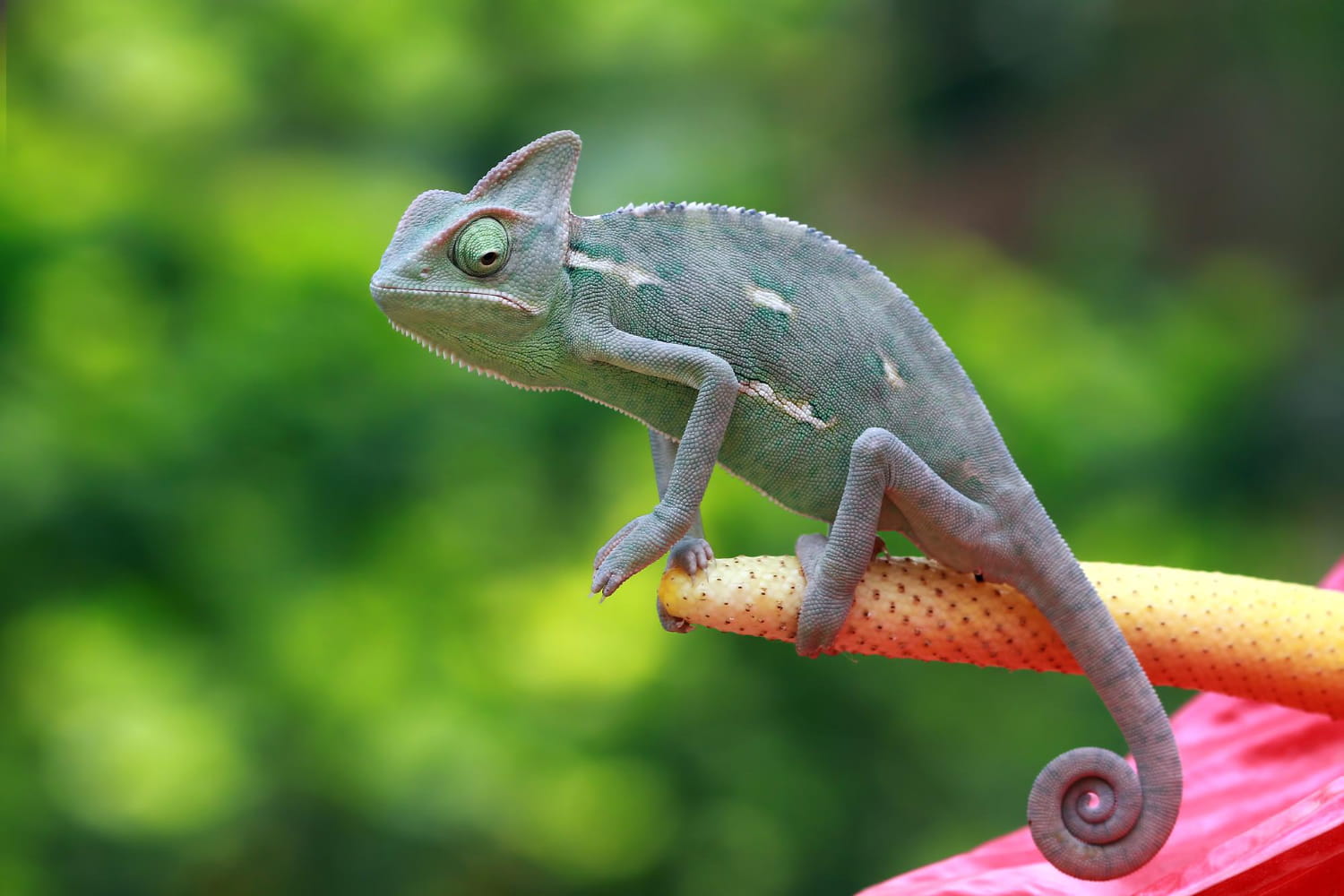
Chameleons are among the most mysterious and amazing creatures on our planet, astonishing us with their ability to change color and their unique body structure. These reptiles inhabit primarily the tropical forests of Africa and Madagascar, where they have perfectly adapted to life in trees. Many people believe they know everything about chameleons, yet there are numerous fascinating details about their biology that you might not have known. We have prepared amazing facts for you that will reveal the world of these remarkable lizards from a new perspective. Read on to learn interesting facts and fascinating facts that will surprise even experienced nature enthusiasts.
- Chameleons change their skin color not only for camouflage but also for regulating body temperature and communicating with other individuals. Special cells called chromatophores contain pigments that can expand or contract under the influence of nerve signals. This allows lizards to quickly respond to changes in their environment or their emotional state.
- A chameleon’s eyes can rotate independently of each other, providing them with nearly a full three hundred sixty degree view around their body. This unique ability allows them to simultaneously track prey in one direction while searching for predators in another. When a chameleon detects an insect, both eyes focus on it for precise aiming before shooting out their tongue.
- A chameleon’s tongue can extend to a length exceeding the size of its own body and moves with incredible speed. The tongue muscles create acceleration that is hundreds of times greater than gravitational acceleration, allowing instant capture of prey. The tip of the tongue has a sticky surface that reliably holds the insect even during rapid retraction.
- Chameleon feet have a zygodactyl structure, with toes fused into two groups of two and three for a strong grip on branches. This anatomy allows them to move confidently even on the thinnest twigs without risk of falling. Each foot is equipped with sharp claws that additionally enhance grip on tree bark.
- Most chameleon species have a prehensile tail that functions as a fifth limb when climbing trees. They can wrap their tail around branches for additional stability or use it as a counterbalance during jumps. Some species even use their tail for holding on while sleeping to avoid falling from their perch.
- The smallest chameleon in the world, Brookesia micra, inhabits Madagascar and has a body length of only about two and a half centimeters. This tiny lizard can easily sit on the tip of a human finger and remain unnoticed among fallen leaves. Despite its miniature size, it possesses all the characteristic features and abilities of its larger relatives.
- The largest chameleons, such as Furcifer oustaleti, can reach lengths of up to sixty-eight centimeters including their tail. These giants inhabit Madagascar and are known for their aggressive behavior when defending territory. Their bright coloration and large size make them one of the most impressive representatives of the family.
- Chameleons possess binocular vision, which allows them to accurately assess the distance to prey before attacking. Their eyes can focus on objects at different distances without needing to move their heads. This ability makes them extremely efficient hunters who rarely miss when hunting insects.
- Some chameleon species, such as the trioceros chameleon, have the ability to see ultraviolet light, which is invisible to the human eye. This helps them better navigate in forest shade and distinguish individuals of their species by special markings on their skin. Such light perception may also influence their behavior when choosing a mate for reproduction.
- Chameleons lack external ears, so they perceive sounds primarily through vibrations transmitted through the bones of their skull. They are sensitive to low-frequency sounds but cannot hear high-frequency tones available to many other animals. This feature is compensated by their exceptional vision, which serves as their primary tool for spatial orientation.
- Most chameleons lay eggs in moist soil, where incubation can last from several months to a year depending on the species. Some species, such as Jackson’s chameleon, are viviparous and give birth to fully formed young. This diversity of reproductive strategies helps them successfully adapt to various living conditions.
- The lifespan of chameleons varies greatly depending on the species, from one year in small representatives to fifteen years in large species in captivity. In the wild, many chameleons do not reach maximum age due to predators and diseases. Proper care in a terrarium can significantly extend the lives of these exotic pets.
- Chameleons are primarily insectivorous, although large species may hunt small birds, lizards, or even rodents. They use an ambush method, slowly approaching prey or waiting for it to come close enough. Their slow, swaying gait helps them remain unnoticed among leaves and branches.
- The casque or crest on the heads of many chameleons serves multiple functions, including collecting rainwater and displaying status among conspecifics. Water flows down the casque directly to the lizard’s mouth, which is an important adaptation in dry regions. The size and shape of the casque often differ between males and females, helping in sex recognition.
- Chameleons regulate their body temperature by changing skin color, darkening to absorb heat or lightening to reflect it. This ability is critically important for cold-blooded animals that depend on external heat sources. In the morning, they often adopt dark coloration to warm up more quickly after a cool night.
- The social behavior of chameleons includes complex displays of coloration and body posture for communication with other individuals. Males often change to brighter colors during courtship or territorial encounters to demonstrate their strength. Females may signal readiness to mate or unwillingness to interact through specific patterns.
- Nocturnal chameleons, such as representatives of the genus Rhampholeon, have adaptations for life in darkness, including enlarged eyes and less bright coloration. They hunt nocturnal insects and hide among leaves during the day to avoid predators. These species are less well known than their diurnal relatives but are equally interesting subjects for research.
- Many chameleon species are threatened with extinction due to habitat loss and illegal capture for the exotic pet trade. Destruction of tropical forests in Madagascar and Africa particularly negatively affects populations of these unique reptiles. Conservation programs and captive breeding help preserve some rare species for future generations.
- Chameleons possess a unique method of movement known as the slow step, where they sway back and forth, imitating the movement of a branch in the wind. This behavior helps them remain unnoticed by both prey and predators in their natural environment. Such a movement method requires great patience but significantly increases their chances of successful hunting.
- The speed of a chameleon’s tongue projection can reach twenty-six body lengths per second, making this movement one of the fastest in the animal kingdom. The tongue muscles work like a spring, storing energy before release for instantaneous projection. This mechanism allows chameleons to catch prey that is at a considerable distance without needing to approach it.
Studying these amazing creatures opens up fascinating facts about evolutionary adaptations and the diversity of life on Earth for us. Each newly discovered amazing fact helps to better understand the complexity of nature and the importance of preserving biodiversity. Interesting facts about chameleons inspire further research and deeper understanding of the reptile world. You might not have known how unique and complex these little masters of camouflage are in their natural environment.


